Tuesday, February 28, 2006

Chicago Transit Authority (1969) - Multiple Aurgasms

So I'm listening to Chicago Transit Authority-- which has been one of my favorite albums since I was about 14 or 15. This was the first and only time Chicago recorded live in the studio as a group. I've read interviews with sound engineers and the guys in the studio saying that recording this album was a nightmare. Getting 7 guys to come together "just so" required an obscene amount of takes.

When this album was released, no one outside LA and Chicago had heard of these guys, and even those from Chicago may not have even realized it was the same group they had known as "The Big Thing."

These were wet behind the ears guys, younger then than I am now. They gave up their royalties so they could get this double LP debut released back in 1969.

They weren't popular yet, they didn't have over 100 million record sales worldwide yet, they weren't the hit machine they would become in the mid-70s and into the early-80s. They were just making this music for the love of the music and because they believed not only in themselves but in the music they were creating.

I could be wrong, but I believe this album didn't chart until after their 2nd album was released a year later.

On one of the days that this album was being recorded, most of the band was taking a break. Guitarist Terry Kath, opted to just stick around the studio and mess around on his guitar. I mean he just went totally apeshit. One of the sound engineers decided to roll tape on it and caught one of the most brilliant "love songs" ever. It's not so much a song, as it is Kath making love to his guitar in a 6+ minute free form jam that at times sounds more like a motorcycle wreck than anything resembling music. But what comes through his intense free-form jamming is a level of energy and passion for his guitar that no structured song could ever really capture.

Chicago's first 3 double LP studio albums and their 1971 4 LP (3 CD) Live at Carnegie Hall album contain some of their best, and most experimental music. It was all recorded before a concerted change in the band, a change that saw them shift from experimenting to trying to score hits. There are diamonds in the rough of some of their later albums. But Chicago Transit Authority, Chicago II, Chicago III, and Live at Carnegie Hall all have a certain magic to them... and there's just something about this debut, the start of something magical, 7 guys making music they love for the sake of the music, not for the sake of selling records.

I may have expanded my musical horizons, I may listen to a lot of other groups now-- but it never fails, I always come back to this album. Days, weeks, years may pass but I know I can always come back to this CD and experience some monstrous aurgasms!

*This post originally appeared on July 21, 2004 in my Livejournal blog.

Saturday, February 25, 2006

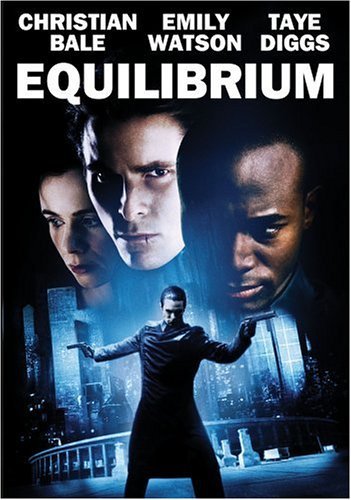
Equilibrium (2002)

Action movies aren't supposed to be smart. They also generally don't have heart either. The characters are generally flat and/or cardboard and the plot is merely a device to loosely tie well choreographed action sequences together.

Equilibrium betrays those stereotypes. Borrowing from both George Orwell's 1984, being set in a future where everyone is always being watched; and from Ray Bradbury's Fahrenheit 451, being set in a future where anything at all that can evoke emotion is destroyed by rule of law and the citizenry take special pills which give them emotional "equilibrium."

In the pills which give equilibrium, the filmmakers have a device which might have allowed their actors to get away with flat and cardboard performances-- essentially they all could have played their parts like Steven Seagall and the lack of emotion would certainly have been believable.

But in casting actors the calibre of Christian Bale, Emily Watson, Taye Diggs, and even Angus McFadyen (best known for his performance as Richard Bruce, the King of Scotland in Braveheart), the film instead benefitted from a higher quality of performances. Instead of just flat and cardboard, Bale's character, John Preston, struggled with his motivation to uphold the law and his curiousity of what he was missing out on by not experiencing emotion.

Mary O'Brien (Emily Watson), is a firecracker, in an otherwise bland clinical future. She plays a renegade whose illicit lover (Preston's former partner, Errol Partridge, played by Sean Bean) had been killed in the line of duty when it was discovered he was keeping "evidence" (books, music, etc.) for himself and allowing himself to feel. Watson's character hasn't been taking her "medication" and her capture forces Officer Preston to confront the life he's chosen to lead and the choices he's made.

Equilibrium is everything action movies are capable of being and should strive towards. There are so many places where the filmmakers could have taken shortcuts or the easy way out. But they didn't. They delivered a high quality and thoroughly enjoyable film in a genre that is generally vapid and dull.

Thursday, February 23, 2006

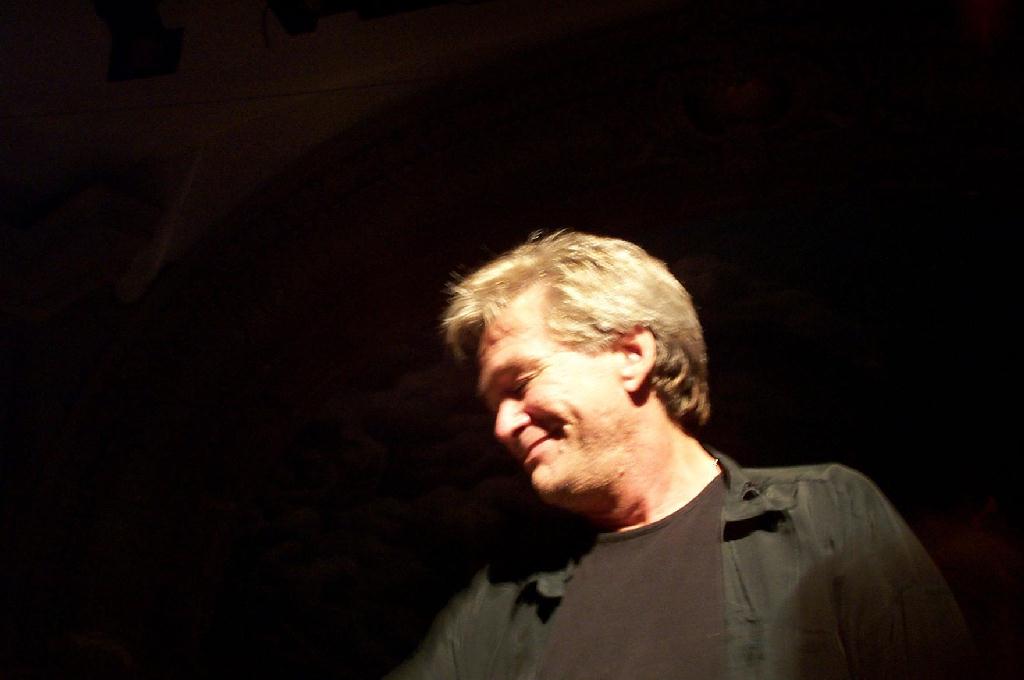
Terry Kath (1946-1978) - a biography and memorial

Your joy is your sorrow unmasked
And the selfsame well from which your laughter rises was oftentimes filled with your tears
.- from The Prophet by Kahlil Gibran

Terry Kath was born in Chicago on January 31, 1946 to Raymond and Evelyn Kath. While Terry started out on drums, in 1956 he switched to “guitar” using his mother’s banjo to teach himself how to play. As a young boy he would play along to records by The Ventures. Inspired by The Ventures, Terry decided to put together an instrumental group of his own, called The Mystics, to perform instrumental music in that same vein.

After graduating high school, Terry went to DePaul University where he met a young Walt Parazaider and Danny Seraphine forming a band called the Missing Links. The Missing Links were the pre-cursor to what became The Big Thing and later Chicago.

Known for his blistering guitar solos and his remarkable ability to play rhythm and lead guitar simultaneously, Terry was held in very high esteem by many of his peers including the great, Jimi Hendrix. While the horns may have been the heart of Chicago… Terry was the soul. Songs like Oh Thank You Great Spirit, Mississippi Delta City Blues, Takin’ It On Uptown, Scrapbook, 25 or 6 to 4, and Poem 58 all demonstrate Terry’s soulful proficiency and precise rapid-fire playing style and demonstrate his ability to play guitar melodically as if it were the 4th vocalist in the band.

Providing not only blistering guitar solos and working with Peter Cetera and Danny Seraphine as the rhythmic backbone of the band but also giving Chicago some of their most bluesy soulful vocals. Terry was a free-spirit living a life on the edge with a sense of urgency that the rest of the band fed off of. Listening to hits like Make Me Smile, Colour My World, and Wishing You Were Here gives an encapsulated portrait of what a soulful vocalist Terry was.

In 1977 Chicago finished up Chicago XI. The album opens with Mississippi Delta City Blues, a song that Terry had written back when Chicago was still called “The Big Thing” and doing the club circuit in the Chicago metro area. The song opens with a troubled laugh from Terry and then the lyrics that showed his discontent… “I’ve got a smile that I put on, when I’m not at home, when I’m not alone, but it’s so hard, to fake that smile, when my insides are cryin’ and my heart’s torn in half.”

On January 23, 1978 Terry’s laughter died in sorrow. At roadie Don Johnson’s house Terry pointed a gun at his head, he showed Johnson that the clip was empty, not realizing there was a bullet in the chamber, restored the clip to the gun and pulled the trigger. Just one week shy of his 32nd birthday Terry’s life ended abruptly, leaving behind his wife Camelia, his 2 year-old daughter, Michele, and a legacy as a soulful, free-spirited musician.

*The accompanying photograph was something I photoshopped back in 2002.

Tuesday, February 21, 2006

Shadow Gallery - Legacy (2001)

When discussing progressive metal, it becomes near impossible not to mention Dream Theater. They set the bar of excellence for an entire genre-- they are the definitive band for that entire genre.

Unfortunately, as a result, many excellent bands oft get overlooked. Among those bands is Shadow Gallery.

What sets Shadow Gallery apart are there church choir-esque vocal harmonies. Where Dream Theater is so heavily focused on musical technique, Shadow Gallery's focus is firmly planted within the realm of harmony-- and it's not just with the vocals (although their vocal harmonies are generally the first thing new listeners notice when first "discovering" this band)-- instrumentally their harmonies tend to be significantly tighter than just about any other metal band (progressive or otherwise) that I've ever heard.

Incidentally it was on the recommendation of a Dream Theater fan that I decided to check out Shadow Gallery. I was not led astray. There was something almost angelic about their harmonies. But when you juxtapose the crunchiness of their guitars with their tight harmonies their music is transcendent.

I realize that one of the complaints many critics have of various forms of progressive rock is that it's overly indulgent and pretentious-- who needs 10, 20, 30 minute songs. Shadow Gallery are gross offenders of that stereotype-- Legacy only has 6 songs on it, 2 of which are over 7 minutes, 1 clocks in at over 15, but the most egregious offender is the 6th and final track, First Light clocking in at 34 minutes 18 seconds (including a 5+ minute "dramatic pause").

First Light is ALMOST a brilliant piece of musicianship which is marred by the aforementioned dramatic pause. Up until the start of that "pause" this is easily one of my favorite CDs... But that "pause" serves no purpose and is a glaring blemish on this otherwise exceptional album-- imagine if you will, a beautiful readhead, perfect in every way except she has a giant mole smack dab in the middle of her forehead with a hair growing out of it. This album is that beautiful redhead and that mole is that wholly unnecessary "pause."

Colors, Legacy, and ESPECIALLY Destination Unknown are some of the most exceptionally crafted songs I've ever heard. The harmonies are spot-on, and while progressive music is notorious for sacrificing emotion for technique-- these songs still manage to evoke some level of emotion in a genre typically not known for doing so.

If you can look past that mole, this beauty has a really great personality.

Sunday, February 19, 2006

A Dirty Job by Christopher Moore

I remember when Ralph Hinckley, The Greatest American Hero, discovered a mysterious space-suit with a cape that granted him superhuman powers-- it even came with an instruction manual, which he somehow managed to lose.

Charlie Asher was having a bad day. His wife had just died after giving birth to their daughter, Sophie, and a shocking new development he had just unwittingly gotten himself a new job, Death. And much like Ralph Hinckley, Charlie is missing the instruction manual which is supposed to give some, albeit vague, insight into what his new job entails.

So begins Christopher Moore's latest novel, A Dirty Job. As with Moore's other literary offerings. This book is filled with Moore's quirky humor. From the Russian and Chinese ladies who live in Charlie's building and often babysit Sophie, to the employee's of his second-hand store-- an ex-cop, Ray, who has a bad habit of using the store's computer searching for female companionship from the Philipines and the Ukraine; and Lily, a teenage Goth girl who is frustrated when that boring square, Charlie, gets the all too cool job of being Death-- a job she feels she is much more deserving of. And then, there's a seven foot tall, Minty Fresh, an African-American dressed from head to toe in green, who introduces Charlie to his new job.

Charlie, like many fathers, believes it's important for his child to have a pet for both companionship and to learn some sense of responsibility. The trouble is that from the various fish, hamsters, and even ALMOST getting a kitten. These pets mysteriously wind up dead shortly after Charlie brings them home.

Strange things are afoot in San Francisco-- mysterious dark creatures attacking Charlie, voices coming from the sewer grates that only Charlie can hear, and small "squirrel people" wandering the city in period costumes are among the anomalies.

In addition to Moore's quirky sense of humor, his novels often explore elements of the supernatural, in ways these themes are not traditionally explored. This owes to Moore's exceptional imagination which is second only to his sense of humor when it comes to his positive attributes.

While none of Moore's novels are bad (quite the opposite, they're actually in varying degrees of "good" to "excellent"), some are certainly better than others. While A Dirty Job may not be his best, it is certainly one of his better and has a bit more heart than his other novels have brought to the table.

For those already familiar with Christopher Moore, no encouragement from me is necessary. You already know about the book and are marking off the days on the Calendar until it's April Fool's Day release-- or you were lucky, like me, and were able to get yourselves an advance copy which has already been read. For those not familiar with Moore-- as much as I loved this novel, I wouldn't recommend starting with A Dirty Job. Island of the Sequined Love Nun, Bloodsucking Fiends: A Love Story, or Lamb: The Gospel According to Biff, Christ's Childhood Pal are much better introductions to Moore's quirky and thoroughly enjoyable style of writing.

So folks, brace yourselves for some more Moore! The only way in which Moore is predictable is that he never disappoints-- so come April 1-- RUN don't walk to your nearest bookstore and pick up your copy of this delightful tome!

Friday, February 17, 2006

Index of Articles

Beer Reviews (alphabetical by brand)
Leinenkugel Summer Shandy


Book Reviews (alphabetical by book title)
Between a Heart & a Rock Place by Pat Benatar
The Big Bamboo by Tim Dorsey

Come On Shore and We Will Kill and Eat You All by Christina Thompson
Crazy '08 by Cait Murphy
Deep Six by Clive Cussler
A Dirty Job by Christopher Moore
Everything Changes by Jonathan Tropper
Farther Than Any Man: The Rise & Fall of Captain James Cook by Martin Dugard
Getting Stoned With Savages by J. Maarten Troost
Goodbye Lemon by Adam Davies
Island of the Sequined Love Nun by Christopher Moore
Juliet, Naked by Nick Hornby
The Little Book by Selden Edwards
Long Way Back by Brendan Halpin
Mine All Mine by Adam Davies
Over the Edge of the World by Laurence Bergreen
Shantaram by Gregory David Roberts
Soon I Will Be Invincible by Austin Grossman
The Time Traveler's Wife and The Confessions of Max Tivoli (a dual review/comparison & contrast essay)
Too Far From Home by Chris Jones
Working Stiff by Grant Stoddard

Film Reviews (alphabetical by film title)
500 Days of Summer (2009)
Almost Famous - The Bootleg Cut (2000)
The Assassination of Jesse James by the Coward Robert Ford (2007)
The Cameraman (1928)

Come September (1961)
Equilibrium (2002)

Highlander (1986)
The Illusionist (2006)
Into the Wild (2007)
The Legend of 1900 (1998)

Malena (2000)
Match Point (2005)
On Her Majesty's Secret Service (1969)
The Passion of the Christ (2004)
Saturday Night Fever (1977)
Star Wars Episode III: Revenge of the Sith (2005)
Things to Do In Denver When You're Dead (1995)
Tigerland (1999)
United 93 (2006)
The Weather Man (2005)
Wicker Park (2004)

Music Reviews & Essays (alphabetical by band/musician name)
Lindsay Aline Illusion (2009)
Ambrosia (1975)
Ambrosia Somewhere I've Never Travelled (1976)

Ambrosia Life Beyond LA (1978)
America Homecoming (1973)
Jon Anderson In the City of Angels (1988)
Asia Enso Kai (Live in Tokyo) (2003)
Asia web release (2006)
Aussie/Kiwi Classic Rock
Australian Crawl Boys Light Up (1980)
John Barry Somewhere In Time Original Soundtrack Recording (1980)
Jimmy Barnes Flesh and Wood (1994)
Jimmy Barnes Live at the Chapel (2002/2004)
Beach Boys Pet Sounds (1966)
Beckley-Lamm-Wilson Like a Brother (2000)
Blood Sweat & Tears Child Is Father to the Man (1968)
Blood Sweat & Tears New Blood (1972)
Blue Öyster Cult Spectres (1977)
Boston Walk On (1994)
British Classic Rock
Buckingham Nicks - s/t (1973)
Randy California - Kaptain Kopter and the (Fabulous) Twirly Birds (1972)
California Transit Authority - Full Circle (2007)
Peter Cetera
Peter Cetera s/t debut (1981)
Peter Cetera One More Story (1988)
Peter Cetera Live in Salt Lake City (2004)
Bill Champlin (essay/artist review)
Bill Champlin leaves Chicago (a personal reflection)
Bill Champlin Single (1978)
Bill Champlin Runaway (1981)
Bill Champlin No Place Left to Fall (2008)
Harry Chapin Had a Way With Words (essay/artist review)
Harry Chapin Heads & Tails (1972)
Harry Chapin Sniper & Other Love Songs (1972)
Harry Chapin Short Stories (1974)
Harry Chapin Verities & Balderdash (1974)
Harry Chapin Portrait Gallery (1975)
Chicago Transit Authority Live at the Itchy Foot Moose - Sept. 1, 1968 (bootleg)
Chicago Transit Authority (1969)
Chicago Transit Authority: Multiple Aurgasms
Chicago Live at the Fillmore August 1969 (bootleg)
Chicago II (1970)
Chicago III (1971)
Chicago V (1972)
Chicago XI (1977)
Chicago Hot Streets (1978)
Chicago XIV (1980)
Chicago What You're Missing (1982) (song review)
Chicago Live at Park West August 6, 1982 (bootleg)
Chicago 16 (1982)
Chicago 18 (1986)
Chicago 19 (1988)
Chicago Stone of Sisyphus (1994)
Chicago - E-mail interview with Danny Seraphine (1997)
Chicago What's It Gonna Be, Santa? (2003)
Chicago "The Box" (2003)
Chicago XXX (2006)
Chocolate Watchband No Way Out (1967)
Chroma Key Dead Air for Radios (1999)
Cold Chisel s/t (1978)
Cold Chisel The Best of Cold Chisel (1998)
Cold Chisel Ringside (2003)
Collective Soul s/t (1995)
Pat Dailey Raw Bars (1998)
Pat Dailey The Great American Saturday Night (2000)
Pat Dailey Being Me (2000) (song review)
Def Leppard Slang (1996)
Def Leppard Euphoria (1999)
Def Leppard Yeah! (2006)
The Doors Other Voices (1971)
Dragon O Zambezi (1978)
Dream Theater Images and Words (1992)
Dream Theater Surrounded (1992) (song review)
Dream Theater Awake (1994)
Dream Theater Home (1999) (song review)
Dream Theater Live in Cleveland September 3, 2002 (concert review)
Dream Theater Octavarium (2005)
Dream Theater Score: Live with the Octavarium Orchestra (2006)
Dream Theater Systematic Chaos (2007)
Dream Theater 12 Step Suite (2002-2009)
Dream Theater Black Clouds & Silver Linings (2009)
The Electric Prunes I Had Too Much To Dream (Last Night) (1967)
Esperanto Rock Orchestra (1973)
John Farnham Whispering Jack (1986)
Fates Warning Disconnected (2000)
Favorite Debut Albums
Favorite One-Hit Wonders
Tim Feehan Carmalita (1983)
A Few of My Favorite Guitarists (essay/musician review)

The Firm (1985)
Four Stars in Heaven (essay)
Ben Folds Songs For Silverman (2005)
Genesis Nursery Cryme (1971)
Genesis A Trick of the Tail (1976)
Kevin Gilbert Thud (1995)
Barry Goudreau s/t (1980)
Steve Hackett Voyage of the Acolyte (1975)
Steve Hackett The Tokyo Tapes (1997)
Steve Hackett Darktown (1999)
Steve Hackett Metamorpheus (2005)
Roger Hodgson In the Eye of the Storm (1984)
Roger Hodgson Open the Door (2000)
Howland-Imboden Project Live at the Baked Potato (2003)
Marc Hunter Communication (1985)
Hunters & Collectors (essay/artist review)
Hunters & Collectors Fate/What's a Few Men (1990)
Hunters & Collectors Cut (1993)
Hunters & Collectors Living in Large Rooms and Lounges (1995)
Hunters & Collectors Juggernaut (1998)
Illinois Speed Press self-titled/Duet (2003 re-release)
INXS s/t debut (1980)
INXS Switch (2005)
I-Ten Taking a Cold Look (1983)
Billy Joel Captain Jack (song review)
Billy Joel The Stranger (1977)
Al Kooper Easy Does It (1970)
Al Kooper/Mike Bloomfield Fillmore East: The Lost Concert Tapes 12/13/68 (2003)
Robert Lamm Live at the Knitting Factory (April 23, 2005)
Level 42 World Machine (1985)
Little River Band (1975)
Little River Band Time Exposure (1981)
Little River Band The Net (1983)
Living Loud (2004)
Steve Lukather Lukather (1989)
Steve Lukather Luke (1997)
Steve Lukather & Friends Santamental (2003)
Steve Lukather Ever Changing Times (2008)
Mapping a Musical Evolution
Marillion Misplaced Childhood (1985)
Maxus s/t (1981)
Mighty Mighty Bosstones Don't Know How to Party (1993)
Guy McDonough My Place (1985)
The Moody Blues Days of Future Passed (1967)
Ian Moss Six Strings (2005)
My Chemical Romance The Black Parade (2006)
Grady Nichols In the Fullness of Time (2001)
On Being a Fan of Music (essay)
OSI Free (2006)
OSI Blood (2009)
John Petrucci Suspended Animation (2004)
Poco The Last Roundup (2004)
Porcupine Tree In Absentia (2002)
Queen with Paul Rodgers Return of the Champions (2005)
Quicksilver Messenger Service Happy Trails (1968)
REO Speedwagon s/t debut (1971)
REO Speedwagon Lost in a Dream (1974)
REO Speedwagon Not So Silent Night (2009)
James Reyne "... and the horse you rode in on" (2005)
James Reyne Ghost Ships (2007)
Rhythm Dukes FlashBack (recorded 1970/released 2005)
Uli Jon Roth The Metamorphosis of Vivaldi's Four Seasons (2003)
Mark Seymour The Closest Living Thing (2008)
Shadow Gallery Tyranny (1998)
Shadow Gallery Legacy (2001)
Sons of Champlin Loosen Up Naturally (1969)
Sons of Champlin Welcome to the Dance (1973)
Sons of Champlin A Circle Filled With Love (1976)
Sons of Champlin Loving Is Why (1977)
Sons of Champlin Hip Li'l Dreams (2005)
Spirit The Family That Plays Together (1968)
Starcastle (1975)
Starcastle Fountains of Light (1977)
Jim Steinman (essay/songwriter review)
Jim Steinman Bad For Good (1981)
Supertramp Crisis? What Crisis?! (1975)
Supertramp Even In the Quietest Moments (1977)
Supertramp Breakfast in America (1979)
Supertramp It Was the Best of Times (1999)
Survivor Caught In the Game (1983)
Terry Kath (1946-1978) - a biography and a memorial
Them Crooked Vultures s/t (2009)
Top 5 New Releases of 2005
Top 20 Musical Guilty Pleasures
Toto Hydra (1978)
Toto Turn Back (1981)
Toto Isolation (1985)
Toto The Seventh One (1988)
Toto Live @ Montreux (1991)
Toto Kingdom of Desire (1992)
Toto Tambu (1995)
Toto - Joseph Williams Telephone Interview (1998)
Toto Mindfields (1999)
Toto Falling in Between (2006)
T-Rex Electric Warrior (1971)
Trillion s/t (1978)
Brian Vander Ark Resurrection (2004)
Various Artists Standing on the Outside Looking In: The Songs of Cold Chisel (2007)
Verve Pipe Underneath (2000)
Roch Voisine Christmas is Calling (2000)
West Coast All-Stars Naturally (1998)
John Wetton Battle Lines (1995)
John Wetton Akustika: Live in Amerika (1996)
John Wetton Rock of Faith (2003)
Joseph Williams I Am Alive (1996)
Joseph Williams The Two of Us (2006)
"What if?" Unreleased Albums
Brian Wilson Smile (2004)
Dennis Wilson Pacific Ocean Blue (1977)
Yes Drama (1980)

Special Thanks to Charlie Ricci whose blog index inspired me to do one myself.

Absurdistan by Gary Shteyngart
And You Know You Should Be Glad by Bob Greene

The Art of Racing in the Rain by Garth Stein
At the Mercy of the Sea by John Kretschmer
The Australia Stories by Todd James Pierce

Thursday, February 16, 2006

Steve Hackett - The Tokyo Tapes (1997)

Awhile back, I picked up this great live set by the former lead guitarist of Genesis (1972-1977), Steve Hackett.

Hackett's back-up band reads like a who's who of progressive rock:
John Wetton (ex-Asia, ex-King Crimson, ex-UK, ex-Uriah Heep) - bass & vocals
Ian MacDonald (ex-King Crimson) - Flute & Sax
Steve Hackett (ex-Genesis, ex-GTR) - Guitar & Vocals
Julian Colbeck (Yes, touring band) - keyboards & piano
Chester Thompson (Genesis touring band) - drums & percussion

The song selection and the arrangements of the songs they chose to play is what makes it such a great set though.

They cover material from King Crimson (In The Court of the Crimson King and I Talk To the Wind), Genesis (Watcher of the Skies, Firth of Fifth, Horizons, Los Endos and I Know What I Like (In Your Wardrobe)), Hackett's solo career, and even some of Wetton's material (including a beautiful acoustic version of the Asia hit Heat of the Moment).

MacDonald really shines on his flute and sax solos, Hackett (as always) is brilliant on guitar, Wetton's vocals are spot on (even on the Genesis material) and Colbeck and Thompson really pull the whole group together.

Wednesday, February 15, 2006

Chicago II (1970)

Once upon a time Chicago had balls. Their music hadn't yet been neutered by the Peter Cetera power ballads of the eighties. Their lyrics hadn't yet shifted from the political nature of songs like It Better End Soon, Someday (August 29, 1968), A Song For Richard & His Friends, State of the Union and Dialogue Pts. 1&2 to the saccharine bubblegum of Look Away, You're Not Alone, and one of the worst musical atrocities they've ever inflicted on their fans and listeners-- You Come to My Sesnses.

Listening to Chicago's latter day catalogue it's easy to understand why this legendary band, which has been elgible for Hall of Fame induction since 1992 still has not even been nominated, let alone inducted. But listening to their first three albums the rationale for their omission from the Rock and Roll Hall of Fame is far from justified.

At the time of its release producer, James William Guercio, in the liner notes of Chicago II implored the listener to take the time to listen to the album from start to finish as 1 complete piece of music, rather than piece-meal listening only to certain songs. His advice is not to be ignored, as this album is indeed best enjoyed as a single piece of music, with several "movements" much like a symphony.

Chicago's debut, Chicago Transit Authority, was recorded with all of the musicians performing in the studio at the same time. It gave that album a rather cohesive, and more of a raw sound. After the nightmare of recording 7 musicians at once for the first album, Guercio and the band opted to take the more traditional approach of each musician recording his parts seperately. As a result, one of the first things the listener will notice is that Chicago II is considerably more "polished" than its predescessor.

The album slowly builds through Movin' In, The Road, and Poem for the People. There's a bit of a crescendo with In the Country-- one of Chicago's best, and most overlooked songs. In it you hear the soulful vocals of Terry Kath, a fantastic brass arrangement, and evidence that Peter Cetera-- besides just having a voice that moistened many a ladies' panties in the eighties with his prom and wedding fodder, was-- once upon a time-- a damn good bass player.

Wake Up Sunshine has a Beatles-esque quality to it, it would not have sounded out of place being performed by the likes John, Paul, George, & Ringo. It's a sign that this band once had the creative and stylistic potential to carry the torch left behind by the Beatles in their 1970 dissolution.

Many casual listeners are familiar with Make Me Smile and Chicago's first stab at prom-fodder, Colour My World-- what they don'y realize are that both these songs are parts of a much bigger whole, the Ballet for a Girl in Buchannon. In interviews the band has admitted to being rather annoyed with their material being chopped up for release as singles but understood it was a necessary evil of the era. The entire Ballet is approximately 15 minutes long, much of the material is instrumental in nature and shows some true musical adventurousness. It also shows the chemistry of Chicago's original rhythm section-- drummer Danny Seraphine, guitarist Terry Kath, and bassist Peter Cetera. It also serves as a reminder that Chicago's horn section once acted as an integral part of their music as opposed to just an accent to help highlight their vocals and vocal harmonies, a role the horn section reluctantly accepted in the eighties.

After the Ballet is Fancy Colours, a song that plays like a rather colorful musical acid trip. The different instruments representing various different "fancy colours." Listeners with more trained ears may even notice that when Guercio was Chicago's producer, the instruments had a considerably more "layered" sound than after the band parted ways with him. Fancy Colours is a prime example of Guercio's style of layering the instruments.

While most die-hard fans and musical trivia buffs are aware of the story behind 25 or 6 to 4's cryptic lyrics, the various theories of drug references and acid trips, etc. are made more amusing when learning that the song is simply a reference to the time of the day-- 25 or 6 minutes to 4 am. For those, in the know I apologize for reiterating this, for those not in the know this is a song about writing a song. The songwriter (Robert Lamm) was suffering from writer's block and stayed up well into the night trying to write a song. When he happened to look at the clock it changed from 3:34 to 3:35.

After 25 or 6 to 4 the focus of the album changes from hard rock with horns and a jazz influence to the more classically influenced style of Prelude, AM Mourning, PM Mourning, and Memories of Love. Musically these songs are quite beautiful-- but they're also quite somber and melancholic about losing a love before her time. As much as I enjoy these pieces of music, they are a low point of the album and seem rather out of place in the context of the album as a whole.

It Better End Soon Movements 1-4 is a plea calling for the ending of the Vietnam War. It's a rather moving reminder that in addition to being more creative and musically adventurous, Chicago was also once far more political than they are today. A couple of other highlights of It Better End Soon is Walt Parazaider's flute solo (the 2nd movement), which is arguably one of the best rock flute solos outside of Jethro Tull's Aqualung, and Terry Kath's soulful wailing preach (the 3rd Movement).

The album closes with one of Peter Cetera's few songwriting contributions of the early years of Chicago, the ponderous Where Do We Go From Here? It makes for an excellent outtro to an overall delightful album.
Monday, February 06, 2006

Deep Six by Clive Cussler


Clive Cussler is not high art. Nor will his books ever be considered "literature"-- Cussler is to books what Steven Seagal and Jean-Claude Van Damme are to movies. They're sometimes fun to watch, but they're not compelling or at all feasible.

Deep Six is no exception to this... If anything this is one of Cussler's weaker novels. With this type of novel, the "action film" of books, the author still has to get the reader to suspend disbelief. Some of Cussler's novels are fun enough, and move quickly enough to allow me to give him the benefit of the doubt and just let things slide. This is not one of those books.

The basic premise, a Korean shipping magnate has her lackey grandson kidnap the President, Vice President, Speaker of the House, and President Pro Tempore of the Senate (the top 4 in line for the presidency) for the Soviets (the book was written in 1984 and set in 1989, I only recently "discovered" it when bored out of my gourd at the Ft. Lauderdale airport).

The chicanery and tomfoolery necessary to pull off such a feat is more than my "suspension of disbelief" could handle. The book did keep me reading as, yes even though I knew it would all end well, I wanted to see how Cussler tied up the loose ends.

They say the devil is in the details and I can understand if Cussler was bored out of his mind by the time he finished this book and just wanted to get it over with. But you'd think a good editor would at least try to compel the writer to re-write the ending. After spending so much time on details and innocuous events throughout the rest of the book, the amount of time spent tying up those details and loose ends in the end was half-assed, at best.

All in all, Cussler's Dirk Pitt novels are fun, but if you're really in the mood to read one of them, skip this one and read Sahara, Raise the Titanic, or even Inca Gold instead, any of them will be much more satisfying reads than Deep Six.

Friday, February 03, 2006

Bill Champlin

Through most of the 90s I was on a Bill Champlin kick. I needed to hear every song he sang lead on. I need to not just hear, but feel, and complete digest his entire catalog. I got to the point where I kutchered him. I had to take a break for a few years.

Last night I made an mp3 CD including all of his solo studio albums which I've been slowly, but surely re-introducing myself to.

Most people don't know who Champlin is, but if they were listening to the radio in the 80s they're certainly familiar with his voice on Chicago hits like Hard Habit to Break (he shared lead vocals with Peter Cetera), Look Away, and You're Not Alone. Sadly those aren't even close to being his best work.

I'd forgotten how good much of his solo material was/is-- the in your face brass of Yo Mama off of Single; the pristine studio gloss of the entire Runaway album; No Wasted Moments and Before You Go which could just as easily have been Chicago songs from his No Wasted Moments EP; Fly By the Light and Highest Stakes from Burn Down the Night; Turn Your Love Around, Sound of the Rain, and Through It All from Through It All; and Southern Serenade and It's About Time from He Started to Sing. I could go on and on...There's something about his gritty baritone that keeps me coming back for seconds, thirds, fourths-- well you get the idea.

Yes his material is pop, but it's pop in its best form-- not the dime-a-dozen cookie-cutter crap that the music industry cranks out faster than the listening public can digest (and more often than not, excrete). Part of Champlin's appeal is his variety-- he goes from traditional pop that would be at home on any album circa 1980-1989, to Lou Rawls inspired R&B, to blues (his cover of In the Heat of the Night shows him at his bluesy best), to the blue-eyed soul of Yo Mama or Turn Your Love Around.

Champlin also shows he knows when to call in his friends-- Single, Runaway, and Burn Down the Night feature a who's who of LA session musicians. And when to go it alone-- Through It All features Champlin doing just about everything from guitars to keyboards, to vocals, and production himself.

Bill Champlin is the total package when it comes to rock/pop music.

The Australia Stories by Todd James Pierce

All families have their stories, their secrets. Todd James Pierce is no exception. The Australia Stories weaves the mystery of main character, Sam Browne's family with Pierce's very own family mystery. Throughout the book the line between Browne's fiction and Pierce's fact remains perpetually blurred which keeps the reader guessing.

The book is a multi-generational struggle with identity. His grandmother, who had once dreamed of returning to the England of her ancestors, gradually develops a love and sense of home for her own native Australia. After divorcing Browne's grandfather and becoming a guide on nature trails into the outback, Browne's grandmother walks into the desert never to be seen or heard from again.

Browne's mother, in a perpetual struggle to make some semblance of a connection with her mother; a mother who had always been a stranger to her; ends up following in her mother's footsteps, disappearing into the outback-- her decaying body found a few days later.

The book shifts from flashbacks to Browne's mother, his grandmother, to his own adolescence, and the failure of his first marriage as Browne tries to solve the mysteries of both his mother and grandmother and develop some sense of his own identity.

Part of the charm of this book is how deeply personal it feels. Throughout the book I felt as if Pierce were giving a glimpse of his own deep thoughts in the guise of Browne. I felt all of the characters easily relatable and felt myself connecting with them and understanding them on a level much deeper than I'm accustomed to.

This book would be an excellent addition to any middle or high school curriculum. We all go through that awkward phase where we're trying to figure out who we are. The Australia Stories is an excellent chronicle of that awkward search of personal discovery.

Thursday, February 02, 2006

Toto - Hydra (1978)

I was recently listening to live versions of Hydra and St. George & the Dragon from their 1978 Hydra album. These two songs had the potential to have been extrapolated on-- a concept album could have been written around the whole St. George tale.

Hydra
is the tale of St. George from the perspective of the Hydra he's made his mission to kill.

Musically, the song features some of Steve Lukather's best guitar playing and some exceptional keyboard work by both Steve Porcaro and David Paich.

The very next track, St. George & the Dragon is the continuation of the tale featuring some more clever keyboarding from Paich and Porcaro.

Sadly the rest of Toto's Hydra album is a bit uneven. There are some strong bits like 99 and
Lorraine. But other than those 4 tracks Hydra is mediocre at best.

I think if Toto had chosen to write the entire album around the tale of St. George either as a concept album (a la Alan Parsons Project) or even a rock opera (a la The Who's Tommy) the end product would have been considerably stronger.

In 1984 Toto composed and performed much of the music to the Dino DeLaurentis version of Frank Herbert's Dune and some of the material from that, is musically similar to the material on Hydra. Desert Theme could just as easily have been an overture to open the tale of St. George, Take My Hand would have fit well as a stirring emotional interlude in the tale.