Friday, March 31, 2006

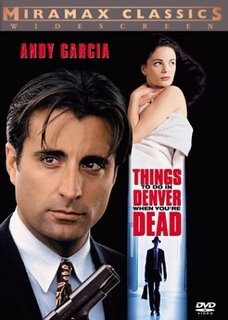
Things to Do In Denver When You're Dead (1995)

Andy Garcia can't carry a movie on his own. Lucky for him, he didn't have to-- well at least not this time around. While Garcia did get top-billing and his mug shared the movie posters with that of the beautiful Gabrielle Anwar, this film is much more of an ensemble performance. Sharing the screen with Garcia are Treat Williams, Christopher Lloyd, William Forsythe, Bill Nunn and a delightfully quirky Christopher Walken as a quadripilegic mob boss.

If taken seriously, this film is absolute tripe. But this is a film that lampoons itself by simple virtue of its own existence. This film is emminently enjoyable if you allow yourself to have as much fun watching it as Christopher Walken appears to have had performing in it.

Things to Do In Denver When You're Dead gives a glimpse into a culture completely foreign to most people. It's not so much a portrayal of a life in the mob as a caricature of it. The dialogue is pure joy as you, the viewer, get drawn in by mafia colloquialisms like "boat drinks," "buckwheat," "the man with the plan" and assorted other lines you probably have never heard before in any other mob films, and are more than likely certain to never hear again.

Essentially it's a tale of an "action" gone wrong. The Man With the Plan (Christopher Walken) orders Jimmy the Saint (Garcia) to give his son, Bernard's, ex-girlfriend's new boyfriend a bit of a scare so he'll back off making the way for a reunion between Bernard and said ex.

When things go horribly awry resulting in death sentences for everyone on his crew, Jimmy feels responsible and does his best to make things right with his crew-- to get them out of the city before the hitman, "Mr. Shhhh" (played brilliantly by Steve Buscemi) has a chance to take them out.

Unfortunately for Jimmy, he's recently fallen in love with the beautiful Dagney and he realizes if he doesn't extricate himself from his relationship and make himself scarce he's as good as signed a death warrant for both of them.

While the plot isn't one of the better to emerge from Hollywood, it doesn't matter. The true enjoyment of the film comes from its dialogue (what you might expect from David Mamet if he had a sense of humor) and spot-on performances from the entire cast. While it borrows some lighting and camera angles from classic film noir it's not so much a film noir as a poignantly humorous caricature of a film noir.

Thursday, March 30, 2006

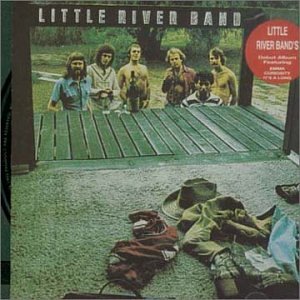
Little River Band s/t (1975)

In 1975 Little River Band burst upon the musical landscape-- their style was a laidback country rock that would not have sounded out of place coming from the Eagles or the Doobie Brothers.

Perhaps the only true fault of this auspicious debut is that it opens with its strongest tracks-- probably one of the strongest tracks in the band's entire song catalog. Clocking in at 8 minutes and 46 seconds A Long Way There showcases the best of what this band has to offer. Their catchy country/rock rhythms, their tight vocal harmonies, Glenn Shorrock's distinct lead vocals, and the rock guitar theatrics of both Graeham Goble and Beeb Birtles.

By opening with such a stellar song, the rest of the tracks only serve to suffer by comparison which is quite unfortunate considering that many of the remaining tracks are also quite enjoyable.

Curiousity Killed the Cat straddles the rock/country line with country-esque vocals and vocal harmonies but with meandering yet driving rock guitar lines.

Meanwhile is good old-fashioned roadhouse boogie. It's fun, it's catchy and features some superlative guitar work-- again by Birtles and Goble. Shorrock's vocals help drive this rollicking tune.

Other standout tracks include the Beeb Birtles penned and sung I'll Always Call Your Name a rather stirring ballad that shows Birtles to be quite a tunesmith in his own right and the somewhat elegeiac Statue of Liberty that captures the general pessimism of America following the Nixon resignation and the Vietnam conflict:

Anything can happen in the U. S. of A.
Ain't no use anymore in tryin' harder

Statue of Liberty sinkin' in the harbour

Despite living half a world away in Australia Glenn Shorrock seemed to have a good idea of the general mood of the American people.

On the whole, this is a very respectable debut that shows glimpses of the even better material that was yet to come. While there are no big hits like The Night Owls, Reminiscing, or Lady-- those would all come later, you can clearly hear the potential of the music which would come from this tight Aussie musical unit.

Related Links
Little River Band (official site)
Birtles Shorrock Goble (official site)
Little River Band (wikipedia)
Birtles Shorrock Goble (wikipedia)
Little River Band (wikipedia album entry)
Glenn Shorrock (wikipedia)
Beeb Birtles (official site)
Beeb Birtles (wikipedia)
Graeham Goble (official site)
Graeham Goble (wikipedia)
Other Little River Band related reviews on The Review Revue

Wednesday, March 29, 2006

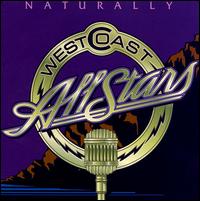
West Coast All-Stars - Naturally (1998)

Initially this project was going to be a solo acapella project-- the brainchild of producer, Joey Carbone. It was going to be an acapella album with former Toto frontman, Joseph Williams, singing all the vocal parts.

After further consideration it was decided that an acapella album marked an excellent opportunity for Joseph to get "a little help from his friends." So joining him on the first West Coast All-Stars CD California Dreamin' in 1997 were Bill Champlin and Jason Scheff of Chicago and fellow former Toto lead vocalist, Bobby Kimball. Scheff, Williams, and Kimball had such a good time on the first project they opted to do this follow-up. Bill Champlin however bowed out and was replaced by session vocalist Tommy Funderburk.

Despite their best efforts, this album doesn't quite match its predescessor. With Champlin the West Coast All-Stars had a baritone and an expert vocal arranger to balance out the 3 tenors of varying ranges with his deeper soulful baritone. In Champlin's absence, Joseph Williams ended up singing the bass/baritone parts. And while he did a respectable job-- he doesn't quite have the range in his lower vocal register that Champlin has. As a result the group as a whole doesn't sound quite as well balanced as they had on California Dreamin'.

That being said this is still a thoroughly enjoyable, extremely hard to find, and generally rather expensive imported gem of an album. The song selection, a collection of various hits of the seventies including such varied material as Earth Wind & Fire's That's The Way of the World, Rod Stewart's Tonight's the Night, Stevie Wonder's Sir Duke, Billy Joel's Just the Way You Are, Gilbert O'Sullivan's Alone Again (Naturally), Sir Paul McCartney's My Love, The Bee Gees How Deep Is Your Love, Bob Marley's I Shot the Sherriff, Marvin Gaye's What's Goin' On and perhaps the best and crowning achievement on this album is Led Zeppelin's Stairway to Heaven.

Yes, I said Stairway to Heaven and yes this is indeed an acapella album. Perhaps the most enjoyable part of the Stairway arrangement is that the Jimmy Page "guitar solo" is scat sung by Jason Scheff. Scheff also handles the lead vocals for the song and is augmented by the stirring, nee haunting background vocals of Funderburk, Williams, and Kimball. The acapella arrangement gives the song an ethereal otherworldly feel.

Another highlight is Alone Again (Naturally), having lost his own mother, Barbara Ruick Williams, at age 14, Joseph Williams modified the lyrics to make the song a bit more autobiographical to his life and less so to that of Gilbert O'Sullivan. Williams vocals on Paul McCartney's My Love are also quite enjoyable and a reminder of what made Toto's Fahrenheit and Seventh One albums so enjoyable.

The other gem is the acapella arrangement of How Deep Is Your Love, the least surprising song on the album, and probably the one which best lends itself to an acapella arrangement. Tommy Funderburk deftly handles the lead vocals with Kimball, Williams, and Scheff providing harmonies which would serve the Brothers Gibb rather proud.

All in all, while not as good as the original West Coast All-Stars acapella CD, it's a thoroughly enjoyable follow-up and a worthy addition to any CD collection.

Tuesday, March 28, 2006

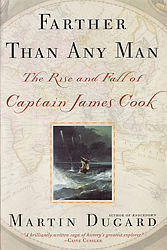
Farther Than Any Man: The Rise and Fall of Captain James Cook by Martin Dugard

Captain Cook was the epitome of sea captains. He was also an anomaly in a nation of rigid class structure. The England of eighteenth century was one in which only those of noble birth could ever hope of becoming captains in the Royal Navy. Despite the odds being heavily stacked against him and turning his back on what would have been a far more financially lucrative career as a commercial sea captain, Cook started over from scratch in the Royal Navy.

He rose through the ranks, and against all odds, in a politically volatile climate he betrayed the odds and was given command of the HMS Bark Endeavour-- his mission, to find the Antarctic continent and to map the transit of Venus across the path of the sun-- an astronimical event which happens only once every century which would allow sailors to navigate by the stars with far greater accuracy than they ever had before.

A bit of an adventure junkie himself, Martin Dugard, chose Captain Cook as his subject matter in his quest to determine what drives men of adventure to forsake the comforts of normalcy, the wife, the kids, the white picket fence, in favor of a life of exploration and adventure to lands never before seen by western eyes.

It's Dugard's adventurer's perspective which makes Farther Than Any Man an incredibly compelling read. History books often come across as dry and boring, forsaking the humanity of history for the events, the facts, the dates, the times, and places. Farther Than Any Man does not fall prey to the same fate. Much like Laurence Bergreen's account of Magellan's circumnavigation, Over the Edge of the World, Farther Than Any Man reads like a novel. A story of man's against the odds rise to power and subsequent fall from grace. It also reads as a study in the power of our ego to both build us up and subsequently tear us back down-- how that ego is at times a blessing and at other times a curse.

At a mere 304 pages the book reads at a brisk and enjoyable pace and does not get bogged down by copious footnotes or endnotes. Although it's best to keep in mind that this is a journalist's account and not a historian's account of Cook's voyages, while it reads as briskly as Bergreen's Over the Edge of the World it's not nearly as well researched and thus one of the common complaints of the book is that many of the smaller details in the book are incorrect. As a result, unlike Over the Edge of the World which is likely to become the definitive book on Magellan's circumnavigation, Farther Than Any Man will only ever be considered an enjoyable and fanciful introduction to Captain James Cook. While it makes an enjoyable companion piece when reading of Cook's life and travels it is by no means a definitive work.

Monday, March 27, 2006

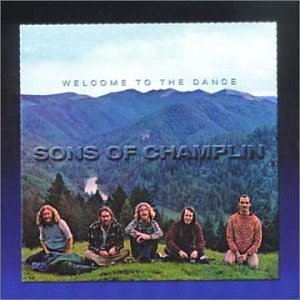
Sons of Champlin - Welcome to the Dance (1973)

After the commercial flop of their Follow Your Heart album in 1971, the Sons of Champlin took some time off, re-grouped, and re-assembled with a new rhythm section. Dave Schallock and James Preston (on bass and drums respectively) were brought in to replace Al Strong and Bill Bowen.

Incidentally the nucleus of this line-up: Bill Champlin on vocals, keyboards, and guitars, Geoff Palmer on vibes, Dave Schallock on bass, and James Preston on drums remains intact to this day with new guitarits Tal Morris and a revamped horn section.

Welcome to the Dance features the band's strongest material since their 1969 debut, Loosen Up Naturally. While the album lacks the psychadelic-infused lyrics of their earlier works in favor of a more R&B/blue-eyed soul flavored sound, Terry Haggerty was still able to infuse some of his more psychadelic flavored guitar licks into this "new" sound.

This album marks an interesting stage in this vastly underrated band's evolution. Some of these tracks even found themselves rearranged and performed by the current line-up on the band's 2005 Hip Li'l Dreams release (Swim and For Joy). The addition of Dave Schallock and Jim Preston was just the change the band had needed apparently as the band sounds much tighter and more cohesive than they had on Follow Your Heart or The Sons.

Champlin's Jimmy Smith inspired organ theatrics and Lou Rawls inspired vocals are present on all tracks. The Mark Isham/Phil Woods horn section augments a handful of the tracks and help pull together the musical stew which made up the Sons of Champlin.

This excellent album had remained out of print for years and was only released on CD in 2001. It remains available today. Whether you're just discovering the Sons of Champlin or re-discovering them for the second, third, or fourth time this is a must-have album to add to your collection. So make sure to pick up this gem while the getting is still good!

Thursday, March 23, 2006

Robert Lamm - Live at the Knitting Factory 4-23-05

In his 39 years with Chicago Robert Lamm has proven himself to be an accomplished songwriter with such classics as Beginnings, Does Anybody Really Know What Time It Is?, 25 or 6 to 4, and Saturday In the Park to name just a handful of his more recognizable songs.

Those outside Chicago's cadre of die-hard fans may not be aware that Lamm has also released a handful of solo albums including 1973's Skinny Boy, 1993's Life Is Good In My Neighbourhood, 1997's In My Head, and 2003's Subtlety and Passion not to mention a trio project he recorded with Gerry Beckley (of America) and the late Carl Wilson (of the Beach Boys) in the years leading up to Carl Wilson's death in 1997 (the trio album, Like a Brother, was released posthumously in the summer of 2000).

Despite his outside efforts, Lamm's live performances as a solo artist can be counted on a single hand, his performances on US soil can be counted with a single index finger. And this live bootleg is that index finger (or, if you prefer, middle finger).

This small and intimate live performance was given to celebrate the release of Lamm's Leap of Faith: Live in New Zealand CD. Opening for Lamm and the small band he put together was the Howland-Imboden Project a small jazz side-project of Chicago guitarist Keith Howland and drummer Tris Imboden (with special guest bassist, Jason Scheff).

To lend a certain air of familiarity to the Chicago material, Lamm's performance was augmented by a 3 piece horn section led by Chicago trumpeter, Lee Loughnane. Jason Scheff lent his voice and bass chops to Lamm for some excellent background vocals (particularly on Watching the Time Go By-- while Scheff is no Carl Wilson, he did handle the Wilson b/g vocal parts respectably).

The set focused heavily on a mix of material from Lamm's most recent solo album, Subtlety and Passion and some of Lamm's better known Chicago material (including Beginnings, Does Anybody Really Know What Time It Is, Saturday In the Park, and 25 or 6 to 4) with a small smattering of tracks from his Life Is Good In My Neighbourhood and In My Head albums.

Perhaps the biggest treats were 25 or 6 to 4 which Lamm sang lead on, possibly for the first time since he recorded the demo back in 1969. In addition to Lamm's vocals there's some fiery guitar work shared by Hank Lindenman and Chicago's own Keith Howland. The other "treat" is All the Years which not only appeared on Lamm's Life Is Good In My Neighbourhood album but also would have been the opening track on Chicago's ill-fated unreleased Stone of Sisyphus album.

The bootleg also includes what I believe were the songs Lamm performed during his sound check, another take of All the Years as well as When Will the World Be Like Lovers which was initially recorded by Chicago for Chicago 18 but ended up not making it onto the album. It did however later appear on Lamm's Life Is Good In My Neighbourhood album.

Perhaps what makes this live set so enjoyable is that it hearkens back to Chicago's much more creative period in the seventies and shows that Lamm still has the songwriting chops which made him the premier songwriter for Chicago in their seventies heyday.

(see also Michael Fortes review on the Rasputin Manifesto)

Tuesday, March 21, 2006

Chicago - XXX (2006)

This isn't your parents' Chicago, and while this album may sound it, upon looking at the calendar this is 2006, not 1992. On first listen I was underwhelmed.. perhaps even disappointed. But this album is a grower-- it may not grab you on first listen, but you'll reap the rewards on future listens.

In 1991 Chicago released Twenty-1 their last album of completely new and original material. In the years since they've released Night & Day, an album of "Chicago-ized" arrangements of Big Band classics like In the Mood and Take the "A" Train, a Christmas album, and an abysmal live album (XXVI) that was so vapid and doctored that it sounded more like a studio album with canned applause.

This album picks up where Twenty-1 left off and kicks it up a notch. If your teeth cut their first cavities on Chicago's sugary power ballads of the eighties you (and, incidentally, your dentist) will delight in the early offerings of Chicago XXX.

The album opens with the recently released single Feel. The biggest surprise about Feel is that it's a Robert Lamm sung single. The last time Chicago released a single featuring Lamm's lead vocals Terry Kath was still alive and Peter Cetera was still in the band. Lamm's voice has deepened and thickened a bit with age. And while it doesn't have quite the same raspy punch that it did on songs such as Skinny Boy it's still quite pleasant to listen to.

The King of Might Have Been is the first in a series of saccharine ballads (Caroline, Why Can't We, Love Will Come Back, and Long Lost Friend). And speaking of friends, producer Jay DeMarcus called in his pals from his band, Rascal Flatts and his country contemporary Shelly Fairchild to lend a few assists. Some other interesting assists come from Toto alum, Joseph Williams contributing background vocals to King of Might Have Been and current Toto vocalist, Bobby Kimball contributing some background vocals to Caroline.

A live version of Caroline leaked out to fans last fall and that version was nails on a blackboard-- there was plenty of room for improvement and the studio version is infinitely better than the obnoxiously cloying live version which was making the rounds prior to the album release.

Why Can't We is a duet featuring Chicago's Bill Champlin and country vocalist Shelly Fairchild (apparently Chicago has been taking notes from their expatriate bandmate Peter Cetera who has had some luck with duets since leaving Chicago). The duet is pleasant enough and it does have something that many of Chicago's popular ballads of the eighties lacked-- HORNS!

Not to be outdone by the vocal stylings of Bill Champlin and Shelly Fairchild, Jason Scheff and Gary LeVox, Jay DeMarcus, and Joe Don Rooney offer a ballad of their own with Love Will Come Back.

After the rather bland Long Lost Friend luckily, the final foray this album offers into the world of power ballads, the band seemingly grows a pair. The album picks up significantly on 90 Degrees and Freezing. It has a rather catchy (albeit repetitive) guitar riff. And unlike much of Chicago's uptempo material of the eighties, where the horns were hidden in the back of the mix, the horns are mixed a bit more in front and are much more a focal point on 90 Degrees and Freezing.

Where Were You has rather bland lyrics, but the lyrics are forgivable due to the vocals of Bill Champlin (who could sing the phone book and make it sound magical) on the verses and the soaring tenor of Jason Scheff on the choruses. The horn chart is also quite infectious and offers an excellent balance and counterpoint to the vocals.

Already Gone, Lovin' Chains, and Better all sound as if they could just as easily have been recorded by the Sons of Champlin. All 3 of the tracks are quite reminiscent of the material on SOC's 2005 Hip Li'l Dreams album, although the horn charts are distinctly Chicago. It's the vocal arrangements, and the mere presence of horns (although SOC's horn section does have a different style than Chicago's) that gives Already Gone that SOC feel. The song is augmented by a brief muted trumpet and brief flute solo (all too brief, but certainly something the band can extrapolate on if they ever add this song to their live sets).

Come to Me, Do is quickly becoming one of my favorite songs on the CD. And with the lyric "I will refresh you" I could easily hear Coca-Cola using this song in their commercials. It's easily one of Robert Lamm's better vocal contributions to Chicago in the post Peter Cetera era.

The album closes as it opens, with the song Feel, the closing version has reinserted the brass punch which was left out of the single version. Both versions have their strong points. The brass-less version, may lack the horns, but the lack of horns allows the listener to focus on Lamm's strong vocals. At the same time there's nothing about the single version that really distinguishes it-- any other band could just as easily have recorded it. The horn mix gives the song that distinctive "this is Chicago" stamp which sets this band apart from their contemporaries.

While this album lacks the musical adventurousness of Chicago's seventies material, it is far more faithful to the "Chicago sound" than Chicago's handful of late eighties and early nineties albums which often had songs which lacked horns or had horns pushed so far to the back of the mix you'd easily miss them if you weren't listening closely enough. That being said, this is easily Chicago's strongest material since the departure of Peter Cetera in 1985.

Monday, March 20, 2006

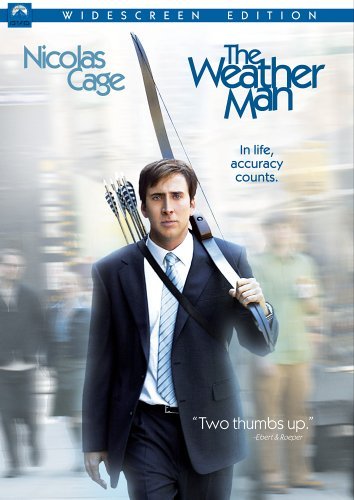
The Weather Man (2005)

This movie was overlooked in the theaters-- I believe I blinked the day it was in the theaters and it was gone before I had the chance to see it.

The film was full of the somber melancholy humor which made movies like American Beauty and About Schmidt worth watching.

David Spritz (Nicolas Cage) is not a likeable character, but because he's not likeable he's delightfully real. He's not cardboard caricature of a human, he is human and as such he resonates with an audience that may not like him, but still finds it within their hearts to sympathize with him.

Spritz a local weatherman for Chicago has a career on the rise. He's been shortlisted to become the Weather Man for a national morning show, Hello America with Bryant Gumbel. But even as his professional life is going well, his personal life is disintegrating around him. He and his wife are estranged and have seperated. His two children-- son Michael (Nicholas Hoult last seen playing Marcus in About a Boy, Hoult nails the American accent to great effect) and daughter Shelly (Gemmenne de la Peña previously seen in Erin Brockovich) won't talk to him, he can't stand the man, Russ (Michael Rispoli) whom his ex-wife, Noreen, has started dating, and his own father (played with brilliance as always, by Michael Caine) doesn't take him seriously.

The humor comes in the comedy of errors that Spritz life has turned into-- getting repeatedly pelted with various forms of fast food (Burritos, Big Gulps, Chicken McNuggets, Frosties, etc. etc.), and random strangers asking him what day the "nipper" was going to be (referring to the abhorrent catch phrase "The Spritz Nipper" which his station came up with).

Some of the more poignant moments in the film include Spritz realization that while his daughter has been nicknamed, "Camel Toe" she's oblivious to the true definition and takes it as a compliment rather than as a slur (camel toes are tough, they do all that walking in the desert), and when Spritz decides to settle a score with the pedophiliac counselor who made advances on his 15 year old son.

In the end, sometimes life is shit and you need to make the best of the lemons it gives you, and in the end Spritz comes to learn and understand that message. His life may not have turned out as he planned, but he was still able to make the best of how it turned out.

Friday, March 17, 2006

Cold Chisel - The Best of Cold Chisel (1998)

Australia has a handful of secrets they've kept close to their chest over the years. Among their better kept secrets is the pub-rock band, Cold Chisel.

The Dylan-influenced keyboardist, Don Walker, is responsible for most of Cold Chisel's lyrics. The vocal duties were often split between Walker, guitarist Ian Moss, and lead vocalist Jimmy Barnes.

Generally I try to avoid reviewing greatest hits compilations-- but for a band which is all but unknown in the United States, I can think of no better way to get acquainted with this band's great song catalog than to pick up this CD.

Some of Cold Chisel's highlights include the bluesy rockers Standing On the Outside and The Rising Sun, and Breakfast at Sweethearts. But Cold Chisel is best known, at least in Australia, for their more political material like When the War Is Over and Khe Sanh (the latter of which has gone on to become one of the most requested songs on Australian radio stations).

Khe Sanh details the general displacement of an Aussie Vietnam vet (yes, something many Americans don't realize is that Australians fought alongside the Americans and South Vietnamese in 'Nam) after returning home after the war. It's also one of the best examples of Walker's superlative songwriting. While there are a handful of Aussie-specific references in the song, it could just as easily be about the sense of displacement American vets felt returning after the war.

When the War Is Over is another shining example of Cold Chisel's musical versatility. The moving ballad was later covered, to great effect, by John Farnham during his brief tenure as the lead singer of Little River Band in the mid-eighties. While the Cold Chisel version lacks the vocal power of the LRB cover it has a rawer and even more desperate melancholy to it.

Admittedly Barnes voice isn't for everyone and for those more used to the smoother tenors and baritones of singers like American Robert Lamm or Brit Paul Rodgers, Barnes vodka soaked raspy growl will take a little bit of getting used to. Maybe the best way to describe Cold Chisel-- think Bad Company with Brian Johnson of AC/DC as the lead singer instead of Paul Rodgers and you're almost there.

The harmonies are often tight, the melodies are often catchy, and the music as a whole provides an exceptional snapshot of Australian music of the late seventies and early eighties. While they never enjoyed the success of their fellow countrymen, Little River Band or AC/DC, they are an excellent antidote for those who may have found LRB to be a little pedestrian and AC/DC a little too loud for their tastes. Cold Chisel provided a happy and more accessible medium between those two extremes.

Tuesday, March 14, 2006

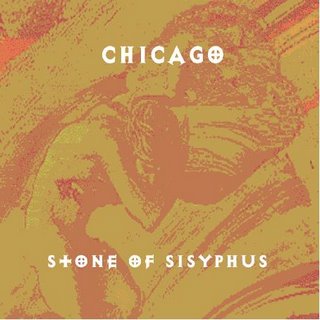
Chicago - Stone of Sisyphus (1994)

On March 22, 1994 Chicago's twenty-second album, Stone of Sisyphus was scheduled for release. The band was forgoing their usual numerical titles. This album was to be a reinvention of sorts.

March 22nd became April 12th. April 12th turned into April 26th. And then April 26th became "September." At some point in this chronology, a decision was made to shelve this album. It was never "officially" to see the light of day.

To this day, while bits and pieces, the occassional song here and there have been released as bonus tracks on various greatest hits compilations. Alternate "solo" versions of certain songs were released by various band members on outside projects. But, truth be told, this album in its original format, has it was originally intended to be released has never "officially" seen the light of day.

But fans remained undeterred. Throughout the mid and late nineties the album did find its way into the hands of the loyal fans who had not forgotten of this band. The more generous of fans rated this the best album Chicago had recorded since the untimely death of guitarist, Terry Kath, in 1978. But even those who were less complimentary went so far as to say it was the best album since the 1985 departure of bassist/vocalist Peter Cetera.

Indeed. If this album had been released on that original Tuesday in late March 1994, the album would have been incredibly well received by the legions of fans who remained disappointed after the overly saccharine Chicago 19 and the rather pedestrian Twenty-1. It had punch, it had balls, and it had that wall of brass that had been so conspicuously absent on the band's eighties albums.

The album opens with All the Years, a Robert Lamm penned tune hearkening back to the political sensibilities he'd injected into Chicago's material of the late sixties and early seventies. A horn-less version had already appeared on Lamm's 1993 solo album, Life Is Good In My Neighbourhood.

The title track is possibly one of the best surprises the band has offered in years. Written by then-guitarist, Dawayne Bailey. Stone of Sisyphus features Lamm and Bailey trading off on the lead vocals with Lamm handling the verses and Bailey handling the choruses and bridge. Bailey's unique sense of humor is present in the lyrics:

Blood sweat and tears turn faith into will

A subtle nod to Chicago's sixties horn-rock contemporaries of years past.

One of the few ballads on the album, Bigger Than Elvis, is bass player Jason Scheff's tribute to his father, Jerry, who once upon a time played bass for Elvis. It's a stirring and shining example of a son's paternal love.

Sleeping In the Middle of the Bed Again, another Lamm penned tune even, at one point, features an attempt at rap. Lamm would later include an alternate and much different arrangement of this song on his 1997 solo release, In My Head. The newer version would lack the infectious groove and the brass punch of the Chicago song.

Mah Jongg, is catchy and laidback with a gentle groove. After being conspicuously absent on the first four tracks, we finally hear Bill Champlin's gritty and soulful vocals. An alternate version of this with Brandon Fields on sax and vocalist Jason Scheff handling vocals ended up on Scheff's obscure solo album, Chauncy a few years later.

Unfortunately, try as they may, Chicago could not completely abandon the insipid or saccharine ballads that had turned their music into prom fodder just ten years earlier. Let's Take a Lifetime is everything long-time fans of this band love to hate about the worst this band has given them over their long tenure.

During the 1993 summer tour, in anticipation of this album's impending release, Chicago performed The Pull. This song has one of the better horn charts I've heard on any of their material in awhile. No longer relegated to the background with the intermittent blats to remind the fans that horns were still part of the band-- as they'd had to resort to in the eighties, the horns remain an integral part of the song from start to finish... Acting almost as another "vocalist" as they had in the band's heyday in the seventies.

While Chicago was not done giving their fans ballads, Candle For the Dark (Here With Me) is much less offensive and considerably less saccharine than Let's Take a Lifetime. It features Robert Lamm, Jason Scheff, and Bill Champlin all taking turns on lead vocals and rather than a synthesized sax solo like in Let's Take a Lifetime the horns actually play throughout the entire song-- if Chicago truly must play the occassional ballad it's nice to see that they remembered to give their horn section something to do, other than just reading the newspaper or "playing" a redundant third or fourth keyboard.

With Twenty-1 Chicago had given the executives at Warner Brothers/Reprise just what they wanted. A rather pedestrian album with a few catchy ballads to be released as singles. That album tanked so bad that only one song from it has ever been performed live. Plaid was Chicago's giant middle fingers to the executives for inflicting the damage of Twenty-1 on the masses. Incidentally, the song probably didn't help convince those same executives to release Stone of Sisyphus.

Proving that Robert Lamm isn't the only one in the band who knows how to write songs with a message, Bill Champlin contributed Cry For the Lost. In 1995 Champlin would release a considerably different version with alternate lyrics titled Proud of Our Blindness on his Through It All solo album. Both versions are interesting, but given Champlin's distinguished grammy-winning songwriting career they are, by comparison, rather forgettable.

In what is probably the most lyrically unusual song in Chicago's canon, Get On This, features hard driving guitars, soaring vocals and lyrics that detail a strange dream. One could almost say that while Robert Lamm stays up until "25 or 6 to 4" trying to write songs, Dawayne Bailey instead waits till morning and tells of the dreams had the night before. Bailey has indicated that many of the lyrics were inspired by the poetry of his then girlfriend, Felicia Parazaider. Trombonist, James Pankow added an assist and the end result is the type of song Chicago had never done before and will, more than likely, never do again.

The album closes with The Show Must Go On an autobiographical song co-penned by Bill Champlin. A very different version of this song with a completely different set of lyrics had appeared on the Fixx album, Ink, a few years before. The Fixx version was titled Falling In Love. Musically, however, it's obvious the two songs were cut from the same cloth.

This is one of the best "could've been" albums to ever sit gathering dust in the vaults. It was certainly better than Chicago's worst material and it was even better than much of the more mediocre half-assed efforts they'd spoonfed fans over the years. If in your Internet travels you stumble across a torrent of this, add it to your download queue. If you miss the Chicago of old, this album will not disappoint. While it has not aged well, it's still aged better than their ill-fated attempts at disco on Chicago XIII and has that brass punch that Chicago SHOULD have had in the eighties when they seemingly forgot they had a horn section.
Friday, March 10, 2006

Favorite One Hit Wonders

They're kind of a cultural phenomenon. They appear, seemingly out of nowhere, become ubiquitous and gradually disappear. The musicians that create them fading back to obscurity after their 15 minute timer goes off. With some bands it's due to a general mediocrity-- they had their moment of greatness then receded back to mediocrity and thus obscurity.

With other bands and musicians it's more a matter of acccesibility. They're accomplished musicians with a small but loyal cult following who put out that one song that's accessible not just to their small cult of loyal fans but to a larger mass audience... They're never able to re-create that one magic moment that allowed them to connect with people beyond their small circle of fans. Some of them have no problem with this, others are distinctly bothered by the phenomenon and try their damndest to recreate that mass appeal that ever so briefly graced their otherwise obscure musical career.

Some of my favorite one-hit wonders include:

10. Pilot - Magic
9. Moving Pictures - What About Me
8. Joey Scarbury - Believe It Or Not (theme from The Greatest American Hero)
7. . The Refreshments - Banditos
6. A Flock of Seagulls - I Ran
5. Chase - Get It On!
4. The Outfield - Your Love
3. Escape Club - Wild Wild West
2. Player - Baby Come Back

*drumroll please*

1. Level 42 - Something About You

What are some of your favorites?

Wednesday, March 08, 2006

Blue Öyster Cult - Spectres (1977)

Blue Öyster Cult will forever be associated with their 1976 hit, Don't Fear the Reaper from their Agents of Fortune album. With that album the expectations for the band changed.

Spectres, the follow-up to Agents of Fortune finds a band straddling the line between metal and pop. Existing in the shadow of its predescessor, Spectres is sometimes overlooked much to the listener's detriment.

There is plenty of finely crafted music on this album. The scorching guitars are still there, the tight harmonies are there. And from the opening Godzilla (which became a staple of BÖC's live set) the band makes a very clear statement that they're still bringing to table all of the elements which fans had come to know and love about them.

While the album as a whole is up to the standards which the band had set for themselves on Agents of Fortune, it is a bit uneven. Goin' Through the Motions while catchy is trite and shows the band veering a little too far from the metal and a little too close to the pop for this listener's liking.

On the opposite end of the spectrum is the stirring and evocative ballad-- a love song, not for a lady, not for a pet, a deceased friend or family member, but for "the night." I Love the Night, is easily one of the, if not the best "slow song" in the band's otherwise uptempo canon. It's also one of the better songs on Spectres.

This is an excellent "mood" album and can best be enjoyed in candle or black light, subtle incense, and a pair of headphones. So, what are you waiting for, turn down the lights and TURN UP THE VOLUME.

Tuesday, March 07, 2006

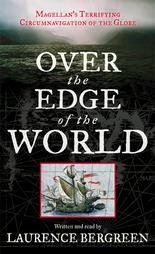
Over the Edge of the World by Laurence Bergreen

In 1519 the world was a much different place. It was believed that the waters of the "Ocean Sea" (as the Atlantic Ocean was known at the time) boiled at the equator, that magnetic rocks existed under the surface of the water which would pull the nails from the wooden ships-- sinking them almost instantly. Some people even held onto beliefs of mermaids and sea monsters. Histories had been written of fictitious rulers of foreign lands like Prester John-- stories which were taken as fact rather than fiction. These ideas were accepted, not just by the illiterate masses, but also by the learned scholars and scientists of the day.

Contrary to the teachings of many grade school textbooks, most people did know that the world was round-- even at the time of Columbus discovery in 1492. However, the cosmologists of the era (astronomers/astrologists) grossly underestimated the size of the Earth-- many by as much as fifty percent.

After many failed petitions to King Manuel of Portugal to fund a westward voyage to get to the Spice Islands in the Far East, Fernand de Magallenes-- or Ferdinand Magellan as he later came to be known renounced his King and turned to King Charles V of Spain for the financial backing he needed for his voyage. And so begins Bergreen's exceptional account of Magellan's circumnavigation.

Bergreen's writing brings Magellan to life. He's not just a name in a textbook. Where Magellan once was just a name in a textbook, Over the Edge of the World gives Magellan a personality and gives a far greater appreciation of Magellan's accomplishment.

There were so many reasons that Magellan's expedition should have been unsuccessful, and some may even argue that it was. The Armada de Moluccas left Seville with 5 ships and 250 men in 1519. Only one ship and 18 men would complete the journey in 1522. Magellan faced and quelled two mutinies. He dealt with starvation, scurvy, fierce storms, wanton lustful orgies between his men and the native women they encountered in South America and the Phillipines and for his ambition he paid with his own life.

Bergreen, however, owes a tremendous posthumous debt of gratitude to Magellan's fiercely loyal Venetian chronicler, Antonio de Pigafetta. Pigafetta kept a remarkable journal and log of the voyage. Pigafetta took it upon himself to learn the tongues of the native Patagonians, Moluccans, and other peoples the expedition encountered. So much care was put into Pigafetta's research and studying of native cultures it can even be said that he was a founding father of the science of anthropology. If not for Pigafetta's accounts Over the Edge of the World might have been a very different book had it been written at all.

The implications of Magellan's circumnavigation are farther reaching than many realize. Put to rest were the myths and erroneus tales from antiquity which had been accepted as fact for so long-- there were no magnetic rocks or boiling equatorial waters nor were there mermaids or sea monsters as once had been accepted. While Columbus had and pursued the idea first, Magellan's voyage fully realized Columbus' dream. Columbus died never truly realizing what exactly he'd accomplished. Magellan actually succeded in accomplishing what Columbus had set out to do. And in so doing he changed the way people looked at and understood the world around them.

A testament to the accomplishment-- a follow-up expedition was sent out shortly after the return of the Victoria (the only ship of the 5 to succcessfully complete the voyage, one other ship, the San Antonio was succecssfully mutinied and turned back to Spain before ever reaching the Pacific) with 5 much larger ships and 450 men-- only 1 ship and 8 men survived the follow-up expedition. It wasn't until Sir Francis Drake sailed around the world in the Golden Hind nearly 70 years later that Magellan's achievement was matched.

Monday, March 06, 2006

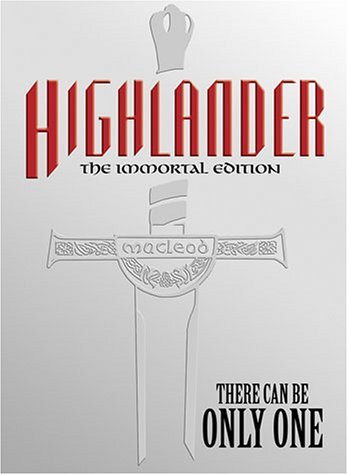
HIghlander (1986)

Before the TV series, the Saturday morning cartoon, and before the head-scratching continuity betraying sequels the world was introduced to Connor MacLeod and an immortal race, the brainchild of writer Gregory Widen.

In an era that featured a saturation of action films-- Commando, Cobra, Rambo, Predator, The Terminator-- this film stood head and shoulders above the rest of the pack (with the possible exception of James Cameron's Terminator).

Connor MacLeod (Christopher Lambert) was born in the 16th century and at some point in in his late twenties or early thirties he made the startling discovery that, wow, he's immortal. The only way in which he's able to "shuffle loose his mortal coil" is for his head to come seperated from his neck.

Being immortal wasn't all fun and games. Cast out of his home in Glennfinnan as a heretic in league with Lucifer, watching the love of his life age and die before his eyes even as he remains the same age-- Life hasn't been easy for Connor. Luckily, under the tutelage of Juan Sanchez Villalobos Ramirez (Sean Connery) Connor becomes a much more skilled swordsman than the mere amateur he had been prior to Ramirez much needed intervention.

Fast forward to the 1980s. It is the time of The Gathering when all remaining immortals must face each other in a final combat until there is only one. Standing between Connor and "The Prize" is the evil Kurgan (played with a delightful evil brilliance by Clancy Brown).

Standing in MacLeod and the Kurgan's way are the NYPD and their attractive forensic scientist with a metallurgical hobby, Brenda Wyatt (Roxanne Hart). When Wyatt discovers fragments of MacLeod's sword-- a sword that should not exist she takes a stronger interest in the mysterious antiques dealer Russell Nash (the pseudonym MacLeod has adopted).

Highlander is a brilliant movie that could easily have stood on its own. It It had the strength to stand on its own. Don't waste your time on the unnecessary sequels or the TV series, let the original product speak for itself.

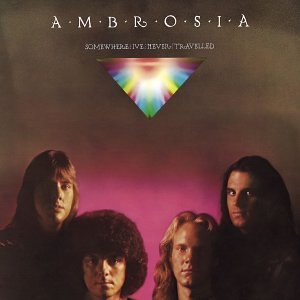
Ambrosia - Somewhere I've Never Travelled (1976)

My discovery of this classic was spurred when I got Ambrosia's prom/wedding staple How Much I Feel stuck in my head. Something about David Pack's vocals had made me hungry for more. So I checked out the the All Music Guide and Amazon.com both of which recommended Somewhere I've Never Travelled as one of Ambrosia's best. It seemed as good a place as any to begin my musical journey. Little did I realize the musical treat my ears were in for. If more of the soft rock of the late seventies and early eighties had shown this level of creativity and experimentation it might have better withstood the tests of time.

Considering I'm already a bit a fan of Alan Parsons it truly was quite a mystery as to why I hadn't yet discovered this Parsons produced album. It has the lush orchestral flourishes Parsons own Project material is known for.

The vocal harmonies of David Pack, Burleigh Drummond, Christopher North, and Joe Puerta are tight and reminiscent of the harmonies of Little River Band and Player. And while none of the tracks on this album are as memorable as their classics Holdin' On To Yesterday or How Much I Feel, the album remains consistently interesting.

One of the standout tracks, I Wanna Know features a Chicago-esque horn chart and some ELO inspired string flourishes. Despite sounding rather dated, it shows the band's breadth of creativity. Another of the exceptional tracks is Dance With Me, George which showcases a bewildering breadth of musical styles from classical to pop to jazz.

So if Ambrosia is a group to which your ears have never travelled or if you're own peripherally familiar with their music, this album marks an excellent starting point to journey into their musical catalogue.

Thursday, March 02, 2006

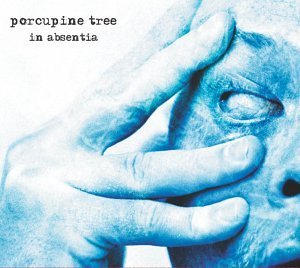
Porcupine Tree - In Absentia (2002)

Steve Wilson is a master painter and his canvas is your eardrums. In Absentia is Porcupine Tree's U.S. debut. And finally it can be said that those of us on the far side of the pond are finally being exposed to what, up to this point, had been one of England's better kept secrets.

The Yes, Pink Floyd, King Crimson and Rush influences are unmistakable-- but when you mix all of those influences with Steve Wilson's imagination you get a new style, a new sound all its own.

There's a somber and ethereal feel to this album from start to finish, even when it verges close to metal on songs like Gravity Eyelids you still get that feeling that you're not just listening to the music, you're feeling it-- because one thing this album has an abundance of is ambience.

Initially I only "stumbled upon" this musical masterpiece after being exposed to Steve Wilson's guest vocals on shutDOWN on OSI's 2003 debut album. While that album is also wholly enjoyable (another review, for another occassion), shutDOWN really stuck out as being one of the best, if not THE best track on the album. I simply had to find out more about this Steve Wilson gent-- and where did that lead?

Straight to In Absentia! This band in general and this album in particular is not one that can be pigeon-holed. Mixing the styles of their prog-rock forebears and adding a strong ambient spin will almost get you there-- but rather than waste time trying to describe them, the best way to enjoy this band, and this album is to pop on a pair of headphones, close your eyes, shut up, and completely surrender yourself to the music. You won't be disappointed.

Wednesday, March 01, 2006

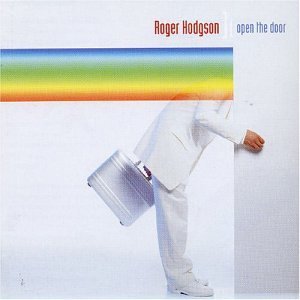
Roger Hodgson - Open the Door (2000)

Roger Hodgson's output since his departure from Supertramp can best be described as "intermittent." Thirteen years elapsed between his 2nd studio release, Hai Hai and Open the Door. But this album has been well worth the long wait.

This album is easily the most Supertramp sounding album since Famous Last Words, the last album Hodgson did with his former band before embarking on his solo career. It's even safe to say that this album sounds more like Supertramp than even Supertramp sounds without Hodgson.

Open the Door was recorded in the French countryside and the influences of Hodgson's setting and his use of French musicians in his backing band give the album a style all its own.

At times Christopher Negre's sax playing is so startlingly reminiscent of John Helliwell and the keyboarding tandem of Hodgson and Arnaud Dunoyer de Segonzac hearkens back to the chemistry that Hodgson shared with Rich Davies.

This is one of those rare albums where there's nary a bad track. It is truly seamless in its exceptional quality. But with the striking resemblance to classic Supertramp, it does leave us begging the question, When is the reunion? Hopefully this album will "open the door" on the possibility of a Supertramp reunion.

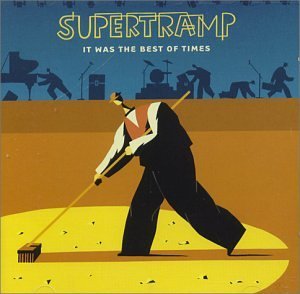
Supertramp - It Was the Best of Times (1999)

Known best for their 1979 Smash hit album, Breakfast In America, Supertramp reunited in 1997 after a long hiatus in the late eighties and early nineties.

The cornerstone of Supertramp, vocalists Rich Davies, Roger Hodgson, and sax player John Helliwell are largely responsible for Supertramp's signature sound. Unfortunately, this live set lacks the trademark falsetto of Roger Hodgson-- the voice of such Supertramp classics as The Logical Song, Take the Long Way Home, Goodbye Stranger, and Breakfast in America. In his place we find the Aussie, Mark Hart (of Crowded House). And try as he may, Hart is no Hodgson.

Still in the band are Davies, Helliwell, and drummer Bob Seibenberg. And despite the absence of Hodgson, this is still an admirable live set--doubling the size of John Helliwell's horn section is Tower of Power alum, Lee Thornburg on trumpet and trombone giving the horns on this live set a much fuller sound than was present on the classic Supertramp albums.

This is not a live set for Supertramp purists. If it's Hodgson's trademark falsetto that you seek, I recommend seeking out Supertramp's Paris album instead. Otherwise, this album is worth giving a chance. Rich Davies and company put forth a valiant and enjoyable effort. Davies voice is still in good form and the augmented horn section is a real treat.