Wednesday, April 26, 2006

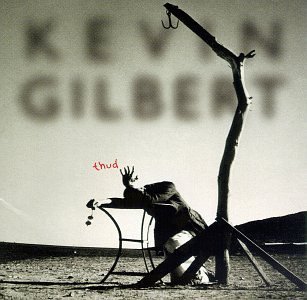
Kevin Gilbert - Thud (1995)

Sometimes genius comes and goes without much notice or fanfare. Such is the case with the late Kevin Gilbert.

Gilbert was an exceptional songwriter, singer, and producer. While his talents were recognized by many of his musical peers and his small cadre of fervently loyal fans, his music and talents remained and continue to remain largely ignored by the general population.

Thud showcases Gilbert's satirical bite, his talents as a producer, multi-instrumentalist, and vocalist. But what was Gilbert's strongest suit was his lyrical skills, his masterful way with words and the way his pained vocals delivered his clever lyrics.

Much like the Toy Matinee album he'd done a few years before with Patrick Leonard, there's not a weak track on the album, all songs showing evidence of his troubled musical genius.

Waiting excellently dispels the myth of the promise of better days to come. In Gilbert's vocal delivery you hear his skepticism that the better times he's waiting for will ever actually arrive. If anything you hear a certainty of future disappointments that the longer he waits for things the less apt they are to happen.

Tea For One captures the pain of loneliness and unrequited love with a stark emotional poignance that allows the listener to feel the pain of Duncan, the song's protagonist, and make an emotional connection with the music that is lacking in more conventional pop songs. Similarly, Tears of Audrey, is a song of putting up walls to keep love out. It gives the fear of pain of broken heart a name-- throughout the song the listener wants the tears of Audrey to fall, to break down the emotional walls many of us are guilty of putting up.

All of us have a dark side, a Shadow Self, we keep at bay-- a darker evil version of ourselves that feeds off of our negativity and grows in strength the more we give into that negativity. Shadow Self is a message from that dark side we all have, acting as a warning to help prevent us from letting our Shadow Self take us over.

But of all the tracks on Thud the one that is almost spooky in its clairvoyance-- it's lyrics even more true today than they were at the time of the albums release is Goodness Gracious:

Goodness Gracious
I'm not listening anymore
Cause the spooks are in the White House
and they've justified a war
So wake me when they notify we're gonna fight some more

Who knows what music Gilbert would have created were he still alive today? What stories would he gone on to tell? What messages would he be delivering us through his darkly emotional lyrics? Unfortunately the world will never find out. But at least he left us with a few glimpses into his musical genius. Thud is an overlooked album that is worthy of not just a first glance, but also of several subsequent glances.

If you've missed out on Gilbert's work in the past, it's not going anywhere and it's never too late to sit up and take notice.

Tuesday, April 25, 2006

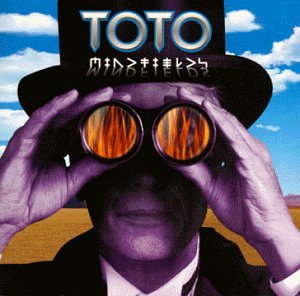
Toto - Mindfields (1999)

In 1998 after a 14 year absence, Bobby Kimball was asked to re-join Toto. With Mindfields Toto marked his return to the fold. Much to the disappointment of their US fans, Mindfields was released initially in Japan and Europe in March 1999 but was not released in the United States until the fall of 1999. In addition to its delayed US release was a rather different tracklisting than had existed on the album's initial release. Being as impatient as I was, I ended up spending over $30 on the original Japanese release.

Besides the obvious, the most noticeable change between Mindfields and 1995's Tambu is that the band sounds a bit more self-assured. They'd dealt with the loss of Jeff Porcaro and were ready to move on.

Mindfields, first and foremost is a pre-Renaissance (the Renaissance would not actually occur until 2006's Falling In Between). The ingredients had started to come together for the band's creative "rebirth" (making this album the band's "re-conception"). And while many of the tracks are incredible (Spanish Steps of Rome, Better World (Pts. 1, 2, & 3), Last Love, and No Love), there are a few missteps-- the band trying to find their new footing after the return of Kimball. And even their missteps-- High Price of Hate, Selfish, and Caught In the Balance-- to name a few, are admirable attempts at genres the band had not previously attempted. While not all of these musical experiments worked, the very experimentalist nature which spawned them was the epitome of the principles the band was founded on and named after (en Toto, Latin for "in total" or "all-encompassing" Toto was created to be a band that would be all-encompassing of all the various different musical styles-- it was not named after the Italian commode/urinal company, the dog from the Wizard of Oz, or a bastardization of the "real" last name of any of the band members as has been reported over the years as the sources of the band's name).

The different musical directions the various different songs take gives the album a bit more "schitzophrenic" feel than its much more cohesive follow-ups (2002's Through the Looking Glass covers CD and the aforementioned Falling In Between). This schitzophrenic nature makes Mindfields sound more like a loose connection of unrelated songs than an actual album with any cohesive lyrical or musical theme.

The album is still worth the price of admission, based on the strengths of its better songs and the musicianship that is evident throughout the album as a whole. But in the grand scope of Toto's history and discography this album will, at best, be remembered as an awkward stage in the band's evolution.

Friday, April 21, 2006

Ambrosia - Life Beyond LA (1978)

While not as strong as their first two albums, Life Beyond LA still bears many of the prog-rock elements and flourishes that their fans had come to know and expect from them.

At the same time the album is superior to its predescessors in that it is far more successful in its marriage of prog-rock with pop elements. While their first 2 albums were rather firmly rooted in progressive rock there's more of a pop influence on this outing. And despite the absence of producer Alan Parsons who had helmed their first two albums, this album still bears the trademark symphonic lushness that the first two albums also had.

The songs tread upon a common melancholy ambience. It strikes down the positive illusions of life in LA and focuses more heavily on the negative sides of the city of angels. There are strong jazz influences throughout the entire album, but nowhere are they more evident than on Apothecary, essentially a love song from a junkie to his "apothecary," which has some beautiful jazz guitar flourishes by David Pack.

One of the strongest tracks and a bit of a commercial breakthrough for them, How Much I Feel, features the stellar vocals of the multi-talented, multi-instrumentalist, David Pack. While it is a love song to "the one that got away" that might come across as trite if sung by a lesser musician, Pack manages to insert enough passion into his vocal delivery to give the song conviction, not to mention a bit of soul. Unfortunately, the success of this song was a double-edged sword leading the band to all but abandon their prog-rock roots for a more pop-friendly sound.

This album is a portrait of a band in transition, chasing a new musical direction-- at its best it's an excellent symbiosis of prog-rock and pop, at its worst it's a significant departure from the direction Ambrosia travelled on their first 2 albums.

Tuesday, April 18, 2006

And You Know You Should Be Glad by Bob Greene

For years Bob Greene was a regular columnist for the Chicago Tribune his columns evoked a common Midwestern everyman feel to them. He wrote about the things people cared about and he wrote those things from the heart.

And You Know You Should Be Glad is a natural extension of his columns-- the biography of a friendship, Greene's lifelong friendship with Jack Roth. But in Greene's friendship with Jack we're given a journey of exploration into our own friendships. We as readers can understand the emotional journey of the friendship as most of us have had or still have that friend. The one with whom you don't need to tell how you feel because he already knows. That friend who instinctively knows when to call you without being asked and that friend whom you would drop everything for if you were ever called upon to do so.

Greene was asked to do just that when called by another in his fabulous fivesome of Allen, Chuck, Dan, and Jack (and of course Bob Greene himself):

"Give me a call," the voice continued. "It's about Jack. He's a little ill, and I wanted to explain it to you." Chuck had never couched a sentence in words like that in our lives.

With a simple phone call the emotional journey begins. As someone who believes life is about the journey rather than the destination. This book exemplifies that very spirit. The book is a journey. In the end, we all know the destination. But Greene does an excellent job of making this book not so much about that destination but about the journey of friendship he took with Allen, Chuck, Dan, and Jack.

We feel those bonds of friendship with his friends because many of us have felt those very same bonds with friends of our own. We come to know and enjoy the inside jokes and the "you had to be there" style of stories of the adventures he and his friends went on together in this long journey called life.

In the end this book isn't just the biography of a friendship, it's a tribute to good friendships everywhere. It works so well because, much like with Greene's old Tribune columns, it strikes a chord with all of us.

Monday, April 17, 2006

OSI - Free (2006)

In 2003 OSI (Office of Strategic Influence) released their self-titled debut CD. Combining the songwriting, keyboarding, and vocals of former Dream Theater keyboardist Kevin Moore with the guitar chops and songwriting skills of Fates Warning's Jim Matheos and the impeccable time-keeping of Dream Theater drummer Mike Portnoy this prog-rock supergroup created a new sound all their own. A kind of techno-metal combining all the best elements of all 3 of the musicians involved.

Oftentimes when a debut is succesful a band will wrest on the laurels of the success of that debut with their sophomore release-- every once in a great while instead of wresting on those laurels a band will evolve and extroplate upon the music of their debut for their follow-up. OSI falls into the latter category as they've evolved and improved upon what had been a thoroughly enjoyable debut.

Kevin Moore's vocals sound a bit more self-assured than they had on the debut and while Moore doesn't have an exceptional voice-- he does have a voice which fits perfectly within the style of music this group performs.

But the strength isn't in the individual pieces which make up this band it's in the sum of the whole. During his tenure in Dream Theater, Moore's lyrics were often the best of any of the songwriters in the band and while Dream Theater has continued to evolve musically since his departure in 1994, lyrically they've never quite matched the punch they had when Moore was in the band. Add to the mix Fates Warning's Jim Matheos and Moore's former bandmate, Mike Portnoy and the musical chemistry is quite unmistakable.

Musically some of the songs bear a passing resemblance to the material on Fates Warning's Disconnected album. Which can be attributed not only to Matheos influence but also to Kevin Moore's occassional guest spots on keyboard with Fates Warning. Moore's keyboard work is quite melodic and the chemistry between Moore's keyboard and Matheos guitar work is some of the best I've heard since the Geoffrey Downes/Steve Howe chemistry on Yes Drama album and on the first couple of Asia albums.

Much like on the debut, the last song on Free, Our Town, is a dramatic shift in gears from a techno-metal vibe to a more stripped down acoustic song. The addition of banjo and pedal steel makes for quite a stark contrast to the crunchy guitars and electronic flourishes which grace the rest of the album.

Given how busy both Matheos and Portnoy are with their respective bands, I won't hold my breath for an OSI tour, but if one were to ever happen I'd be one of the first in line for tickets.

Friday, April 14, 2006

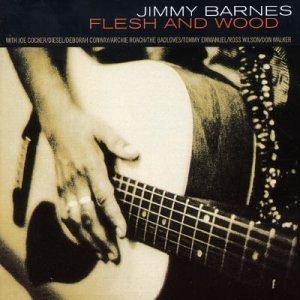
Jimmy Barnes - Flesh & Wood (1994)

After his Soul Deep collection of covers of the soul songs which had inspired his career as a singer, Jimmy Barnes decided to take his music in yet another direction with 1994's Flesh and Wood. Comprised of a mixture of covers and original materials this album perhaps allows Barnes to show his vocal capabilities better than any of his previous albums ever had.
Not having to compete with amplified instruments it's much easier to hear and appreciate Barnes gritty soulful vocals. Whether it's Barnes own It Will Be Alright or his emotive cover of The Band's classic The Weight. These stripped down acoustic arrangements show the best of what Barnes was and is capable of.

When you toss in a duet with Joe Cocker (Guilty) and some guest spots with Aussie rock luminaries like Diesel, Tommy Emmanuel, and Archie Roach. The mix ends up being an even more well-rounded and a delightful treat.

This is the kind of CD you play when you're drinking alone with friends like Johnny Walker, Jim Beam, Jack Daniels, Jose Cuervo, or Captain Morgan. Dim the lights, take a sip of your poison of choice and savor the cocktail of music and alcohol on its slow burn through your insides.

From start to finish its got that hot humid rainy night, chirping cricket, bottle of single malt Scotch feel to it.

The performances are relaxed but not restrained and completely unpretentious and the vocals are some of Barnes' strongest. The only truly weak moment is his cover of Elvis Presley's Love Me Tender which neither adds nor takes away anything from the original performance making it an unoffensive, if not bland, cover.

Highlights include Barnes cover of the Cold Chisel classic Flame Trees, Ride the Night Away, and his stirring duet with Deborah Conway-- Let It Go.

Thursday, April 13, 2006

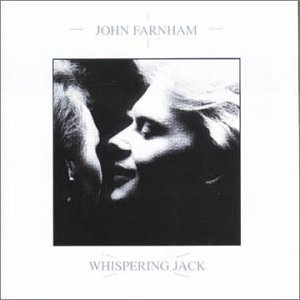
John Farnham - Whispering Jack (1986)

After a brief stint as the lead vocalist of Little River Band, a union that worked far better in theory and on paper than it did in practice, John Farnham resumed his solo career with what would become the first album in Australia by an Australian musician to sell over 1 million copies. Much to the detriment of the US population this album remains largely unheard outside of Australia.

Whispering Jack is everything that was good about eighties pop. It was catchy, it was fun, and it got into your bloodstream. As with most albums, there are indeed some songs that are better than others, but none of the material on this album is weak. Even the “weak” tracks on this album are stronger than some of the better tracks by other artists of this era.

While 2 of the songs on the album Pressure Down and A Touch of Paradise were Australian hits. The hallmark of this album, the one song that transcended the term “hit” and became not just a hit song but an Australian anthem is You’re the Voice which is easily the strongest song on the album. Farnham’s exceptional voice was the perfect vehicle to spread the message of the song across the entire nation of Australia.

Farnham’s voice has a depth and presence that sets it apart, and maybe that’s why his stint in Little River Band was so short-lived and didn’t translate to the success many believed it should have. While Glenn Shorrock’s voice blended into the tapestry of vocalists in the band, Farnham’s stood apart. And part of what made LRB’s music work was the tightness of their vocals and vocal harmonies and having someone with a voice as distinct as Farnham’s was bound to upset that vocal balance.

Much of the material on those Farnham-led Little River Band albums was just as strong as the material on Whispering Jack, but to many fans it just wasn’t “Little River Band”—it was John Farnham with Little River Band—the balance had been upset. Part of the reason of the success of this album can be attributed to a restoration of that balance. Farnham was back on his own, and Glenn Shorrock returned to Little River Band and both once again sounded as they should.

Rife with synthesizers and drum machines that were so inescapable in the eighties, the album does sound somewhat dated. Despite sounding dated the album remains eminently enjoyable.

Tuesday, April 11, 2006

Toto - Tambu (1995)

The first thing that jumps out about Tambu is the rather original design of the CD sleeve, giving off the appearance of a classic dime store pulp novel. But it's not just the design of the CD sleeve that makes the album pop. This album marks Toto's first studio effort following the death of founding member and drummer Jeff Porcaro.

Perhaps what is most admirable about Jeff's "replacement" is that Toto didn't try to replace Jeff. They chose the well-established, Simon Phillips, a drummer with a style and sound all his own and struck out in a new musical direction.

Listening to 1992's Kingdom of Desire and Tambu back to back one can scarcely believe these two albums are products of the same band, so disparate are they in style, tone, production, and overall sound. Where Kingdom of Desire was hard driving, gritty, and raw hard rock Tambu is a more polished and melancholy affair. It's a band saying goodbye and seeking closure after the death of Porcaro-- a closure they needed to find before being able to continue in a different musical direction.

Toto has never been known for their lyrics, where in the past their lyrics were light fluff, Tambu is probably the band's strongest album to date (at least in the lyrical sense). There's an emotional honesty to the lyrics that many of their previous albums were lacking-- the lyrics often getting sacrificed at the expense of the band's musicianship and composition-- an afterthought. But this time around the lyrics weave seamlessly with David Paich's piano chops, Simon Phillips soothing beats and rhythms, and Steve Lukather's gravelly voice which had become a mainstay on the previous album.

There's a recurring theme of time-- time lost, time running out, time that's passed, and trying to hold on to time throughout the album. And while many of the songs come across as romantic love songs, that romantic love is merely a metaphor for the love this band felt for Jeff Porcaro. There's also a natural progression to the songs as you hear the band dealing with crushing grief and a desire to move on with their lives and careers. The album does end on the very promising The Road Goes On which has become a staple of Toto's live shows in recent years:

"Now I see it all through different eyes
Where I'm going, where I've gone
All I know-- I'm still surprised
That the road goes on and on"

While this isn't Toto's best it is certainly one of their better albums, it shows a band in transition, in flux, and generally maturing and is certainly worth a listen.