Thursday, August 31, 2006

Sons of Champlin - Loving Is Why (1977)

While not as well known as their horn band contemporaries-- Chicago, Blood Sweat & Tears, or Tower of Power. The Sons of Champlin had developed a respectable cult following in the San Francisco Bay Area playing Bill Graham's Fillmore and Avalon Ballrooms in the late 60s and early 70s (in fact they performed at the final concert at Graham's Fillmore West in 1971).

Starting out as "The Opposite Six", the band went through a myriad of name changes including: The Nu Boogaloo Express, The Rhythm Dukes, the Masterbeats (a name which scared concert promoters away), and even Yogi Phlegm but they always seemed to come back to The Sons of Champlin. A name that Bill Champlin's bandmates had come up with due to Bill's status as a teenage father in the late sixties.

The band started out on the Capitol Record label where they released three albums. The band split up from 1971 to 1973 before reforming with a new bass player, drummer, and horn section. Only vocalist Bill Champlin, guitarist Terry Haggerty, and vibes/keyboard player Geoff Palmer remained from the original line-up.

In 1977 the band released what would be their final album before a long hiatus. You wouldn't know it from listening to Loving Is Why, as the band sounds as tight as it ever had. Champlin's vocals are at his gritty, soulful, James Brown's stolen DNA best. The horns are tight, the rhythm section (James Preston and Dave Schallock) were firing on all cylinders.

Songs like Saved By the Grace of Your Love, Big Boss Man, and Time Will Bring You Love are as good as anything the band had ever released before. They were still a band that was, or at least seemed to be, firing on all cylinders. Essentially they sounded like Chicago might have still sounded if they still had a pair. Their music is brassy, bluesy, and has a punch that should have, but for whatever reasons did not, propel them into the spotlight.

Shortly after the album's release, Bill Champlin left to pursue a solo career. He released two albums Single (1978) and Runaway (1981) before being invited to join Chicago by their then drummer, Danny Seraphine.

It's a pity that to this day this album is yet to be released on CD. The LP can be found in used record stores, on eBay, or Gemm.com, but for the time being one will have to wait for a CD release.

Related Links
Sons of Champlin Biography (from the AllMusicGuide)
Sons of Champlin Loosen Up Naturally (1969) (Review Revue)
Sons of Champlin Welcome to the Dance (1973) (Review Revue)
Sons of Champlin Hip Li'l Dreams (2005) (Review Revue)
Bill Champlin (Review Revue)

Wednesday, August 30, 2006

The Electric Prunes - I Had Too Much To Dream (Last Night) (1967)

In the late sixties there was an abundance of accomplished garage bands performing a fiery, fast-paced, rock and roll. They were essentially laying down the foundation for what, in the seventies and eighties, would become punk.

History and circumstances were kind to some of these groups, while others unfortunately fell through the cracks.

One of the bands that, due to internal strife, fell through those cracks was the Electric Prunes. While they scored a couple of hits with I Had Too Much To Dream (Last Night) and Get Me To the World on Time, much to the public's detriment their album cuts went largely ignored.

While today much of their music does sound a bit dated, heavy on the organs trippy drug influenced lyrics-- but on the whole this music is merely a product of the era in which it was recorded.

Whether it's the infectious bass of Are You Lovin Me More (But Enjoying it Less), or the catchy Eastern-European sounding Sold to the Highest Bidder with a catchy upbeat tempo and high pitched notes there's a sense of musical adventurousness to their material that betrays the brevity of their musical influence.

Had the original line-up not imploded shortly after the release of this album this is a group that could have gone on to have had an influence comparable to the likes of groups like the Rolling Stones or Pink Floyd (it's not entirely a stretch considering much of the material has a similar style and feel to Syd Barrett era Pink Floyd).

Related Articles
I Had Too Much To Dream (Last Night) and Get Me To the World On Time (live on The Hit Show)


The Electric Prunes (AMG Overview)
The Electric Prunes (Wikipedia entry)
I Had Too Much To Dream (Last Night) (AMG Album Review)
I Had Too Much To Dream (Last Night) (Wikipedia entry)


Monday, August 28, 2006

Chicago - Live at the Fillmore August 1969

Before the hits, before Peter Cetera made his name nearly synonymous with "prom ballad"-- before Chicago was even "Chicago" they were the Chicago Transit Authority.

After relocating from the Windy City to LA and becoming the house band at the Whiskey, the CTA started making a name for themselves opening for and touring with the likes of Jimi Hendrix, Janis Joplin, and a handful of other big names of the era.

In August 1969 someone had the foresight to lay down tape and capture directly from the soundboard, one of the CTA's shows at Bill Graham's famed Fillmore West.*

This is one of the earliest known soundboard live recordings of this band-- a band that was still young & hungry. They were still very much a hard rock band with horns and not the pop band they would later become.

The mix is imperfect, as are the performances but that's what makes them so enjoyable. Chicago's debut album had a raw energy to it that producer Jimmy Guercio would seemingly "polish" out of them on their later recordings.

This live bootleg captures that rawness and energy. On the guitar heavy tracks like Poem 58, Liberation, and It Better End Soon Terry Kath's guitar is pushed to the front of the mix. On songs like Does Anybody Really Know What Time It Is? Robert Lamm and Peter Cetera's vocals are pushed closer to the front of the mix.

If anything, when compared to live bootlegs from recent years, this set speaks volumes of the change in direction this band has taken over the years. Chicago Transit Authority in 1969 was a band that had something to say and wanted to make sure their message was heard whether it was the anti-Vietnam message of It Better End Soon or the historically significant Someday which chronicled the riots at the 1968 Democratic National Convention. In this music can be heard a band that was trying to make a difference and still had the youthful idealism to believe they could effect that change or at least play some part in changing the world... The Chicago of 2006 is a band wresting on their laurels sleepwalking through sets weighed down by insipid saccharine ballads and their various hits over the years.

If Chicago were remembered for what they once were-- the band that played a kick ass ballsy concert at the Fillmore back in 1969 and not the tired old nostalgia act they've become, they'd surely be in the Rock & Roll Hall of Fame today. Instead after fourteen years of elgibility they've not even so much as been nominated for a place in the famed hall.

*the image is the handbill from the exact concert this bootleg was recorded at (thanks Google)

Related Links
mp3s
Poem 58 (15MB) (temporary link)
It Better End Soon (12MB) (temporary link)
25 or 6 to 4 (10MB) (temporary link)

Articles and Reviews
Chicago Transit Authority (wikipedia)
Chicago Transit Authority (AllMusicGuide)
Chicago Transit Authority (Review Revue #1)
Chicago Transit Authority "Multiple Aurgasms" (Review Revue #2)
Chicago II (Wikipedia)
Chicago II (AllMusicGuide)
Chicago II (Review Revue)

Thursday, August 24, 2006

Spirit - The Family That Plays Together (1968)

Admittedly, history has not been as kind to Spirit as it has to many of their contemporaries. The fiery guitar work and Hendrix-esque vocals of Randy California mixed with jazzy instrumentals and tight vocal harmonies made for some exceptional and thoroughly enjoyable music.

The album opens with Spirit's only Top 30 hit, the California penned, I've Got a Line On You. Giving up his trademark multi-tracked guitars, Randy California instead plays it simple with an infectious and catchy guitar solo-- proving to his fans as much as to himself that sometimes less truly is more.

The hopeful, It Shall Be, follows. In an era where America's youth were being sent to Vietnam, California wanted to spread a little sunshine instead-- a little hope for the future in a present that was quite scary for many.

Another highlight to this exceptional album of stand-out tracks is Darlin' If, featuring beautifully tight vocal harmonies in a style of California folk-rock that would later be made popular by musicians like Jackson Browne. The guitar solo is poignant and beautiful and the song is gorgeously emotive.

There are no weak tracks on this exceptional album, it's just a collection of great music from a much different era from a band that, unfortunately, has largely been forgotten in the pages of musical history.

Related reading
Randy California - Kaptain Kopter and the (Fabulous) Twirly Birds (1972) review
Spirit biography from the All Music Guide
Randy California biography from Wikipedia
Randy California biography from the All Music Guide
Jay Ferguson biography from the All Music Guide

Wednesday, August 23, 2006

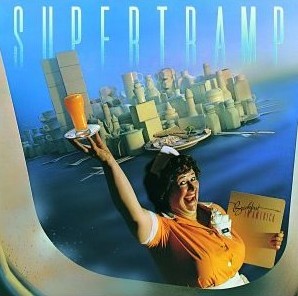
Supertramp - Breakfast in America (1979)

Despite initially getting off to a rocky start with two albums that were essentially ignored by the public in the early seventies (their debut and it's immediate follow-up, Indelibly Stamped), Supertramp more than made up for it with 1974's Crime of the Century and with that album the band also seemed to find it's footing-- putting out a series of exceptional albums; Crisis?! What Crisis?, Even In the Quietest Moments, and then this-- their smash hit, the pinnacle of their success, Breakfast in America.

While this isn't their best album, it is their most accessible and radio friendly. Spawning the hits Goodbye Stranger, Breakfast in America, The Logical Song, and Take the Long Way Home radio and the general public could not get enough of this gem.

And listening to the album start to finish, it's not difficult to understand why. The album is infectious, it grabs hold of the listener on Gone Hollywood and doesn't let go until Child of Vision.

Despite this not being their best album, it is certainly still one of their better, in the succession of albums they released between 1974 and Roger Hodgson's departure in 1983. The vocal chemistry between Hodgson and Davies is the best it had been since Crisis?! What Crisis? The songs are crisp and exceptionally executed and capture the overall dour melancholia that was so pervasive in that era.

This album could not be duplicated today, it's a capsule of a place in history and perhaps better than just about any other album from that era, Breakfast in America is a snapshot of the overall mood of the western world at the time of the album's recording. What was not captured in the album's lyrics was certainly captured in the music and the overall performance of the album as a whole.

Related Links
Roger Hodgson - Open the Door (2000) review
Supertramp - Crisis?! What Crisis? (1975) review
Supertramp - It Was the Best of Times (1999) review

Goodbye Stranger

Breakfast in America

The Logical Song

Take the Long Way Home


Tuesday, August 22, 2006

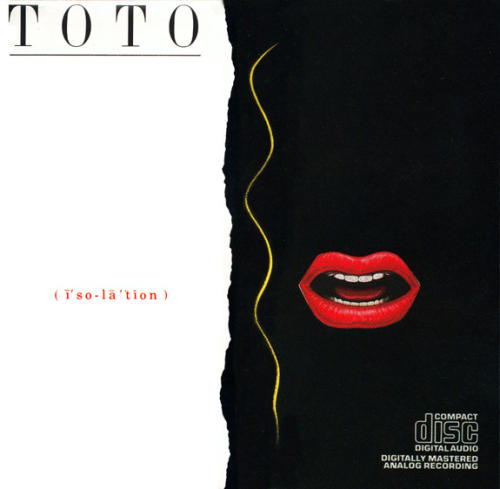
Toto - Isolation (1985)

In 1982 Toto won album of the year for IV and seemingly swept the grammies. Coming off the success of that album, the expectations were high for these veteran studio cats.

Unfortunately, difficulties would strike the band shortly after the release of IV. After nearly completing Isolation, lead vocalist Bobby Kimball was fired for drug abuse issues (incidentally, Kimball was invited back into the band in 1998).

The search for a new lead singer was not an easy one. Toto's first choice for a replacement was Mr. Mister's Richard Page. Page turned them down preferring to record and perform music he'd written rather as opposed to having to do Kimball-karaoke.

Drummer Jeff Porcaro received a tape of Louisianna bayou rock band, LeRoux and was quite impressed with their tweeter-frying lead vocalist, Fergie Frederiksen. So, after only one album with LeRoux, Frederiksen packed up and headed for Los Angeles to front Toto.

Frederiksen's vocal stamina and acrobatics made for an interesting fit in Toto. And the change in direction they took with Frederiksen in the band was not well received by the fans that had embraced their efforts on Toto IV.

The band was a bit harder edged, the songs were a bit more uptempo, with only one ballad in the mix-- the melancholic Steve Lukather penned and sung How Does It Feel. The rest of the musical offerings of this album were sung by either Fergie Frederiksen, David Paich, or both. The addition of Frederiksen was actually an excellent mix for background vocals as his tweeter-frying tenor gave the band a bit more balance in their upper registers. Frederiksen's background vocals are probably most noticeable on the minor hit Stranger In Town. But Fergie seems to steal the show on songs like Endless and Angel Don't Cry which sound as though they're tailor made to his vocal register.

After having heard live bootlegs from this era-- Toto was never better live than with Fergie in the band. He was consistently good from night to night and really took some of the Kimball classics like Hold the Line and English Eyes and made those songs his own. Sadly, for Fergie at least, this incarnation of the band was not to last. He was given his walking papers after the 1985 tour.

Today this album sounds a bit dated, but it can still be appreciated for its musicianship, Frederiksen's vocals, and its novelty-- this is one of only 2 Toto albums that feature all 3 of the Porcaro brothers (Jeff on drums, Mike on bass, and Steve on keys) as full members of the band.

Related links:
Toto - Hydra (1978) review
Toto - The Seventh One (1988) review
Toto - Kingdom of Desire (1992) review
Toto - Tambu (1995) review
Toto - Mindfields (1999) review
Toto - Falling in Between (2006) review
Trillion s/t (1978) review (Fergie's 1978 hard rock band with keyboardist/producer Patrick Leonard)

Stranger In Town music video


How Does It Feel music video

Wednesday, August 16, 2006

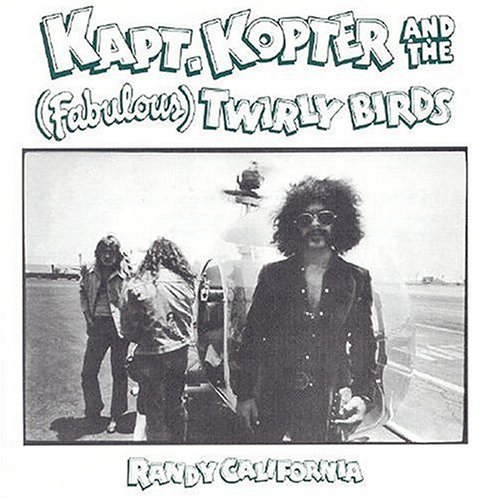
Randy California - Kaptain Kopter and the (Fabulous) Twirly Birds (1972)

In 1966, Jimi Hendrix was the front man in a group called Jimmy James and The Blue Flames. In that group were a couple of guys named Randy-- Randy Wolfe from California and the other Randy from Texas. To distinguish the two of them Hendrix dubbed them Randy California and Randy Texas respectively.

When Hendrix was invited to England, Randy's parents didn't allow him to go with, and thus Randy California missed out on what became The Jimi Hendrix Experience.

Most of us know what happened to Jimi... And listening to the music of singer, songwriter, guitarist Randy California, it's quite obvious that in his short time working with Hendrix Randy was heavily influenced by Jimi.

In 1967 California started the band Spirit which charted 10 albums between 1967 and 1976. In 1971 Randy left Spirit to pursue a solo career (although he would return to various incarnations of the band throughout the rest of his life).

Kaptain Kopter and the (Fabulous) Twirly Birds was Randy's first stab at a solo career. And while the album shows Randy's talents on guitar and even on Hendrix-esque vocals, it's quite evident that he's not much of a frontman. Where his work with Spirit was more jazz-influenced, his solo work shows more of a hard rock/acid rock edge and thus shows much more prominently the influence Hendrix had on Randy several years before.

Kaptain Kopter is an exceptional album and Randy shines throughout and even does an impressive cover of the Beatles Day Tripper. From start to finish the album is an interesting encapsulation of where acid rock was in the early seventies and remains one of the great overlooked/obscure albums of that decade.

Monday, August 14, 2006

Almost Famous - The Bootleg Cut (2000)

In 2000, Cameron Crowe released this brilliant and largely autobiographical film about a young budding rock journalist who gets to live every music fan's dream of going on tour with one of his favorite bands, the fictitious Stillwater.

Stillwater is a fictitious representation of many actual experiences Crowe had as a young rock journalist. Many of the experiences William Miller had with Stillwater in the film are experiences Crowe had with an assortment of different groups from The Allman Brothers Band to Led Zeppelin to Lynnyrd Skynnyrd (to name but a few).

What makes this movie so brilliant isn't that it's based on fact (although, admittedly that does help), it's that the performances are spot on. There are scenes where Kate Hudson says more with her eyes than most actresses say in all the lines they deliver over the course of their career.

There's a certain likability of William Miller and of Penny Lane and the chemistry that Kate Hudson, Billy Crudup, and Patrick Fugit share really pulls the whole film together. In this director's cut, remains over 30 minutes of extra footage that did not make it into the original theatrical release.

While some of the scenes that ended up being deleted do feel like filler material, there are also several extra scenes or extended scenes which really add a lot to the film as a whole. Probably the strongest of the extra scenes features Crudup, Hudson, and an ice machine. Russell (Crudup) has a glass and every time he gives Penny Lane (Hudson) a compliment he puts another cube of ice in his glass until finally he says, "I'd keep going but my glass is full." To which Hudson replies simply and perfectly, "Damn."

The performances are solid, all around Billy Crudup, Kate Hudson, Patrick Fugit, and Frances McDormand is exceptional as William's worried mother. Sometimes there's a film where one or two actresses can hold the viewer's attention and the rest seem like filler, but all of these actors give such exceptional performances that they command the viewer's attention in each and every one of their scenes.

There are few movies out there that are good enough to garner repeat viewings, but this one never gets old. It captures the heart and imagination of the viewer and for the duration of the film, it feels ever so perfectly like a home away from home.

Friday, August 11, 2006

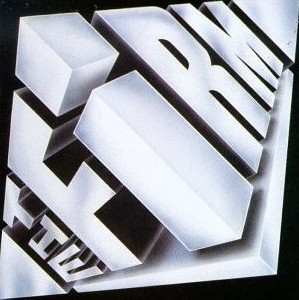
The Firm (1985)

One would think that the combination of Bad Company's Paul Rodgers and Led Zeppelin's Jimmy Page would make for some pretty damn good music. And one would be at least partially correct.

When The Firm was on, they were firing on all cylinders, Page's guitar making an excellent complement to Rodgers vocals, Chris Slade's drumming, and Tony Franklin's bass playing.

However their music was also somewhat uneven. There are a handful of tracks on here that feature some of Paul Rodgers best vocals since Bad Company's Straight Shooter album, but on some of those tracks one is left wondering where is Jimmy Page? Reading the newspaper perhaps? Doing the NY Times crossword puzzle? When you have a guitarist the calibre of Jimmy Page in your band, isn't it best to take full advantage of his talents?

Instead, much of this album comes across as "Paul Rodgers with special guests Jimmy Page, Chris Slade, and Tony Franklin" not as one cohesive band.

That being said, being a fan of the vocal prowess of Paul Rodgers, this is some of his best work and the tracks where Page does shine-- tracks like Radioactive, Make or Break, Midnight Moonlight, Cadillac, and Free to Live-- the whole band shines. It's these tracks that make the album well worth it and show the potential this band had, had they consistently performed as a group, instead of playing like Paul Rodgers backing band.

And while Rodgers sounds pretty damn good covering The Righteous Brothers, You've Lost that Lovin Feelin' one can't help but notice how incredibly out of place the song sounds in the context of the album as a whole.

In short it's a valiant effort, well worth it for its strong tracks, but it just falls short. And any band that has Jimmy Page as a member-- well most would expect that band to actually make far more and far better use of his talents than The Firm did.

Related links
Queen with Paul Rodgers Return of the Champions (2005)
Radioactive


Satisfaction Guaranteed


Tuesday, August 01, 2006

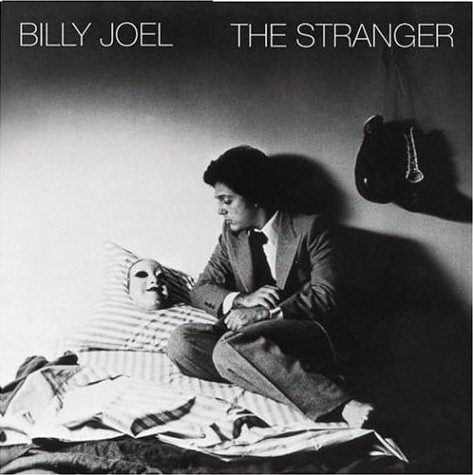
Billy Joel - The Stranger (1977)

If you were alive at the tail end of the seventies, chances are this album has been indelibly stamped on your psyche.

As much as Boston's debut or the Saturday Night Fever soundtrack, this album was the soundtrack of the late seventies and managed to help catapault Joel from mere popularity to superstardom.

With all of Joel's music there's an emotional honesty there that most of us are able to relate to on some level or another. While Sir Elton was the big name across the pond-- Goodbye Yellow Brick Road his name-making smash hit, over on our side of the pond, Billy was our piano man and The Stranger was our Goodbye Yellow Brick Road.

There's a familiarity to the characters he sings of-- whether it be Anthony from Movin' Out or Brenda & Eddie from Scenes From An Italian Restaurant, Joel sang of them with a familiarity that made them our friends as much as they were his. And with that familiarity comes the popularity of this album. Billy Joel seemingly effortlessly, wrote and performed an album that many of us could all relate to in our own special ways.

All of the songs on the album are written in such a way that each listener feels the songs are about him or her directly, or peripherally. We may not know of these experiences he sings of personally, but we know "those people." And in that relatability, Billy Joel created an album that is as timeless as it is beautiful.

So pop on your headphones and visit this old friend with a bottle of red, a bottle of white-- it all depends upon your appetite...

Related Links

Movin' Out


The Stranger


Just the Way You Are


Scenes From An Italian Restaurant


Only the Good Die Young