Showing posts with label Jason Scheff. Show all posts

Saturday, December 16, 2006

Chicago 18

There are good ideas and then there’s an eighties remake of 25 or 6 to 4 complete with drum machines and other typical eighties synthesized sounds. In Chicago’s rather vast song catalog there are a lot of diamonds—the favorites like Make Me Smile, Just You and Me, If You Leave Me Now, Old Days, and Color My World; the fan favorites like Beginnings, Questions 67 & 68, Now That You’ve Gone, and Scrapbook… then in 1986 producer David Foster had what may have been the largest lapse in judgement in his career as a producer—he convinced Chicago to do an updated version of 25 or 6 to 4.

There’s that old adage, “if it ain’t broke, don’t fix it.” It wasn’t broke, and the remake totally fell flat. With all the synthesizers and drum machines the fire of the original was gone. And while Steve Lukather’s guitar solo might have given it a little more credence, a little more “polish” if you will—a polished turd is still a turd.

The rest of Chicago 18 is a valiant effort, but it’s missing something—and by something I don’t just mean the departed Peter Cetera who had left to seek the “greener pastures” of a solo career after the multi-platinum success of Chicago 17. Jason Scheff does a respectable job and has a pleasant but unremarkable tenor voice. Part of what made Chicago sound so Chicago wasn’t so much that Peter Cetera was a good singer, but more that his tenor vocals were so distinct. He had one of those voices that could have easily have been picked out of a police line-up. And while Jason Scheff could (and still can) certainly sing the songs and sing them well, there’s nothing about his vocals that make those songs stand out the way Peter’s voice once did.

But even if Jason did have that “distinct” voice, there’s still something else missing. A certain fire under the toes. With Chicago 16, the band was in dire straits (and I don’t mean they were bandmates of Mark Knopfler and Midge Ure). They’d been dropped by Columbia Records and while they’d had moderate success after the death of Terry Kath, they hadn’t matched the success they’d had with their first eleven albums. Chicago XIV had gone toilet paper (2-ply) or maybe—if you’re being generous it went plywood. Chicago 16 was make or break. The band knew it, David Foster knew it and you could hear it in the music. There was a fire in the music, desperation to it. And even as polished as it was you could still hear that fire—that energy. Following the success of 17 and despite the departure of Peter Cetera, the band seemed to be wresting on their laurels—merely going through the motions on Chicago 18. It’s not that the songs were of sub-par quality, if anything they had good material to work with (arguably, better than the material on Chicago 17). It’s that the performances were generally unconvincing and flat, a glaring contrast to both Chicago 16 and 17.

Related Media

It's Alright


Will You Still Love Me


25 or 6 to 4 (1986 remake)


Other Chicago related articles

Wednesday, March 29, 2006

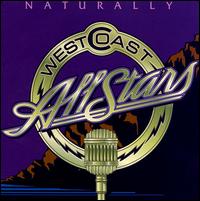
West Coast All-Stars - Naturally (1998)

Initially this project was going to be a solo acapella project-- the brainchild of producer, Joey Carbone. It was going to be an acapella album with former Toto frontman, Joseph Williams, singing all the vocal parts.

After further consideration it was decided that an acapella album marked an excellent opportunity for Joseph to get "a little help from his friends." So joining him on the first West Coast All-Stars CD California Dreamin' in 1997 were Bill Champlin and Jason Scheff of Chicago and fellow former Toto lead vocalist, Bobby Kimball. Scheff, Williams, and Kimball had such a good time on the first project they opted to do this follow-up. Bill Champlin however bowed out and was replaced by session vocalist Tommy Funderburk.

Despite their best efforts, this album doesn't quite match its predescessor. With Champlin the West Coast All-Stars had a baritone and an expert vocal arranger to balance out the 3 tenors of varying ranges with his deeper soulful baritone. In Champlin's absence, Joseph Williams ended up singing the bass/baritone parts. And while he did a respectable job-- he doesn't quite have the range in his lower vocal register that Champlin has. As a result the group as a whole doesn't sound quite as well balanced as they had on California Dreamin'.

That being said this is still a thoroughly enjoyable, extremely hard to find, and generally rather expensive imported gem of an album. The song selection, a collection of various hits of the seventies including such varied material as Earth Wind & Fire's That's The Way of the World, Rod Stewart's Tonight's the Night, Stevie Wonder's Sir Duke, Billy Joel's Just the Way You Are, Gilbert O'Sullivan's Alone Again (Naturally), Sir Paul McCartney's My Love, The Bee Gees How Deep Is Your Love, Bob Marley's I Shot the Sherriff, Marvin Gaye's What's Goin' On and perhaps the best and crowning achievement on this album is Led Zeppelin's Stairway to Heaven.

Yes, I said Stairway to Heaven and yes this is indeed an acapella album. Perhaps the most enjoyable part of the Stairway arrangement is that the Jimmy Page "guitar solo" is scat sung by Jason Scheff. Scheff also handles the lead vocals for the song and is augmented by the stirring, nee haunting background vocals of Funderburk, Williams, and Kimball. The acapella arrangement gives the song an ethereal otherworldly feel.

Another highlight is Alone Again (Naturally), having lost his own mother, Barbara Ruick Williams, at age 14, Joseph Williams modified the lyrics to make the song a bit more autobiographical to his life and less so to that of Gilbert O'Sullivan. Williams vocals on Paul McCartney's My Love are also quite enjoyable and a reminder of what made Toto's Fahrenheit and Seventh One albums so enjoyable.

The other gem is the acapella arrangement of How Deep Is Your Love, the least surprising song on the album, and probably the one which best lends itself to an acapella arrangement. Tommy Funderburk deftly handles the lead vocals with Kimball, Williams, and Scheff providing harmonies which would serve the Brothers Gibb rather proud.

All in all, while not as good as the original West Coast All-Stars acapella CD, it's a thoroughly enjoyable follow-up and a worthy addition to any CD collection.

Tuesday, March 21, 2006

Chicago - XXX (2006)

This isn't your parents' Chicago, and while this album may sound it, upon looking at the calendar this is 2006, not 1992. On first listen I was underwhelmed.. perhaps even disappointed. But this album is a grower-- it may not grab you on first listen, but you'll reap the rewards on future listens.

In 1991 Chicago released Twenty-1 their last album of completely new and original material. In the years since they've released Night & Day, an album of "Chicago-ized" arrangements of Big Band classics like In the Mood and Take the "A" Train, a Christmas album, and an abysmal live album (XXVI) that was so vapid and doctored that it sounded more like a studio album with canned applause.

This album picks up where Twenty-1 left off and kicks it up a notch. If your teeth cut their first cavities on Chicago's sugary power ballads of the eighties you (and, incidentally, your dentist) will delight in the early offerings of Chicago XXX.

The album opens with the recently released single Feel. The biggest surprise about Feel is that it's a Robert Lamm sung single. The last time Chicago released a single featuring Lamm's lead vocals Terry Kath was still alive and Peter Cetera was still in the band. Lamm's voice has deepened and thickened a bit with age. And while it doesn't have quite the same raspy punch that it did on songs such as Skinny Boy it's still quite pleasant to listen to.

The King of Might Have Been is the first in a series of saccharine ballads (Caroline, Why Can't We, Love Will Come Back, and Long Lost Friend). And speaking of friends, producer Jay DeMarcus called in his pals from his band, Rascal Flatts and his country contemporary Shelly Fairchild to lend a few assists. Some other interesting assists come from Toto alum, Joseph Williams contributing background vocals to King of Might Have Been and current Toto vocalist, Bobby Kimball contributing some background vocals to Caroline.

A live version of Caroline leaked out to fans last fall and that version was nails on a blackboard-- there was plenty of room for improvement and the studio version is infinitely better than the obnoxiously cloying live version which was making the rounds prior to the album release.

Why Can't We is a duet featuring Chicago's Bill Champlin and country vocalist Shelly Fairchild (apparently Chicago has been taking notes from their expatriate bandmate Peter Cetera who has had some luck with duets since leaving Chicago). The duet is pleasant enough and it does have something that many of Chicago's popular ballads of the eighties lacked-- HORNS!

Not to be outdone by the vocal stylings of Bill Champlin and Shelly Fairchild, Jason Scheff and Gary LeVox, Jay DeMarcus, and Joe Don Rooney offer a ballad of their own with Love Will Come Back.

After the rather bland Long Lost Friend luckily, the final foray this album offers into the world of power ballads, the band seemingly grows a pair. The album picks up significantly on 90 Degrees and Freezing. It has a rather catchy (albeit repetitive) guitar riff. And unlike much of Chicago's uptempo material of the eighties, where the horns were hidden in the back of the mix, the horns are mixed a bit more in front and are much more a focal point on 90 Degrees and Freezing.

Where Were You has rather bland lyrics, but the lyrics are forgivable due to the vocals of Bill Champlin (who could sing the phone book and make it sound magical) on the verses and the soaring tenor of Jason Scheff on the choruses. The horn chart is also quite infectious and offers an excellent balance and counterpoint to the vocals.

Already Gone, Lovin' Chains, and Better all sound as if they could just as easily have been recorded by the Sons of Champlin. All 3 of the tracks are quite reminiscent of the material on SOC's 2005 Hip Li'l Dreams album, although the horn charts are distinctly Chicago. It's the vocal arrangements, and the mere presence of horns (although SOC's horn section does have a different style than Chicago's) that gives Already Gone that SOC feel. The song is augmented by a brief muted trumpet and brief flute solo (all too brief, but certainly something the band can extrapolate on if they ever add this song to their live sets).

Come to Me, Do is quickly becoming one of my favorite songs on the CD. And with the lyric "I will refresh you" I could easily hear Coca-Cola using this song in their commercials. It's easily one of Robert Lamm's better vocal contributions to Chicago in the post Peter Cetera era.

The album closes as it opens, with the song Feel, the closing version has reinserted the brass punch which was left out of the single version. Both versions have their strong points. The brass-less version, may lack the horns, but the lack of horns allows the listener to focus on Lamm's strong vocals. At the same time there's nothing about the single version that really distinguishes it-- any other band could just as easily have recorded it. The horn mix gives the song that distinctive "this is Chicago" stamp which sets this band apart from their contemporaries.

While this album lacks the musical adventurousness of Chicago's seventies material, it is far more faithful to the "Chicago sound" than Chicago's handful of late eighties and early nineties albums which often had songs which lacked horns or had horns pushed so far to the back of the mix you'd easily miss them if you weren't listening closely enough. That being said, this is easily Chicago's strongest material since the departure of Peter Cetera in 1985.

Tuesday, March 14, 2006

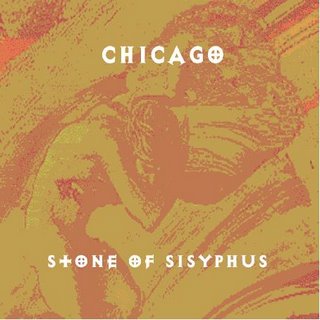
Chicago - Stone of Sisyphus (1994)

On March 22, 1994 Chicago's twenty-second album, Stone of Sisyphus was scheduled for release. The band was forgoing their usual numerical titles. This album was to be a reinvention of sorts.

March 22nd became April 12th. April 12th turned into April 26th. And then April 26th became "September." At some point in this chronology, a decision was made to shelve this album. It was never "officially" to see the light of day.

To this day, while bits and pieces, the occassional song here and there have been released as bonus tracks on various greatest hits compilations. Alternate "solo" versions of certain songs were released by various band members on outside projects. But, truth be told, this album in its original format, has it was originally intended to be released has never "officially" seen the light of day.

But fans remained undeterred. Throughout the mid and late nineties the album did find its way into the hands of the loyal fans who had not forgotten of this band. The more generous of fans rated this the best album Chicago had recorded since the untimely death of guitarist, Terry Kath, in 1978. But even those who were less complimentary went so far as to say it was the best album since the 1985 departure of bassist/vocalist Peter Cetera.

Indeed. If this album had been released on that original Tuesday in late March 1994, the album would have been incredibly well received by the legions of fans who remained disappointed after the overly saccharine Chicago 19 and the rather pedestrian Twenty-1. It had punch, it had balls, and it had that wall of brass that had been so conspicuously absent on the band's eighties albums.

The album opens with All the Years, a Robert Lamm penned tune hearkening back to the political sensibilities he'd injected into Chicago's material of the late sixties and early seventies. A horn-less version had already appeared on Lamm's 1993 solo album, Life Is Good In My Neighbourhood.

The title track is possibly one of the best surprises the band has offered in years. Written by then-guitarist, Dawayne Bailey. Stone of Sisyphus features Lamm and Bailey trading off on the lead vocals with Lamm handling the verses and Bailey handling the choruses and bridge. Bailey's unique sense of humor is present in the lyrics:

Blood sweat and tears turn faith into will

A subtle nod to Chicago's sixties horn-rock contemporaries of years past.

One of the few ballads on the album, Bigger Than Elvis, is bass player Jason Scheff's tribute to his father, Jerry, who once upon a time played bass for Elvis. It's a stirring and shining example of a son's paternal love.

Sleeping In the Middle of the Bed Again, another Lamm penned tune even, at one point, features an attempt at rap. Lamm would later include an alternate and much different arrangement of this song on his 1997 solo release, In My Head. The newer version would lack the infectious groove and the brass punch of the Chicago song.

Mah Jongg, is catchy and laidback with a gentle groove. After being conspicuously absent on the first four tracks, we finally hear Bill Champlin's gritty and soulful vocals. An alternate version of this with Brandon Fields on sax and vocalist Jason Scheff handling vocals ended up on Scheff's obscure solo album, Chauncy a few years later.

Unfortunately, try as they may, Chicago could not completely abandon the insipid or saccharine ballads that had turned their music into prom fodder just ten years earlier. Let's Take a Lifetime is everything long-time fans of this band love to hate about the worst this band has given them over their long tenure.

During the 1993 summer tour, in anticipation of this album's impending release, Chicago performed The Pull. This song has one of the better horn charts I've heard on any of their material in awhile. No longer relegated to the background with the intermittent blats to remind the fans that horns were still part of the band-- as they'd had to resort to in the eighties, the horns remain an integral part of the song from start to finish... Acting almost as another "vocalist" as they had in the band's heyday in the seventies.

While Chicago was not done giving their fans ballads, Candle For the Dark (Here With Me) is much less offensive and considerably less saccharine than Let's Take a Lifetime. It features Robert Lamm, Jason Scheff, and Bill Champlin all taking turns on lead vocals and rather than a synthesized sax solo like in Let's Take a Lifetime the horns actually play throughout the entire song-- if Chicago truly must play the occassional ballad it's nice to see that they remembered to give their horn section something to do, other than just reading the newspaper or "playing" a redundant third or fourth keyboard.

With Twenty-1 Chicago had given the executives at Warner Brothers/Reprise just what they wanted. A rather pedestrian album with a few catchy ballads to be released as singles. That album tanked so bad that only one song from it has ever been performed live. Plaid was Chicago's giant middle fingers to the executives for inflicting the damage of Twenty-1 on the masses. Incidentally, the song probably didn't help convince those same executives to release Stone of Sisyphus.

Proving that Robert Lamm isn't the only one in the band who knows how to write songs with a message, Bill Champlin contributed Cry For the Lost. In 1995 Champlin would release a considerably different version with alternate lyrics titled Proud of Our Blindness on his Through It All solo album. Both versions are interesting, but given Champlin's distinguished grammy-winning songwriting career they are, by comparison, rather forgettable.

In what is probably the most lyrically unusual song in Chicago's canon, Get On This, features hard driving guitars, soaring vocals and lyrics that detail a strange dream. One could almost say that while Robert Lamm stays up until "25 or 6 to 4" trying to write songs, Dawayne Bailey instead waits till morning and tells of the dreams had the night before. Bailey has indicated that many of the lyrics were inspired by the poetry of his then girlfriend, Felicia Parazaider. Trombonist, James Pankow added an assist and the end result is the type of song Chicago had never done before and will, more than likely, never do again.

The album closes with The Show Must Go On an autobiographical song co-penned by Bill Champlin. A very different version of this song with a completely different set of lyrics had appeared on the Fixx album, Ink, a few years before. The Fixx version was titled Falling In Love. Musically, however, it's obvious the two songs were cut from the same cloth.

This is one of the best "could've been" albums to ever sit gathering dust in the vaults. It was certainly better than Chicago's worst material and it was even better than much of the more mediocre half-assed efforts they'd spoonfed fans over the years. If in your Internet travels you stumble across a torrent of this, add it to your download queue. If you miss the Chicago of old, this album will not disappoint. While it has not aged well, it's still aged better than their ill-fated attempts at disco on Chicago XIII and has that brass punch that Chicago SHOULD have had in the eighties when they seemingly forgot they had a horn section.

Wednesday, December 14, 2005

Chicago - What's It Gonna Be, Santa? (2003)

In 2003, Chicago re-released their 1998 Christmas album XXV with 6 “bonus” tracks. This 20 song Christmas CD is the result. In addition to adding 6 tracks, the band opted to shuffle the order of songs, in some cases, to the album’s benefit, and in other cases to its detriment.

While its predecessor started with a bang—Little Drummer Boy, this version starts with Winter Wonderland. While it’s a fun track, it doesn’t have quite the same punch as their exceptional arrangement of Little Drummer Boy. And maybe it’s just me, but towards the end of Little Drummer Boy the horn chart sounds like it was lifted from Joy to the World—and when I say Joy to the World I don’t mean the classic carol. I mean the Three Dog Night seventies mega-hit about everyone’s favorite bullfrog named Jeremiah. Whether this is tip of the hat to Chuck Negron and company, a subtle jab at Three Dog Night, a silly coincidence, or my overactive musical imagination is beyond me.

One of the surprises of the original release was Let It Snow, Let It Snow, Let It Snow, which did so well for the band back in 1998, they even opted to record a Spanish version, Navidad, Navidad, Navidad. Trumpeter Lee Loughnane’s rare vocal appearance (his first turn on lead vocals since This Time on Chicago XI, way back in 1978) was truly a delight for the die-hard fans who have been waiting to hear more of his underrated vocals.

Much like the original release, this re-release features another vocal surprise. “Newbie” (well, he’s been in the band since 1995, but in a band that’s been around since 1967, I think that still warrants being referred to as a “newbie”) guitarist, Keith Howland takes a turn on lead vocals for Jolly Old St. Nicholas, one of those six aforementioned “bonus tracks.” Their upbeat, rocking arrangement of Jolly Old St. Nicholas is an interesting departure from the otherwise “safe” Christmas album. Howland sounds confident both behind the microphone and on the guitar.

While a nice addition, to this re-release, This Christmas may fail to disappoint, but it also fails to excite this listener. Despite Jason Scheff’s pleasant vocals, this arrangement plays it a bit “too safe” and fails to do anything that sets it apart from any other version of the song, making it otherwise forgettable.

Much like the original release, the low-point of this re-release is Feliz Navidad. The original is a rollicking, catchy, and fun song. When I first heard Chicago had opted to cover the song I was excited and really looked forward to hearing it. When I finally heard it, I couldn’t have been more disappointed. The once vocally adventurous Robert Lamm has grown quite boring indeed. This arrangement of Feliz Navidad sounds like how Wayne Newton might sound singing a funeral dirge. The re-release could only have benefited from the exclusion of this musical abomination.

One of the other bonus tracks, Bethlehem, an original tune written by vocalist/keyboardist, Bill Champlin and his wife Tamara is a catchy tune which would have the potential to become a Christmas standard if not for better publicity and promotion. The song is from the perspective of the 3 wise men journeying to Bethlehem. The vocals are shared by Champlin, Jason Scheff, and trumpeter Lee Loughnane taking another turn on vocals. Each vocalist sings from the perspective of a different wise man which makes the song that much more interesting and memorable. Of all the additions to the re-release this one is probably the most welcome.

Robert Lamm takes another turn on vocals for The Christmas Song, his lounge singer-esque vocals complement this song far better than the aforementioned Feliz Navidad. The horn arrangement and uptempo rhythm also help prevent the song from regressing into a funeral dirge.

Rudolph the Red-Nosed Reindeer is given the same gritty soulful performance that Santa Claus Is Coming to Town was given on the original release. While I normally can’t stand either of these songs as they are obnoxious and probably some of the most overplayed secular carols ever conceived by the human imagination, Bill Champlin at least makes Rudolph the Red-Nosed Reindeer listenable—no small feat by any stretch of the imagination. Unfortunately, even as much as I love Champlin’s brand of blue-eyed soul, not even his gritty soulful performance can rescue Santa Claus Is Coming to Town—another track whose absence would only have served to benefit this re-release.

O Come All Ye Faithful is sung with a soft and gentle reverence by Jason Scheff. His soft tenor is an excellent match for this traditional hymn. The way it’s performed seemingly as a duet between Scheff and Walt Parazaider’s flute adds to its charm.

Chicago’s arrangement of Have Yourself a Merry Little Christmas has made it one of my favorites, not just on this CD—but a favorite of the entire season by ANY artist. Bill Champlin, who has a tendency to oversing many songs puts just the right amount of soul into this song. He refrains from the vocal theatrics which he has come to be known for during many of Chicago’s live shows in recent years and keeps it simple letting Keith Howland and James Pankow’s arrangement speak for itself.

Sleigh Ride, yet another of the 6 “bonus tracks” to grace the re-release is one of the most fun and upbeat arrangements I’ve heard of the song. The juxtaposition of Lee Loughnane’s vocals on the verses and Jason Scheff’s vocals on the choruses keep the song upbeat, fun, and interesting.

Gathering their children, Chicago formed a “children’s choir” to perform 2 songs on the original Christmas release. While the novelty is fun at first listen, generally people are only truly interested in children’s choirs if they are somehow related or have some vested interest with at least one of the children in that choir. Generally, the lack of bass and baritone vocals in a children’s choir causes them to come across at a pitch which is at best annoying, and far too often, painful to listen to. The 2 songs featuring the children’s choir, Child’s Prayer and One Little Candle fall into the latter category. Without a vested emotional interest in the children’s choir I found those tracks worthy of only a single listen. They’ve fallen victim to the “skip” button each time since.

On the whole this is a solid Christmas album. While many Christmas CDs come across as “same ol’, same ol’” with only the occasional diamond in the rough—this offering features far more diamonds and much less rough than much of the other holiday fodder offered to the masses in the ever growing Christmas holiday season. Despite my strong negative feelings towards certain tracks, I truly enjoy the album as a whole and recommend it to anyone looking to expand their holiday music collection.

Friday, November 18, 2005

Chicago 19 (1988)

Well... at least the cover art is cool to look at.

The worst album Chicago has ever released (yes, even worse than the failed attempt at Disco known as Chicago XIII). I don't care how many "hits" it yielded. This was Chicago pandering to the label and to the masses. Heart In Pieces, c'mon, you've got to be kidding me, right? The original version by Canadian Tim Feehan is leaps and bounds better than this poor excuse of a "Chicago" song. Feehan can sing circles around Scheff and DOES. If you want to hear this song done right, try to find Feehan's Full Contact. And THAT is how this song SHOULD sound.

I Don't Want To Live Without You Looking Away at What Kind of Man Could Last Forever. Yes, I know it's really 4 different songs but they may as well all be the same song. They're all bland insipid and uninspired drivel. In 1995 and 2000, Chicago performed What Kind of Man Would I Be acoustically, the acoustic arrangement was leaps and bounds better than the version found on this CD.

Victorious, I Stand Up, and Come In From the Night ALMOST save this album. However, Victorious lacks horns and as good as Come In From the Night and I Stand Up are... they lack the fire and energy of songs like Follow Me, What You're Missing, and Prima Donna.

This isn't just the worst album Chicago recorded for Warner/Reprise this is their worst album, BAR NONE. It's so bad that if someone were to try to give it to you for free it would still be a waste of your money.