Thursday, October 28, 2010

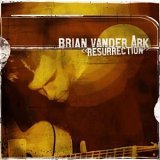
Forgotten Music Thursday: Brian Vander Ark - Resurrection (2004)

It was once said of Billy Joel that his mass appeal is due to his ability to write songs which can be so personal and individual for so many different people. Each of his songs can conceivably mean something different to every listener. Where Billy Joel has left off, others have risen to the challenge of writing songs that have that similar mass appeal. Brian Vander Ark is such a singer and his album, Resurrection shows some of the best material of one of the best singer/songwriters of his generation, picking up the torch left by the likes of Elton John, Billy Joel, and Bruce Springsteen, but with a style all his own.

Despite the success of their 1997 hit The Freshman few people (outside of Michigan at least) are familiar with The Verve Pipe in general and the songwriting talents of their lead singer, Brian Vander Ark in particular.

While the Verve Pipe didn't grab me at first, there's no denying that Vander Ark's songwriting has only improved with each successive album. His solo album, Resurrection, follows in the natural progression of the Verve Pipe's 2000 release, Underneath. The two albums make excellent companions to one another.

The opening track, 1229 Sheffield has some of Vander Ark's more clever turns of phrase:

Returning our bottles for ten cent deposits
I'll drink us two dollars more...

The pet names you once gave me, we soon gave to the pets
I still come when you call them, just to be sure

There's a naked honesty to Vander Ark's songwriting that some may describe as "angsty" but to pigeonhole it would do it a great disservice. Another highlight to the album, And Then You Went Away probably best captures Vander Ark's "heart-on-the-sleeve" angst:

You hung your favorite picture so you could see it everyday
Then you went away, then you want away
It's by the window garden you said you'd water everyday
Then you went away, then you went away...

Slipped on the velvet curtains you had custom made
Then you went away, then you went away
And there's my new best friend, the one you took in as a stray
Then you went away, then you went away

Much like many of his Verve Pipe songs, there's a common theme of the evolution of relationships-- people growing together, growing apart, and the circumstances we face in relationships and the effect those events have on the relationship-- sometimes making it stronger, other times tearing it apart. This theme, tackled initially on the opening track, 1229 Sheffield is revisited on Mileage:

Pass by the high school
A memory rerun
When I was seventeen couldn't wait for twenty-one
I pass by the church
Where I married you
When you were twenty-one and I was twenty-two...

So I speed past the building
I always wanted to
Since I was twenty-one, almost twenty two
If I'd had the nerve
I'd have quit there before
You turned twenty-three and couldn't take me there any more...

The album as a whole is Vander Ark at his very best. His voice is soothing and consistently interesting. The songs never falter, there's not a "weak" or "skippable" song on the CD-- if anything most songs fall victim to the repeat button and with each new listen provide the listener with the gift of a new perspective. This is an album that only improves with each listen. So listen and enjoy!

Friday, October 15, 2010

Steve Hackett - Out of the Tunnel's Mouth (2010)

Every once in awhile a song, an album, or even just a simple solo-- be it vocal, guitar, keyboard, or some other instrument will send chills up and down my spine.  Admittedly that hasn't happened in a long time.  There have been albums I've enjoyed.  And while I've dared music and musicians to wow me it's been quite awhile since I've been gobsmacked by an album.  Steve Hackett gave me a much needed and long overdue musical sucker punch with his latest release.

While not as well established or known as his former bandmates, Steve Hackett has developed a respectable and devoted cult following since his departure from Genesis following their Wind & Wuthering album in 1977. 

In the years since his departure from Genesis, Hackett has explored several different musical styles-- classical, flamenco, world music, jazz, and even the prog rock that he'd come to be known for in his five years with Genesis.

Of all of the albums that he has recorded since his debut, Voyage of the Acolyte, none of them has married all of the music styles that he drew upon for influence as well as Out of the Tunnel's Mouth.  The Genesis influences are unmistakable and it leaves one wondering if this album is what Genesis might sound like today had Hackett been the driving creative force in the band instead of Banks, Rutherford, and Collins.  Incidentally, the album also features Hackett's predecessor, Anthony Phillips, playing 12 string guitar.

 The album starts with the hauntingly beautiful, Fire On the Moon, there's a dark haunting quality in the opening of the song thanks to the music box that complements Hackett's guitar and vocals throughout the song.  At about 1:10 the song shifts from haunting to transcendent and majestic before shifting back to haunting at 1:37.  The song shifts back and forth between haunting and majestic throughout.  Hackett's vocals are reminiscent of Pink Floyd's, Roger Waters and David Gilmour.  The guitar solo that comes in at 2:46 is one of the most emotive solos Hackett has recorded since Firth of Fifth on Genesis Selling England By the Pound.  Hackett graces the song with a second guitar solo starting at 4:36 that picks up where the first had left off at 3:25.  There is a beautiful keyboard piece that dances around Hackett's guitar solos.  It never over-powers the guitar it merely accents the better elements of Hackett's fretwork.

Nomads starts with a brilliant flamenco flavored acoustic guitar solo that further showcases Hackett's versatility.  As with Fire On the Moon the vocals on Nomads are more used like an instrument than for lyrical effect.  Heck the phone book could be sung to the same melody and make the song just as satisfying.  That being said the lyrics are well written and certainly leave some of Hackett's fans wondering why Banks, Rutherford, and Collins didn't utilize Hackett's talents more when they had the opportunity to do so.  The flamenco guitar resumes at 2:45 into the song before Hackett switches from the acoustic flamenco to his trademark electric guitar at 3:07 for another brilliant solo that is nearly as enjoyable as the solos in Fire On the Moon.

The style and mood of the album shifts from the light and airy flamenco tinged Nomads to the pastoral prog-rock vibe of Emerald and Ash, a song that would not have sounded out of place on a Caravan album back in the seventies.  The song is chocked full of imagery.  The song is also colored with some beautiful sax playing by Rob Townsend.  This song also features not only Hackett on electric guitar but Anthony Phillips on 12-string acoustic guitar.  The two former Genesis guitarists sound absolutely brilliant together.


Tubehead is a more straight ahead instrumental rocker with Yes's Chris Squire guesting on some frenetic bass playing.  Where the previous material was lighter and more relaxed. Tubehead has a dark crunchy edge and plays like a train running full speed ahead.

The mood shifts to somber and melancholy on Sleepers.  Much like with Fire On The Moon, Nomads, and Emerald and Ash there's a haunting beauty to Sleepers making for yet another brilliant track on an album that had already been consistently brilliant.  The mood on the song shifts from melancholic to dark and sinister at 4:53.  If ever there was a song that screamed of Halloween, Sleepers is it.  Hackett's guitar playing evokes spooky haunted houses on chilly fall evenings.

Ghost In the Glass has a light jazz fusion vibe to it.  The percussion suggests a dimly lit jazz club after closing.  The acoustic guitar work of Anthony Phillips gives way to the haunting electric work of Hackett whose electric playing is augmented by a string section of violins and violas.  Much like the keyboard work on Fire On the Moon the additional strings accent Hackett's guitar playing.

Still Waters is deceiving in its title as it has a rolling blues vibe to it adding yet another musical style this already musically diverse album. 

The album closes with Last Train to Istanbul which has more than subtle hints of Middle Eastern influence.  You can hear the train chugging along at a moderate but steady pace through the Turkish countryside.  There is a lot going on in the song and it's easily the "busiest" song on the album.  With so many different styles coming into play and so many different influences you can listen to the song multiple times and hear something new and different each time. 

What makes Out of the Tunnel's Mouth so enjoyable from start to finish is its accessibility.  Not all of Hackett's explorations into other musical styles have come together as well as this album.  Despite featuring so many different musical styles there is a cohesiveness to the album.  All of the songs sound like they belong on the same album.  And all of the songs, despite the myriad of different styles, are distinctly Steve Hackett.  I'm willing to go out on a limb here and say this is the best solo album of any member of Genesis past or present and better than any of the albums Genesis has recorded since Hackett's departure  (Five out of Five Stars... or if you prefer a PERFECT TEN on a scale of 1 to 10!)

Related Links
Steve Hackett (official site)
Steve Hackett (wikipedia)

Sunday, October 10, 2010

Black Country Communion - Black Country (2010)

Sometimes music jumps out and grabs you on the first listen, other times it merely plants a seed that slowly grows inside you.  Black Country is an interesting mix of songs that do both. 

The opening title track, Black Country, grabs the listener and holds on tight with Glenn Hughes vocals and driving bass along with Jason Bonham's exceptional drumming leading the way for much of the song with Joe Bonamassa playing some solid guitar throughout.  This is the perfect opening track for the album as it is a force unto itself.  Hughes vocals are just as powerful as they were in his days in Deep Purple.

One Last Soul was the lead single released in mid-August.  While catchy with some killer vocals by Hughes, it's actually one of the weaker tracks on the album.  It lacks the punch and attitude of Black Country and some of the stronger tracks that come later on the album.

The Great Divide chugs along on the backbone of Hughes bass playing Bonham's drumming.  Hughes vocal wails are reminiscent of Robert Plant at his vocal peak in the seventies showing that even pushing sixty he still has a tremendous range and can still rock harder than many guys half his age.

While there are no weak tracks on the album and Black Country Communion is to 2010 what Them Crooked Vultures were to 2009 (THE supergroup of the year), easily the best tracks on the album are Song of Yesterday and Too Late For the Sun.  The latter of which features an extended jam that really shows what this band is capable of when allowed to stretch out and improvise, whereas the former is the antithesis of Too Late for the Sun, it's a beautiful and well constructed song from start to finish.  Where Too Late For the Sun has pure unbridled raw energy, Song of Yesterday has a more refined polish to it.  Joe Bonamassa shines throughout the album but Song of Yesterday is easily his best track on the album.  That's saying a lot given the overall strength of the album.

This album was recorded rather quickly, most songs were cut with as few takes as possible which gives the album a very pure energy.  There's a rawness to the material that speaks to the general spirit of classic rock and at the same time enough polish to really display the brilliant talents of each of the band members.

Black Country Communion has captured the spirit and vibe of the bands that inspired them.  If you're jonesin' for some twenty-first century classic rock this album should top your list!

Related Links
One Last Soul live

Interview with Glenn Hughes

Glenn Hughes & Joe Bonamassa performing Medusa

Black Country Communion (official site)
Glenn Hughes (official site)
Glenn Hughes (wikipedia)
Joe Bonamassa (official site)
Joe Bonamassa (wikipedia)
Jason Bonham (official site)
Jason Bonham (wikipedia)
Derek Sherinian (official site)
Dereik Sherinian (wikipedia)