Showing posts with label Steve Lukather. Show all posts

Saturday, August 13, 2011

One Track Mind: Toto - Falling In Between (2006)


Toto has long been one of my favorite bands. Their willingness to take risks and try a variety of different styles of music has always impressed me as has their brilliant talent. After all Toto is a band of session cats. These are the guys the other bands call on to perform on their albums.

Heck these guys started out backing up Boz Scaggs on his Silk Degrees album and after the unprecedented success of their 1982 album IV they were tapped by Michael Jackson to play on his Thriller album.

In 2006 Toto released what would inevitably be their final studio album, Falling In Between.  Some would argue this was their best album ever and most would agree it was their best album since IV.  They certainly went out with a bang.

The album opened with the title track.  From the first time I heard Falling in Between, it swiftly became one of my favorite Toto songs.  It had a fiery drive to it I'd not heard since Gypsy Train on their 1992 Kingdom of Desire album.

Between Steve Lukather's fiery guitar work and the powerful vocals of original lead vocalist Bobby Kimball (who rejoined the band in 1998 after a 14 year absence), the tasteful background vocals and keyboard work of grammy winning keyboardist Greg Phillenganes, and the precise and tasteful drumming of Simon Phillips Falling In Between has it all.  It inevitably set the tone for the entire album.

Related Link
Falling in Between (album review)


Saturday, April 30, 2011

One Track Mind: Steve Lukather - Hate Everything About U (1997)


In 1997 Steve Lukather released his most raw and personal album to date, Luke.  After his then recent divorce Luke was an emotional blood-letting of sorts.  Hate Everything About U is perhaps the most heart-wrenching of the songs on the album.

Employing the same songwriting tool that 10cc did on their hit I'm Not In Love--  repetition.  Lukather's repeated claims of hate instead reveal a heartbroken love.  Lukather rattles off a litany of reasons for his "hate" that expose his love, regret, and broken heart.

At the time I first heard this song in 1998, I was still nursing the wounds of a broken heart suffered a few months before this song was a sucker punch to my heart.  While the whole album resonated with me Hate Everything About U and Always Be There For Me (but that's another review for another time) hit a particular nerve.  And while I've long since moved on I still look back on both of those songs fondly as they helped me get through a bit of a rough patch

Thursday, April 14, 2011

One Track Mind: Toto - I'll Be Over You (1986)


I'll Be Over You
by: Steve Lukather & Randy Goodrum

Some people live their dreams

Some people close their eyes
Some people's destiny
Passes by


There are no guarantees
There are no alibis
That's how our love must be
Don't ask why


It takes some time
God knows how long
I know that I can forget you
As soon as my heart stops breaking
Anticipating
As soon as forever is through
I'll be over you


Remember in times gone by
Promises we once made
What are the reasons why
Nothing stays the same


There were the nights
Holding you close
Someday I'll try to forget them
As soon as my heart stops breaking
Anticipating
As soon as forever is through
I'll be over you

As soon as my heart stops breaking
Anticipating
Someday I'll be over you
 As soon as my heart stops breaking
Anticipating
Someday I'll be over you
As soon as my heart...
While not as successful as 1982's mega hits Africa  & Rosanna, Toto enjoyed modest success with 1985's I'll Be Over You.  The song tugs at the heart strings a bit.  Having my heart put through the wringer a few times over the years this song has provided a comfort to me on those ocassions when the wounds of heartbreak were still fresh.  Those moments, fresh out of a relationship you didn't want to end when you don't think you'll ever feel that way again.  Most of us are familiar with these feelings.  The song has been sung millions of times with millions of different lyrics but the sentiment rings true for different people in different variations.  Some might argue there's little that sets this song apart from all of those other songs that share the same sentiments.  I'd argue there's a lot to be said for the delivery and the performance of the lyrics and that's where Toto comes through in spades.

There's a natural progression to the song where it shifts from "As soon as forever is through" to "Someday I'll be over you." that mimics the progression we go through as we get over loves lost and allow ourselves to open up to the possibility of new love.

This song has aged considerably better than some of Toto's other songs from the eighties.  Over the years the band has offered alternative arrangements of the song to keep it fresh (including a beautiful and stirring acoustic version on the 1999 tour).  Steve Lukather's soulful vocals are a perfect fit for the song.

If you've "been there" and "done that"-- chances are this song song will speak to you as well.

Thursday, November 04, 2010

Steve Lukather - All's Well That Ends Well (2010)

In his latest outing Steve Lukather shows he's still at the top of his game.  While his last album, Ever Changing Times, was thoroughly enjoyable;  All's Well That Ends Well, shows that Lukather is at his best when he's at his most personal.  Much like with his 1997 album, Luke, Lukather gets a bit more personal than on his other solo releases.

The album opens with Darkness In My World.  The opening is somewhat ambient in nature until almost two minutes into the song when Lukather shifts gears with an infectious rhythm groove.  This is one of the more melodic examples of AOR I've heard in awhile.  Despite the advent of iTunes and single-serving music, Lukather proves album oriented music still has its place.

On My Way Home sounds like it wouldn't have been out of place on Ever Changing Times.  The style is reminiscent of that album.  Lukather has said that this album is a continuation of that album and On My Way Home is certainly a track that bridges the styles of the two different albums together. The vocals are tight and the song has those trademark jazz fusion influences that Lukather is known for.  The guitar solo hints to one of Lukather's influences and close friends, Larry Carlton.

Can't Look Back is Lukather's look back at looking forward in his life.  The song captures Lukather's nature of restlessness.  He's been a perpetually active musician since before Toto's inception in 1977 between touring, recording, and doing sessions at a pace that would drive many of us to exhaustion.  The song features a soulful guitar solo, the kind Lukather has come to be known for.

Don't Say It's Over is one of Lukather's trademark ballads lyrically reminiscent of Toto's I'll Be Over You but musically it completely fits into the musical jigsaw of this album.

Flash In the Pan is a hard driving rocker displaying Lukather's trademark lack of restraint.  The song is balls to the wall from start to finish.  One of the more amusing and fun songs on the album.

Watching the World displays Luke's growing disenfranchisement with the political establishment and the general state of the world.  "Sitting here watchin' the world, fallin' apart, oh, what can you do?, Standing in the shadows of lies and deceivers, When does it end?"

You'll Remember can best be described as a fusion rocker.  It would not have sounded out of place on Ever Changing Times and is one of the "common threads" that ties this album to its predecessor.  The guitars and vocals are definitely pop rock, but the keyboards and rhythm speak more to Luke's fusion influences.

Brodie's has a bad-ass blues vibe it's the pissed off bitter counterpoint to the more melancholy Watching the World.  The lyrics are fortunately (or unfortunately, depending on how you look at it) have a fair share of pop-cultural references to big-screen TVs and Facebook pages.  It makes the song prescient for our times but over time will likely "date" the song to this era.

The album closes with the instrumental fusion rocker, Tumescent (You've got to love Luke's highbrow sophomoric sense of humor-- great song title for an instrumental piece!).

From start to finish the album is one of Lukather's best. Mixing the polish of 2008's Ever Changing Times with the dark personal vibe of 1997's Luke for an album that works on many levels.

Related Links
All's Well That Ends Well promo video clip

Steve Lukather (official site)
Steve Lukather (wikipedia)

Tuesday, August 03, 2010

Toto - Turn Back (1981)

If reviews could be crystallized into single words "ambivalence" would likely be the most appropriate word to describe Turn Back.  The material is considerably more consistent in its quality than on 1978's Hydra.  However the production is somewhat muddy and at least one of the performances is a bit of a head scratcher.

Having heard a live bootleg of A Million Miles Away from 1996 sung by Steve Lukather not by Bobby Kimball as was done on this album, Lukather's voice was much better suited to the song leaving this listener wondering why Kimball was given the nod on the vocals on the studio release all those years ago. 

There really is a lot to like about the music on this album, however given the muddiness of the mix (at least on the US released versions of the CD) it makes the album largely unlistenable and thus it makes the album largely frustrating.  Here are eight songs of quality varying between merely good and thoroughly enjoyable but being mixed so poorly the listener really has to struggle to enjoy the songs. 

Given better production and mixing this album really could have been much much more and considerably better than it ended up being.  Luckily Toto would work out the kinks in the studio for their multiple grammy winning smash follow-up, IV, just a couple years later.

Kimball's vocals are easily better than they had been on Toto's first 2 albums and arguably even better than on IV, Lukather's guitar work and vocals are also easy on the ears the keyboard tandem of David Paich and Steve Porcaro is in top form and the rhythm section-- Dave Hungate on bass and the late Jeff Porcaro on drums-- fuhgeddaboutit. 

Some of the standout tracks include If It's The Last Night, English Eyes, and the rather unusual love song I Think I Could Stand You Forever (note to the lads having trouble with the lasses-- this is NOT a line to use on a girl you may be interested in and thus this is not a song to be used to try to woo the object of your affections). 

I've read that the Japanese release is a considerably better/less muddy mix but I've not heard it so I can't vouch for that.  If you find or get your hands on a better mix of this album chances are you'll thoroughly enjoy it.  And heck if you can get past an album sounding like it was recorded in one of the bathrooms in Grand Central Station you might even enjoy the sub-par US released mix of the album.

Related Links
Toto (official site)
TotoNetwork.com
Toto (wikipedia)
Steve Lukather (official site)
Steve Lukather (wikipedia)
David Paich (official site)
David Paich (wikipedia)
Jeff Porcaro (wikipedia)
Steve Porcaro (wikipedia)
Bobby Kimball (official site)
Bobby Kimball (wikipedia)
David Hungate (wikipedia)

Thursday, January 07, 2010

Toto - Live @ Montreux 5/7/1991

By 1991 Toto had more than proven themselves. They'd had a string of hits in the eighties and a mantle full of Grammy Awards collected for Toto IV and Rosanna at the 1983 Grammy Awards.

They also had soldiered through a revolving door of lead singers-- Bobby Kimball, Fergie Frederiksen, Joseph Williams, and Jean-Michel Byron (the last of which the band and most fans try to forget).

But you take the good with the bad and after the sour taste that Byron had left them with, Toto decided to soldier on with guitarist Steve Lukather handling the lion's share of lead vocals.

The 1991 Montreux Jazz Festival in Switzerland was the first glimpse Toto gave of their then upcoming album, Kingdom of Desire.

What the band didn't know, and couldn't have known at the time was that this would end up being one of Jeff Porcaro's final concerts with the band before his untimely passing in August 1992. As such this bootleg is arguably the highest quality and one of the only bootlegs available featuring Porcaro playing material from his final album with the band.

Toto's set starts out with the fiery On the Run (which, incidentally, didn't make it onto Kingdom of Desire) an uptempo rocker, and easily one of the heaviest and hardest rocking songs that Toto had ever recorded. It would not have sounded out of place on Kingdom of Desire which ended up being, arguably, Toto's heaviest, hardest, and rawest album. (On the Run did inevitably make it onto Toto's 1997 twentieth anniversary rarities collection, XX.)

The band also plays Kingdom of Desire and the intensely grooving instrumental Jake to the Bone from Jeff Porcaro's final album.

In addition to the new material the band also dips into their back catalog with the Lukather penned and sung ballad I'll Be Over You, the smash hits-- Africa, Rosanna, and Hold the Line. In the absence of a regular tenor vocalist on Rosanna and Hold the Line Toto taps background singers (Fred White and Jenny Douglas respectively) to handle the tenor vocals. At times the background singers are equal to the task but for the most part their vocals fall thin compared to Bobby Kimball's vocals on the originals.

A couple of covers round out Toto's set, the Hendrix cover Red House that lets Steve Lukather cut his teeth a bit more on guitar and the seemingly out of place throwaway Ike & Tina Turner cover, I Wanna Take You Higher featuring Toto's female back-up singers (Jenny Douglas & Jackie McGhee) singing lead. While this cover might not have sounded out of place at a Toto concert in the late seventies, given the rest of the songs in this early nineties set, it sounds woefully out of place and sticks out like a sore thumb.

That being said, this bootleg is definitely worth adding to any collection largely on the strength of On the Run, Jake to the Bone, Kingdom of Desire, and the Hendrix cover Red House. And for any Toto fan, this is a must given its significance as the first time any material from Kingdom of Desire was performed live (and by Jeff Porcaro to boot!).

Related Links
Kingdom of Desire (wikipedia)
Toto (official site)
Jeff Porcaro (wikipedia)
Steve Lukather (official site)
Steve Lukather (wikipedia)
David Paich (wikipedia)
Mike Porcaro (wikipedia)

Thursday, December 24, 2009

Top 10 albums of the Decade (2000-2009)

10. Chicago Stone of Sisyphus (2008, recorded in 1993) This was the last album Chicago recorded that they really believed in. Recorded in 1993 and produced by Austrian Peter Wolf. This was the first album Chicago recorded since Chicago XI that had no songs by outside writers. All of the songs on the album were either written or co-written with at least one member of the band. While there were some session musicians performing on the album, the reliance on session musicians was considerably less than on Chicago's albums from the eighties. As such this is likely the last Chicago album of original material that actually IS a Chicago album. It falls in at #10 for 2 reasons. The omission of the song Get On This which appears on many of the bootleg versions of the album that had/have been floating around since it was originally supposed to have been released on March 22, 1994 and the 14 year delay in the album's release. Technically this is a 90s album. It sneaks onto this list based on the technicality of its official release. (note, the review I've linked to is of the bootleg version, not the official release of the album).

9. Def Leppard Songs From the Sparkle Lounge (2008) This is easily the best new album from Def Leppard since Adrenalize and possibly even since Hysteria. It's a return to form after the abysmal X (the sleeve made a great bird cage liner and the CD made for a passable coaster). It's an extraploation of their 2006 covers album, Yeah! which was also thoroughly enjoyable but misses the list as its covers and not original material.

8. CTA Full Circle (2007) After being voted out of the band he helped found, drummer Danny Seraphine dropped off the radar for over fifteen years. Upon resurfacing he put together California Transit Authority. On their debut album they did primarily covers of Danny's material with Chicago. These new arrangements of Chicago classics are much more faithful to the spirit of the band Chicago once was than the new material that Chicago has been releasing in more recent years (incidentally, since Danny's departure). Seraphine found a chemistry with guitarist Marc Bonilla that he hasn't felt with any guitarist since the passing of the late great Terry Kath. You can hear that chemistry on every track. There are some excellent contemporary arrangements of some of Chicago's more obscure songs (Happy Cause I'm Going Home for example). Whether or not you're a fan of Chicago, this is an excellent album as it really takes their material to a different level.

7. OSI Free (2006) In 2003 former Dream Theater keyboardist Kevin Moore teamed up with guitarist Jim Matheos of Fates Warning and his former bandmate, drummer Mike Portnoy of Dream Theater to form OSI. Their self titled debut was thoroughly enjoyable ambient metal. Their 2006 follow-up was an extrapolation and a substantial improvement over their debut.

6. My Chemical Romance Welcome to the Black Parade (2006) Love it or hate it, emo was there and hard to miss around the middle of the decade. Personally I'm not generally a fan of emo, but Welcome to the Black Parade transcended the genre. The classic rock influences were undeniable. There was a strange Queen meets Pink Floyd meets Green Day vibe dripping from almost every song. There's an anthemic quality to many of the stronger tracks on the album (and the strong tracks comprise most of the album).

5. Verve Pipe Underneath (2000) While I didn't "discover" this particular album until 2002 it really struck a chord with me. Brian Vander Ark (whom I had the pleasure of meeting in 1996 when the Verve Pipe performed at my alma mater my freshman year) is a brilliant lyricist and on this album, moreso than any other Verve Pipe album, the lyrics really spoke to me. I was at a point in my life where I was spinning my wheels and this album was an emotional road map guiding me back to where I needed to be.

4. Porcupine Tree In Absentia (2003) By the time In Absentia was released, Steve Wilson and co. had already well established themselves in England on their previous releases. This was the album that introduced Porcupine Tree to the US audience. While the album cover is arguably a bit disturbing or even off-putting for some, the music is brilliant. There's an ambient vibe reminiscent of Pink Floyd with some subtle heavy metal hints that suggest a slight Dream Theater (incidentally, Porcupine Tree's drummer, Gavin Harrison, ended up replacing Mike Portnoy in OSI, on their 3rd release, Blood) influence creating a sound and style that is unique to Porcupine Tree.

3. Steve Lukather Ever Changing Times (2008) Around the same time that the sun was setting on the remarkable thirty-one year run of his band, Toto, Steve Lukather recorded Ever Changing Times. This marked his first full album of original material since Luke (1997). This is a decidedly more polished and also more well-rounded release than the gritty raw crunch of Luke. Lukather explores his various different influences from jazz fusion to AOR to hard rock. His guitar playing is superb and while he's not known for his voice, it certainly fits the material he is performing with the soulful grit he came to be known for in Toto.

2. Dream Theater Train of Thought (2003) (oddly enough, I haven't yet reviewed this one) After the at times brilliant and at times mediocre Six Degrees of Inner Turbulence Dream Theater released the much heavier metal onslaught of Train of Thought. Despite only having 7 tracks, the album clocks in at just over an hour long. The first four songs given the listener a relentless full speed ahead progressive metal onslaught before the slow melancholic 3 minute pause of Vacant giving the listener just enough time to catch his or her breath before putting the accelerator back to the floor for the final two tracks. This is easily Dream Theater's heaviest album ever and I'd argue their best of this decade (although this year's Black Clouds and Silver Linings does come close to matching Train of Thought's brilliance). The early Metallica and Pantera influences are unmistakable.

1. Toto Falling in Between (2006) It's bittersweet that this ended up being Toto's final album as it also was, imho, their best. After a revolving door of lead singers in the 80s, Bobby Kimball returned to the fold in 1998 after a 14 year "vacation" (as Steve Lukather said on the '98 tour, "you'd think he'd have a f***in' tan!"). With Bobby's return Toto grew progressively better starting with 1999's Mindfields followed shortly thereafter by their 2002 covers album Through the Looking Glass and culminating with Falling in Between. There's not a weak song on the album, the addition of grammy winning keyboardist/vocalist, Greg Phillenganes, was a welcome one (Phillenganes initially joined to replace David Paich on tour as Paich had retired from touring, but was still an active member of the band in the studio). There's a strong organic cohesiveness to the album. While Toto had remained popular in Europe and Asia they'd largely fallen off the radar in their native USA. It's unfortunate as that has left this great album largely unheard by domestic ears. For whatever reason, the critics never really warmed to Toto despite their commercial successes. Some would say it was a fluke that Toto IV essentially swept the 1983 grammies (Record of the Year - Rosanna, Album of the Year - Toto IV, Best Instrumental Arrangement Accompanying Vocals - Rosanna, Best Vocal Arrangement for 2 or more vocalists - Rosanna, Best Engineered Recording Non Classical - Toto IV, Producer of the Year - Toto) but there's no denying the eclecticism and musical brilliance of Falling in Between. If they had to go out, at least it was with a bang, not a whimper.

Honorable Mentions
Velvet Revolver Libertad, Them Crooked Vultures, Guns 'n' Roses Chinese Democracy (it was surprisngly better than expected, but the bar was set pretty low given the length of time it took to release the album), Brian Vander Ark Resurrection, Ben Folds Rockin the Suburbs, Dream Theater Black Clouds & Silver Linings, OSI Blood, Dream Theater Systematic Chaos, Ben Folds Songs for Silverman, Robert Lamm Subtlety and Passion, Sons of Champlin Hip Li'l Dreams

Wednesday, September 16, 2009

Mapping a Musical Evolution

I've been listening to Toto's earlier albums lately and I've noticed that there's a bit of a musical evolution in progress when listening to the below albums in the following order:

1976 - Boz Scaggs Silk Degrees
1977 - Toto s/t debut
1978 - Toto Hydra
1978 - Bill Champlin Single
1979 - Airplay s/t
1981 - Toto Turn Back
1981 - Bill Champlin Runaway
1981 - Peter Cetera s/t debut
1982 - Chicago 16
1982 - Toto IV
1984 - Chicago 17

You can hear how the Toto sound started with Scaggs Silk Degrees and then morphed with David Foster's production on Champlin's Single and Runaway albums and on David Foster & Jay Graydon's Airplay album. Peter Cetera dabbled with it a little by using Steve Lukather on his s/t debut but when Champlin & Foster came in and brought some of the guys from Toto along for Chicago 16 & 17 it just hit on all cylinders. And even though Foster didn't produce Toto IV you can hear a bit of his influence. It's little wonder that Chicago 16, 17, and Toto IV all sold so well (not to mention Toto IV seemed to sweep the grammies the year it came out).

I know the shift in the sound and style on Scaggs Silk Degrees to the sound & style of Chicago 16 & 17 is a gradual one. But if you listen to those albums in that order you can hear that musical evolution happening.

Some other albums that further help flesh out this musical evolution are Earth Wind & Fire's I Am (featuring the hit single After the Love Is Gone written by Jay Graydon, David Foster, and Bill Champlin and Steve Lukather playing some guitar parts on certain songs), I-Ten's Taking a Cold Look (featuring most members of Toto and co-produced by Steve Lukather), Steve Perry's Street Talk (prominently featuring both Steve Lukather and his semi-frequent songwriting collaborator, Randy Goodrum), Fee Waybill's Read My Lips, and The Tubes The Completion Backward Principle and Outside Inside albums.

After hearing this evolution I pored over the list a bit further, looking for THE common thread... I found that other than the Airplay album Steve Lukather of Toto contributed in some way shape or form (either as a songwriter, guitarist, or producer) to ALL of those releases. Some of his Toto bandmates joined him on some but not others... and the Airplay album, the only one that didn't have any contributions from Steve Lukather featured his bandmate, Jeff Porcaro on drums and percussion

Many of these releases are referred to as "West Coast Music." Considering Steve Lukather's involvement in most of them might he be considered the father or godfather of West Coast Music?

Thursday, November 13, 2008

Steve Lukather - Ever Changing Times (2008)

My hopes were high for Lukather's first album of original material since 1997's Luke. While I thoroughly enjoyed his rather unusual yet festive Christmas venture, Santamental, a few years ago Lukather is at his best when performing original material.

Initially, I was underwhelmed. The album opens with a bang on its title track and had some high points like New World which featured guest background vocals by former Toto bandmate, Joseph Williams, and the deeply personal I Am was also a highlight for me but much of the rest of the album fell flat for me on first listen.

That being said, I didn't feel I was being fair to Lukather. Didn't feel as though I'd given the album a fair enough shake. After all, there were a handful of Toto albums that I'd initially been lukewarm to which later grew to be my favorites. So, I gave Ever Changing Times a few more listens and sure enough like a fine wine this album is to be sipped and savored. It won't blow you away on first listen, it will sneak in and subtly win you over, but only after you give it the time and chance it truly deserves.

While Luke, with its raw unpolished sound and darkly personal lyrics remains my favorite of Lukather's solo endeavours Ever Changing Times is arguably a more well rounded album featuring a better mix of the uptempo and Lukather's more melancholic melodic side (sometimes in the same song as in Tell Me What You Want From Me).

If you're new to Lukather's solo material or new to his music in general this is an excellent album to start with as it really displays his multiple talents-- guitarist, songwriter, and singer. If you're already familiar with him, this album might not grab you at first-- but give it a chance, in the long run it won't disappoint!

Related Links
Steve Lukather - Ever Changing Times music video


The Making of Ever Changing Times


Steve Lukather (Wikipedia entry)


----------------
Now playing: Steve Lukather - Stab In The Back
via FoxyTunes

Thursday, May 10, 2007

Steve Lukather - Lukather (1989)

In 1989 Steve Lukather stepped outside the confines of Toto to release his debut solo album. And in this solo effort Lukather received a little help from his friends... Eddie Van Halen (co-writing and playing bass on the album's opener Twist the Knife), Richard Marx (contributing background vocals on a couple of tracks), Steve Stevens (contributing a scorching guitar solo on the epic Fall Into Velvet), Jan Hammer (contributing a synthesized "guitar" solo on Fall Into Velvet), and even Toto bandmates David Paich and Jeff Porcaro contributed their talents to this freshman effort.

Opening with a throwaway Van Halen track (from either the 5150 or OU812 sessions), Twist the Knife the album scorches from the first chords Lukather plays on his guitar. This song was originally recorded, with completely different lyrics and a different title (I Want Action).

The next track, Swear Your Love features very audible background vocals from Richard Marx a moderately interesting but imminently forgettable hook.

The strongest track, indeed the reason to own this album is Fall Into Velvet featuring guitar solos by Steve Lukather and Steve Stevens and a scorching keyboard solo by Jan Hammer (of Miami Vice Theme fame). Clocking in at over 9 minutes and complemented by the soulful background vocals by Cindy Mizelle Lukather takes this track to its absolute limits and really stretches out.

Some of the other stand-out tracks include the pop-friendly Lonely Beat of My Heart (co-penned by Lukather with Diane Warren) and With a Second Chance- either of which could have been successful singles within the context of the late eighties pop scene.

Lukather's lone ballad, Turns to Stone, is pleasant enough but imminently forgettable. It lacks that something special that made some of Lukather's Toto ballads like and I Won't Hold You Back and I'll Be Over You so consistently enjoyable.

All in all, it's a solid but mediocre effort. Lukather's subsequent solo albums would show substantial improvement over this debut release.

Thursday, November 16, 2006

Toto Live at the Chicago House of Blues 11/14/06

So I saw Toto live for the first time last night-- here's a breakdown:

Venue: D - As much as I love Toto, I would have liked to have been able to sit for at least PART of it. I mean, as good as it was, I really didn't need to be on my feet for Greg Phillenganes keyboard solo!

Music: A+ - These guys are still masters of their respective crafts. Although Mike Porcaro didn't look so good. He looked either bored, constipated, or in pain for a good portion of the show. Maybe he was having an "off" night, his playing was okay, but he just didn't seem to be enjoying himself, it was almost as if he was just going through the motions. The rest of the band was solid however. Lukather had a blistering guitar solo and I was much impressed by Simon Phillips drumming.

Vocals: B- - Don't get me wrong, I'm glad Bobby Kimball is back in the band, but no offense, he really doesn't have the right vocal style to tackle songs like Pamela and he doesn't really have the range to tackle the Fergie Frederiksen material (in his defense, few singers DO have that range). I will say Bobby did a respectable job on Endless and he nailed all of "his" material. But he seemed to struggle a bit on Isolation and Pamela. Greg Phillenganes, Steve Lukather, and Tony Spinner all sounded exceptional, but for the most part the instruments were so loud in the mix the quality of their vocals suffered as a result.

Setlist (song selection/order): B - There was a great mix of hits and deep album cuts, but they started out with 3 or 4 of their more "obscure" tracks in a row (the first 2 songs were off their latest album). While I, a die-hard fan, appreciated this I think playing one of their biggest hits earlier on would have helped energize the crowd a bit more. The key is to know your audience, and while their setlist did appeal to my portion of the audience (the fellow die-hard fans) I think it alienated some of the more casual listeners who may have been in attendance.

Overall: B+ - All in all it was a very enjoyable show, but I'm hoping next time Toto comes to my neck of the woods it's at a better venue (with seats!) as honestly, most of my disappointment with the show stems from having sore feet from standing so long-- something the band had little/no control over.

Tuesday, August 22, 2006

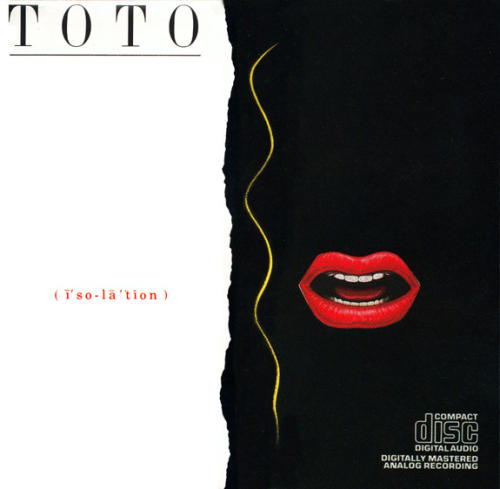
Toto - Isolation (1985)

In 1982 Toto won album of the year for IV and seemingly swept the grammies. Coming off the success of that album, the expectations were high for these veteran studio cats.

Unfortunately, difficulties would strike the band shortly after the release of IV. After nearly completing Isolation, lead vocalist Bobby Kimball was fired for drug abuse issues (incidentally, Kimball was invited back into the band in 1998).

The search for a new lead singer was not an easy one. Toto's first choice for a replacement was Mr. Mister's Richard Page. Page turned them down preferring to record and perform music he'd written rather as opposed to having to do Kimball-karaoke.

Drummer Jeff Porcaro received a tape of Louisianna bayou rock band, LeRoux and was quite impressed with their tweeter-frying lead vocalist, Fergie Frederiksen. So, after only one album with LeRoux, Frederiksen packed up and headed for Los Angeles to front Toto.

Frederiksen's vocal stamina and acrobatics made for an interesting fit in Toto. And the change in direction they took with Frederiksen in the band was not well received by the fans that had embraced their efforts on Toto IV.

The band was a bit harder edged, the songs were a bit more uptempo, with only one ballad in the mix-- the melancholic Steve Lukather penned and sung How Does It Feel. The rest of the musical offerings of this album were sung by either Fergie Frederiksen, David Paich, or both. The addition of Frederiksen was actually an excellent mix for background vocals as his tweeter-frying tenor gave the band a bit more balance in their upper registers. Frederiksen's background vocals are probably most noticeable on the minor hit Stranger In Town. But Fergie seems to steal the show on songs like Endless and Angel Don't Cry which sound as though they're tailor made to his vocal register.

After having heard live bootlegs from this era-- Toto was never better live than with Fergie in the band. He was consistently good from night to night and really took some of the Kimball classics like Hold the Line and English Eyes and made those songs his own. Sadly, for Fergie at least, this incarnation of the band was not to last. He was given his walking papers after the 1985 tour.

Today this album sounds a bit dated, but it can still be appreciated for its musicianship, Frederiksen's vocals, and its novelty-- this is one of only 2 Toto albums that feature all 3 of the Porcaro brothers (Jeff on drums, Mike on bass, and Steve on keys) as full members of the band.

Related links:
Toto - Hydra (1978) review
Toto - The Seventh One (1988) review
Toto - Kingdom of Desire (1992) review
Toto - Tambu (1995) review
Toto - Mindfields (1999) review
Toto - Falling in Between (2006) review
Trillion s/t (1978) review (Fergie's 1978 hard rock band with keyboardist/producer Patrick Leonard)

Stranger In Town music video


How Does It Feel music video

Monday, May 08, 2006

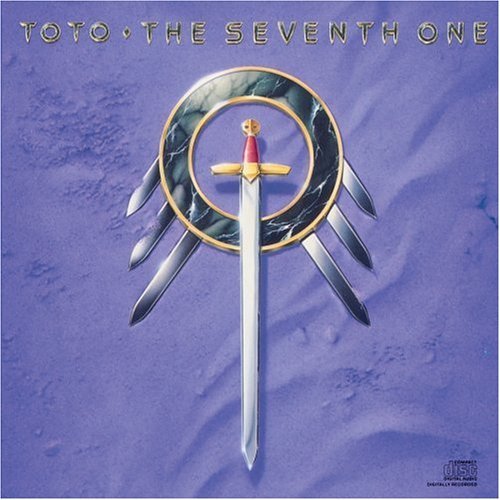
Toto - The Seventh One (1988)

Toto has delved into a myriad of different musical styles, but in the eighties they seemed to have their fingers firmly planted on the pulse of pop music. But even when focused on pop music, Toto's music was leaps and bounds above much of the other pop music of the era.

While 1982's IV swept the Grammies and is thus much more well known, The Seventh One is at least equal in quality if not superior due to it's pristine production and a greater sense of musical adventurousness-- integrating steel drums, Spanish guitar, and other musical styles and elements not traditionally heard in pop music.

In 1984 Toto parted ways with lead vocalist Bobby Kimball. After being turned down by Mr. Mister vocalist, Richard Page, Toto settled on Fergie Frederiksen. Unfortunately, due to Fergie's difficulties in the studio, he only lasted 1 album (Isolation) and 1 tour (1985) before Toto opted to part ways with him as well. One of the vocalists they approached, Jason Scheff, had already gotten a gig-- replacing Peter Cetera in Chicago, but he did recommend a tenor vocalist, Joseph Williams, who he was familiar with.

Williams got the gig and sang lead on 1986's Fahrenheit and on The Seventh One. While he sounded exceptional on Fahrenheit he sounds considerably more self-assured and more comfortable in his new shoes on The Seventh One. His soaring tenor, a perfect fit for Toto.

The Seventh One is one of those rare albums where each track is inherently catchy, where the hooks get under your skin and get your toes tapping, hands clapping, or fingers snapping. Drummer, Jeff Porcaro, once again proves his worth as one of the best groove drummers in the industry. Toto even borrows a horn section for several tracks (including Chicago trombonist, James Pankow on the lead-off track, Pamela)-- it could even be argued that Toto was more comfortable with using a horn section in the eighties than their contemporaries, Chicago, as evidenced largely by this album.

The vocal harmonies are tight as always (and borrowing another page from Chicago, Joseph Williams lead vocals are layered with his background vocals-- much like Peter Cetera used to do with Chicago), Steve Lukather's guitar chops seem a bit more crisp as having Joseph singing lead allowed him to concentrate more on his guitar.

Standout tracks include Pamela, Stop Loving You, Mushanga, Anna, and the anthemic Home of the Brave which has become a favorite at Toto's live shows in recent years.

In short, if you enjoyed Toto IV, you'll be pleased as punch with The Seventh One as it uses the same pop-friendly foundation as IV and takes it to another level.

Related article:
Joseph Williams Telephone Interview 4/14/1998

Tuesday, April 25, 2006

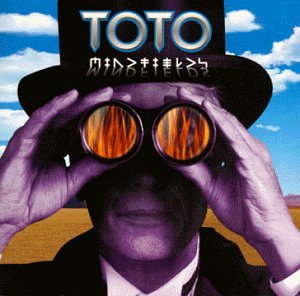
Toto - Mindfields (1999)

In 1998 after a 14 year absence, Bobby Kimball was asked to re-join Toto. With Mindfields Toto marked his return to the fold. Much to the disappointment of their US fans, Mindfields was released initially in Japan and Europe in March 1999 but was not released in the United States until the fall of 1999. In addition to its delayed US release was a rather different tracklisting than had existed on the album's initial release. Being as impatient as I was, I ended up spending over $30 on the original Japanese release.

Besides the obvious, the most noticeable change between Mindfields and 1995's Tambu is that the band sounds a bit more self-assured. They'd dealt with the loss of Jeff Porcaro and were ready to move on.

Mindfields, first and foremost is a pre-Renaissance (the Renaissance would not actually occur until 2006's Falling In Between). The ingredients had started to come together for the band's creative "rebirth" (making this album the band's "re-conception"). And while many of the tracks are incredible (Spanish Steps of Rome, Better World (Pts. 1, 2, & 3), Last Love, and No Love), there are a few missteps-- the band trying to find their new footing after the return of Kimball. And even their missteps-- High Price of Hate, Selfish, and Caught In the Balance-- to name a few, are admirable attempts at genres the band had not previously attempted. While not all of these musical experiments worked, the very experimentalist nature which spawned them was the epitome of the principles the band was founded on and named after (en Toto, Latin for "in total" or "all-encompassing" Toto was created to be a band that would be all-encompassing of all the various different musical styles-- it was not named after the Italian commode/urinal company, the dog from the Wizard of Oz, or a bastardization of the "real" last name of any of the band members as has been reported over the years as the sources of the band's name).

The different musical directions the various different songs take gives the album a bit more "schitzophrenic" feel than its much more cohesive follow-ups (2002's Through the Looking Glass covers CD and the aforementioned Falling In Between). This schitzophrenic nature makes Mindfields sound more like a loose connection of unrelated songs than an actual album with any cohesive lyrical or musical theme.

The album is still worth the price of admission, based on the strengths of its better songs and the musicianship that is evident throughout the album as a whole. But in the grand scope of Toto's history and discography this album will, at best, be remembered as an awkward stage in the band's evolution.

Tuesday, April 11, 2006

Toto - Tambu (1995)

The first thing that jumps out about Tambu is the rather original design of the CD sleeve, giving off the appearance of a classic dime store pulp novel. But it's not just the design of the CD sleeve that makes the album pop. This album marks Toto's first studio effort following the death of founding member and drummer Jeff Porcaro.

Perhaps what is most admirable about Jeff's "replacement" is that Toto didn't try to replace Jeff. They chose the well-established, Simon Phillips, a drummer with a style and sound all his own and struck out in a new musical direction.

Listening to 1992's Kingdom of Desire and Tambu back to back one can scarcely believe these two albums are products of the same band, so disparate are they in style, tone, production, and overall sound. Where Kingdom of Desire was hard driving, gritty, and raw hard rock Tambu is a more polished and melancholy affair. It's a band saying goodbye and seeking closure after the death of Porcaro-- a closure they needed to find before being able to continue in a different musical direction.

Toto has never been known for their lyrics, where in the past their lyrics were light fluff, Tambu is probably the band's strongest album to date (at least in the lyrical sense). There's an emotional honesty to the lyrics that many of their previous albums were lacking-- the lyrics often getting sacrificed at the expense of the band's musicianship and composition-- an afterthought. But this time around the lyrics weave seamlessly with David Paich's piano chops, Simon Phillips soothing beats and rhythms, and Steve Lukather's gravelly voice which had become a mainstay on the previous album.

There's a recurring theme of time-- time lost, time running out, time that's passed, and trying to hold on to time throughout the album. And while many of the songs come across as romantic love songs, that romantic love is merely a metaphor for the love this band felt for Jeff Porcaro. There's also a natural progression to the songs as you hear the band dealing with crushing grief and a desire to move on with their lives and careers. The album does end on the very promising The Road Goes On which has become a staple of Toto's live shows in recent years:

"Now I see it all through different eyes
Where I'm going, where I've gone
All I know-- I'm still surprised
That the road goes on and on"

While this isn't Toto's best it is certainly one of their better albums, it shows a band in transition, in flux, and generally maturing and is certainly worth a listen.

Thursday, February 02, 2006

Toto - Hydra (1978)

I was recently listening to live versions of Hydra and St. George & the Dragon from their 1978 Hydra album. These two songs had the potential to have been extrapolated on-- a concept album could have been written around the whole St. George tale.

Hydra
is the tale of St. George from the perspective of the Hydra he's made his mission to kill.

Musically, the song features some of Steve Lukather's best guitar playing and some exceptional keyboard work by both Steve Porcaro and David Paich.

The very next track, St. George & the Dragon is the continuation of the tale featuring some more clever keyboarding from Paich and Porcaro.

Sadly the rest of Toto's Hydra album is a bit uneven. There are some strong bits like 99 and
Lorraine. But other than those 4 tracks Hydra is mediocre at best.

I think if Toto had chosen to write the entire album around the tale of St. George either as a concept album (a la Alan Parsons Project) or even a rock opera (a la The Who's Tommy) the end product would have been considerably stronger.

In 1984 Toto composed and performed much of the music to the Dino DeLaurentis version of Frank Herbert's Dune and some of the material from that, is musically similar to the material on Hydra. Desert Theme could just as easily have been an overture to open the tale of St. George, Take My Hand would have fit well as a stirring emotional interlude in the tale.

Saturday, January 28, 2006

Toto - Falling in Between (2006)

Toto is and always has been a band of "musician's musicians"-- highly respected among their peers but often overlooked by the American public and often panned by their critics. And their revolving door of lead vocalists Bobby Kimball, Fergie Frederiksen, Joseph Williams, and Jean-Michel Byron, certainly didn't help them remain in the public eye.

The 1998 return of original lead vocalist, Bobby Kimball, is just what this band needed to steer them back on track. While much of the material they recorded in the 14 years following Kimball's 1984 firing is exceptional and quite listenable the material they've recorded since his return shows a certain return to form-- taking their music up a notch.

While 1999's Mindfields was arguably their best album since the grammy winning Toto IV (1982), Falling in Between kicks it up to a whole new level. Those who have lost track of Toto over the years may not think this sounds like them, those who have stuck around for all their ups and downs over the years will surely recognize this album as another step in the band's evolution.

This album welcomes new keyboardist/vocalist Greg Phillinganes who joined the band for the 2004 tour to replace keyboardist David Paich who has taken a leave of absence from the road for health reasons. Even moreso than Mindfields, Falling in Between sounds like a full group effort. The latin-tinged percussion, Steve Lukather's melodic guitar, and Paich's keyboard fills throughout the album bare evidence that this band, contrary to popular public belief, is alive and VERY well.

From the opening track, Falling in Between, Toto grabs a firm grasp on the listener and holds on tight, not letting go through the duration of the album. Dying on My Feet features Chicago's James Pankow guesting on trombone and Tower of Power's Lee Thornburg on trumpet augmenting Toto's already tight sound.

Bottom of Your Soul finds Steve Lukather sharing lead vocals with former Toto vocalist, Joseph Williams, who was invited to join the sessions as a friend and guest. His smoother tenor fits the song better than the more soulfully flamboyant Bobby Kimball's would have, his contributions to this album are welcome ones indeed.

King of the World shows that David Paich still has not only his keyboard chops but still has a respectable singing voice as he shares the vocals with Bobby Kimball and Steve Lukather.

Another notable guest spot is on Hooked, Jethro Tull's Ian Anderson graces the song with his superlative flute chops. Anderson's flute and Lukather's guitar play so tightly together you'd almost swear Anderson had been in Toto all along.

Simple Life shows Steve Lukather at his best both as a musician and a songwriter. This is probably one of his most nakedly personal songs since the material on his 1997 solo album, Luke.
In 1992 after drummer Jeff Porcaro's passing, Toto could have gone the easy route and found a "Jeff-clone" instead they opted to find an established drummer with a style all his own. Taint Your World is yet another song added to the Toto catalog by Simon Phillips in which he proves himself to be a drummer apart. While Phillips sound excellent throughout the entire album, Taint Your World is the one track in which his talents are most evident.

Let It Go finds Greg Phillinganes showing he's more than equal to the task of handling lead vocals for Toto on his own. The song also features a moving and melodic guitar solo by Steve Lukather.

Spiritual Man is an interesting piece in that it's a rather secular gospel song. It's not overtly religious and only hints at Christianity with references to a man with "holes in his hands." The song instead focuses on spirituality rather than belief or dogma.

Ironically the closing track is titled No End In Sight. And hopefully with a title like that, this album is a sign of more great music to come from this far too often overlooked band.

Related Links
Falling in Between (wikipedia)
Toto (wikipedia)
Toto 99 (Official Website)
Steve Lukather (Official Website)
Steve Lukather (wikipedia)
Bobby Kimball (Official Website)
Bobby Kimball (wikipedia)
Mike Porcaro (Official Website)
Mike Porcaro (wikipedia)
Simon Phillips (Official Website)
Simon Phillips (wikipedia)
David Paich (wikipedia)
Greg Phillinganes (wikipedia)

Tuesday, December 06, 2005

Steve Lukather - Santamental (2003)

The very title of his 2003 Christmas CD, Santamental, immediately tips Steve Lukather’s cards so you know he's not dealing from the same deck as dear old dad. The picture of Lukather in a straightjacket with Christmas lights wrapped around him on the CD sleeve only reinforces that message. The best part about this CD, Lukather brought some of his “friends” over to “play.” Friends like Eddie Van Halen (on Joy to the World), Edgar Winter (on Greensleeves and Winter Wonderland), Steve Vai (on Carol of the Bells) and Michael Landau (on Look Out for Angels) augment and complement Lukather’s vocal and guitar stylings throughout the CD.

If you’re looking for a “safe” Christmas CD, reminiscent of Burl Ives, Bing Crosby, Frank Sinatra, and Nat King Cole, you really ought to keep looking—you won’t find that on this CD… Well, that’s not entirely true. Lukather does an amusing “duet” with the late Sammy Davis Jr. on the Christmas classic, Jingle Bells.

Lukather seamlessly shifts from instrumental to vocal tracks showing off his guitar chops on songs like Angels We Have Heard On High and Silent Night and his raspy vocals on Broken Heart for Christmas, Look Out For Angels and Winter Wonderland.

What makes this such a stand-out Christmas CD is that Steve Lukather is able to take each of these songs and make them his very own. While the songs are still recognizable as Christmas songs, they have an extra chutzpah (okay, so maybe “chutzpah” is a word better reserved for a Hanukah CD) that also makes them distinctly Lukather songs.

Tuesday, November 22, 2005

Steve Lukather - Luke (1997)

On his third and probably most emotionally charged solo album Toto guitarist, Steve Lukather took his game to a new level. The very title of the album, Luke, is the first indication that this album is a more personal endeavor than his previous 2 albums. Using his more personal moniker as an album title is the opening of the door to give the listener a glimpse of a man coming to terms with a recent divorce and the new life he was about to embark on.

Unlike his über-polished eponymous debut in 1989 and 1994’s Candyman, Luke exhibits a raw energy- an exposed nerve if you will. With darker themes of pain, abandonment, and betrayal the polished sound would have seemed out of place on the emotional journey Lukather chooses to take his listeners on this time around.

The album starts with a sucker punch: “Blue eyes, black skies, clouds filled with pain, disguise the emptiness, the disdain” in The Real Truth. This song is that moment after any relationship that’s already ended when the shock has passed and you’re forced to come to grips with the fact that it’s over.

Misery loves company. When hearts get broken we tend to will that pain upon the person who caused the hurt. “Wish I could feel bad for you, feel anything after all I’ve been through, I’m not as strong as I seem, while your heart is beating, I’ve got this broken machine.” Broken Machine and Love the Things You Hate is every venomous word you’ve ever thought after someone as broken your heart.

After 4 hard driving songs, Lukather slows things down with the melancholic Hate Everything About U, arguably one of the best songs Lukather has ever performed:

You don’t know how much I hate everything about you
Your honey red lips and your eyes big and sparkling blue
The curve of your hips and your black Irish hair
Sends a shiver that runs through me too
You don’t know much I hate you

Wish it were true

Few other songs have ever expressed so well that hate really isn’t the opposite of love. If anything, this song demonstrates it takes just as much energy to hate as it does to love. Sometimes only when trying your hardest to hate someone do you truly discover how much you really loved that person.

On the flip side is Lukather’s middle finger at the whole mess, Always Be There For Me. Full of piss and vinegar from start to finish it sums up all of the anger, hurt, and bitterness the rest of the album touches on. If any song sums up the mood of the whole album, this is it:

When I reach out my hand
There’s nobody there I can touch any more
When I call out your name
The pain rips right through me like never before
Is it too much to ask
For one last memory
‘cause yesterday you said
You’d always be there for me


All in all what makes this album work so well is the way each song sounds like a duet between Lukather the singer and Lukather the guitarist. And while this subject matter has been covered by numerous other poets and musicians over the years—the rawness of Lukather’s voice and the fevered crunch of his guitar makes it seem fresh and new and just plain honest. This is the soundtrack for all of those bitter break-ups we find ourselves on the receiving end of. ***** (out of 5)

Monday, November 21, 2005

Favorite Debut Albums

A lot of cool bands have had fantastic debut albums... Some bands are able to match their early success on later albums, others never quite get "there." What are your favorite debuts?

Here are mine:

1) Bad Company Bad Company (1974) - Not a bad song on it. Strong start to finish. Fantastic effort from one of the first 70s "supergroups." Highlights include the title track, the cover of Mott the Hoople's Ready For Love which by far exceeds the original version (after all, Paul Rodgers can sing circles around Ian Hunter), and Seagull.

2) Boston s/t (1976) - Much like with Bad Company, there wasn't a bad song on their debut. Unfortunately, their debut got so heavily overplayed when it came out that it staled the band for many would be fans. Highlights include More Than a Feeling, Smokin', Foreplay/Long Time, and Let Me Take You Home Tonight.

3) Chicago Transit Authority (1969) - Other than Free Form Guitar this album is strong from start to finish. While I personally do enjoy Free Form Guitar I think it's out of place on the album. It should have been put at the very end of the album AFTER the nearly 15 minute long opus Liberation I think having it in the middle of the album kind of shunts the album continuity. Other than the awkward placement of FFG, this album is absolutely fantastic. Highlights include I'm a Man, Introduction, Beginnings, and South California Purples.

4) Toto s/t (1977) - Not a bad song on this stellar debut. While it's not their best album it certainly shows glimpses of the brilliance that would be exhibited on their later material. Highlights Hold the Line, I'll Supply the Love, and Angela

5) Sons of Champlin Loosen Up Naturally (1969)- originally released on vinyl on the exact same day as Chicago Transit Authority... what a great day for music that was! There's not a bad song on this great collection. There's a certain energy and cohesiveness that was lacking on their 1970 follow-up. This truly shows off what Bill Champlin was/is capable of. Highlights Freedom, Things Are Gettin' Better, 1982-A, Everywhere, and Don't Fight It, Do It

Honorable Mention(s): King Crimson In the Court of the Crimson King (1969), Matchbox 20 Yourself Or Someone Like You (1996), Steve Lukather s/t (1989), Trillion s/t (1978), and Peter Cetera s/t (1981), Dream Theater When Dream and Day Unite (1989), Asia s/t (1981), Meat Loaf Bat Out of Hell (1977)