Showing posts with label 60s. Show all posts

Thursday, June 09, 2011

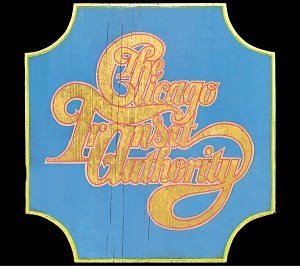
One Track Mind: Chicago Transit Authority - Introduction (1969)


While I'm part of what is considered the "second wave" of Chicago fans in that I became a fan of theirs in the eighties when they were riding high on hits like Hard to Say I'm Sorry, You're the Inspiration, Hard Habit to Break, Will You Still Love Me, and to a lesser extent Look Away, it was inevitably their back catalog that held my interest and kept me a fan all these years later. 

I remember, Christmas 1991.  My parents got me my first computer and Chicago's 4 cassette box set, Group Portrait.  I was already intimately familiar with everything Chicago had recorded since 1981 (Chicago 16-21) but I was still rather new to their older material. 

I popped in that first casette and was blown away by the opening track, Introduction, which had been the lead track on their debut album back in 1969.  Terry Kath's soulful vocals and searing guitar, that wall of brass from the horn section, and a tasteful Lee Loughnane trumpet solo that was followed by a fiery Terry Kath guitar solo.  I was hooked!

About a year and a half after that, the summer of 1993, my father took me to my first Chicago concert at the Starlite Theater in Latham, NY.  Latham was about a 3 1/2 hour drive from my hometown.  On that tour they were opening their sets with... Introduction.  The faces and voices had changed somewhat.  Terry Kath had died in 1978, Peter Cetera had left the band in 1985 to pursue a solo career, and drummer Danny Seraphine had unceremoniously and somewhat acrimoniously been fired in 1990.  In their places were Bill Champlin (vocals & keys), Dawayne Bailey (guitar & b/g vocals), Jason Scheff (bass & b/g vocals), and Tris Imboden (drums).  The horn section was still intact though as was original keyboardist/vocalist, Robert Lamm. 

My father & I made the same pilgrimage in 1994 and I had the joy of meeting many of the members of the band including guitarist Dawayne Bailey, bass player Jason Scheff, trumpet player Lee Loughnane, keyboardist Robert Lamm, trombone player Jimmy Pankow, and the 2 guys who were arguably the most gracious with the fans) trumpet player Lee Loughnane and drummer Tris Imboden. 

Since then my knowledge and familiarity with Chicago has grown substantially.  I know their back catalog front, back, left, right, upside down, and inside out.  Some of their material has aged well, some has not.  But Introduction-- no matter how many times I listen to it, it's like hearing it for the first time all over again.  There's a timeless energy to it.  That these guys were in their early twenties when they recorded it.  None of them had even graduated college that they were able to compose and perform material like this just blew my mind. 

And now whenever I hear that song, my mind goes back to those long road trips with my father (my mother joined us when we went to see them in Saratoga Springs, NY with CSN in 1996 and in Toledo, OH in 1997 when they came to visit me while I was working at Cedar Point Amusement Park.  But on both those tours they had dropped Introduction from the setlist).

I opened with a clip of the original line-up of the band performing the song in 1972.  So it seems only fitting that I close with a clip of the band, as I would have seen them in 1993, performing the song in Toronto:

Thursday, January 27, 2011

Forgotten Music Thursday: John Barry - Themependium (2007)

With a career spanning over 5 decades, John Barry has made a name for himself as one of the most in demand film score composers-- perhaps only second to John Williams. 

Included in this exceptional box set are not only Barry's more well known works for the Bond films (including the signature theme) but also material from his Oscar winning scores for Born Free, Out of Africa, The Lion In Winter, & Dances With Wolves. 

The set is rounded out by a handful of some of Barry's lesser known works including TV themes and material from his scores for Raise the Titanic (easily the best part of this Golden Razzie winner of a bomb), Somewhere In Time (the hauntingly beautiful theme that yanks on the heartstrings and some might argue is more memorable than the film) not to mention material from Day of the Locusts, Body Heat, Frances, Peggy Sue Got Married and many more.  For fans of film scores this is a must have as Barry's  scores were so brilliant they at times were even superior to the films he was scoring (Raise the Titanic and Frances are cases in point).

While it could be argued that much of the material on this box set is well known (the Bond themes in particular) much of it is not.  And pulled from the context of the movies and shows the music is taken from, much of the "forgotten" and even some of the more well known gems are what stand out the most as they are strong enough to stand on their own even without the films they are from as a frame of reference. 

There's a distinct and haunting beauty to much of Barry's work.  Considering the length, scope, and breadth of Barry's career a single CD collection would not do him justice.  This box set is an excellent place to start delving into Barry's extensive body of work and could conceivably inspire the listener to delve deeper into some of the full scores that are merely hinted at in this set.

Related Links
John Barry (wikipedia)
John Barry - The Man With the Midas Touch

Friday, March 26, 2010

Moody Blues - Days of Future Passed (1967)

Lush and beautiful from start to finish the Moody Blues Days of Future Passed is possibly the very first progressive rock album, not to mention one of the first successful concept albums. Ambitious, adventurous, and symphonic—while a product of its era Days of Future Passed has, for the most part, aged remarkably well.

The album is a delightful mixture of late sixties psychedelia and symphonic rock. The symphonic pieces performed by the London Festival Orchestra which was conducted by Peter Knight. Knight wrote most of the orchestral pieces around musical themes that had been written by Moodies Justin Hayward, Ray Thomas, Mike Pinder & John Lodge.

Admittedly some of the rock pieces are moderately dated but with new mixes they have also remained relatively fresh.

Initially Deram Records approached the Moody Blues to record a rock version of Dvořák’s New World Symphony. Little did they know that the Moodies had already started writing Days of Future Passed around a live stage show. The basic concept, a musical journey of the passage of time from day to night was nearly doomed to failure before recording even started. A combination of symphonic music with rock had never been done before, at least not to the extent that the Moody Blues were planning. Understandably the executives were wary—properly executed Days of Future Passed did have tremendous potential, but improperly executed the album had the potential to completely alienate fans of both rock and symphonic music. The risk of failure was tremendous.

Despite the odds stacked against them, the Moody Blues made it work. Days of Future Passed was a commercial and critical success thus paving the way for bands like Yes, Pink Floyd, Genesis, King Crimson, and Emerson Lake & Palmer to release similarly musically adventurous albums in the late sixties and into the seventies. Had Days of Future Passed failed chances are record label execs would have been reluctant to bankroll the musically adventurous albums of the aforementioned prog rock bands and thus deprived the listening public of some truly fantastic albums.

While the Moody Blues didn’t quite get it perfect, they got it right and they were the first to do so successfully. The Beatles may have had Sgt. Peppers and many may consider that as the first concept album. But it could be argued that Sgt. Peppers concept only bookended the album whereas the Moody Blues remained true to the concept from the start to the finish of Days of Future Passed making it truly the first concept album.

Days of Future Passed can also be considered part of a trifecta of albums that really motivated the shift from singles-oriented to album-oriented releases. Prior to 1967 many albums were merely collections of singles with filler material. On the first handful of Beatles and Beach Boys albums the songs were largely inter-changeable. That is to say any singles from any of their albums would just as easily have fit on any of their other albums. With the Beatles Sgt. Peppers Lonely Hearts Club Band, the Beach Boys Pet Sounds, and the Moody Blues Days of Future Passed there was a definite shift to individual songs being pieces of a greater whole—the whole being greater, not equal, to the sum of its parts.

Related Links
Days of Future Passed (allmusic.com)
Days of Future Passed (wikipedia)
Moody Blues (official site)
Moody Blues (allmusic.com)
Moody Blues (wikipedia)
Justin Hayward (official site)
Justin Hayward (wikipedia)
John Lodge (official site)
John Lodge (wikipedia)
Mike Pinder (official site)
Mike Pinder (wikipedia)
Ray Thomas (wikipedia)
Peter Knight (wikipedia)
London Festival Orchestra (wikipedia)
Deram Records (wikipedia)

Thursday, March 25, 2010

Forgotten Music Thursday: Al Kooper & Mike Bloomfield - Fillmore East: The Lost Concert Tapes 12/13/68

While this show was recorded in December 1968 with the full intention of being released shortly thereafter, it instead sat long forgotten and presumed lost until 2001 when Al Kooper was going through some old tapes in his possession stumbled upon this show. He cleaned it up a bit and finally almost thirty-four years after it had originally been performed and recorded it was finally released.

Sometimes when musicians team up there’s an undeniable, unmistakable, and absolute electric chemistry between them, such was the case with Mike Bloomfield & Al Kooper. Teaming up initially for the SuperSession album, a series of concerts were scheduled on both the East and West Coasts at Bill Graham’s Fillmore East and West venues.

While that chemistry is certainly enjoyable in the studio, it’s even more tangible in a live setting. In addition to exhibiting Bloomfield’s virtuosity on guitar, Johnny Winter also guests on It’s My Own Fault. Hearing Bloomfield and Winter playing side by side is an enjoyable treat in and of itself.

The electric energy of Kooper and Bloomfield I’d argue rivals the considerably more famous Steve Winwood/Eric Clapton/Ginger Baker collaboration, Blind Faith. There’s an honesty and a respect between Bloomfield and Kooper that is evident on each song. Rather than rival egos challenging one another as was the case of many supergroups since then, Bloomfield and Kooper play homage to each other and do a tremendous service to one another’s talents—because of, not in spite of their mutual respect and apprectiation of one another.

Perhaps the weakest link on the album are Al Kooper’s vocals and the sub-amateurish drumming of Johnny Cresci. While his voice is enjoyable when he remains within his range, on 59th St. Bridge Song (Feelin’ Groovy) Kooper attempts to sing outside of his range with less than enjoyable results. This is a minor quibble as the concert was largely instrumental and was more a display of Kooper’s talents on keyboard and Bloomfield’s undeniable abilities as a blues guitarist firmly in tune with Chicago’s brand of urban electric blues. Johnny Cresci was woefully under-talented compared to the talents of Kooper and Bloomfield whose playing was strong enough to overshadow much of Cresci’s drumming—unfortunately not quite enough to completely eclipse his sub-par playing.

Forgotten for thirty-four years this concert was well worth the wait and it’s a blessing to fans of Al Kooper, Mike Bloomfield, Johnny Winter specifically and of great music in general that once found by Kooper he had the good sense to share this release with the listening public.

Related Links
Al Kooper (official site)
Mike Bloomfield (official site)

Al Kooper (wikipedia)
Mike Bloomfield (wikipedia)
Johnny Winter (wikipedia)

Thursday, March 18, 2010

Chocolate Watch Band - No Way Out (1967)

While they were fixtures of the San Francisco Bay Area music scene of the late sixties, time has not been kind to the Chocolate Watchband. Today they remain largely forgotten by all but the more avid listeners of music from this period.

For those unfamiliar—close your eyes and imagine the Rolling Stones… now picture a runaway freight train ramming the Stones through a mushroom clouded prism of psychedelia. That sound is the Chocolate Watchband.

Their music has not stood the test of time as well as some of their contemporaries largely because, other than a very small handful of bands from that era, psychedelia burnt out (like many of the musicians who performed it) within a relatively short span of time. Its popularity was not sustained and the spaced out trippy keyboard sounds remain relics of the bygone era in which the music was originally recorded.

There was a definite Stones influence that was especially evident on songs like Come On (which sounds so reminiscent of the Stones you might even check the liner notes to make sure it’s NOT Mick Jagger singing). And speaking of the Stones, these guys had a rather huge pair—it takes a pair to tackle music as diverse as the aforementioned Stones influenced Come On to the Wilson Pickett staple In the Midnight Hour to the spacey Pink Floyd-esque instrumental Dark Side of the Mushroom (which predates PF’s Dark Side of the Moon by several years).

If these guys had adapted and changed with the changing times they likely would today be mentioned in the same breath as guys like Jimi Hendrix, the Jefferson Airplane, the Who, Pink Floyd, and other bands that today get name-dropped like jelly-beans into a musical Easter Basket. The talent was there, but perhaps the vision was not. As quickly as they appeared and were noticed, they had disappeared.

Today No Way Out is a time capsule of the Summer of Love—and it’s one of the better (if lesser known) capsules of that era. The most dated of their songs Are You Gonna Be There (At the Love In) is catchy upbeat and features more of those Mick Jagger-esque vocals that the band was known for in their prime. The album is enjoyable from start to finish with not a weak track on it not to mention a seminal album of its era and of the psychedelic genre.

Related Links
The Chocolate Watchband (official site)
The Chocolate Watchband (wikipedia)
The Chocolate Watchband (allmusic)

Monday, December 28, 2009

Chicago Transit Authority - Live at the Itchy Foot Moose Sept. 1, 1968

Imagine, if you will, getting to hear your favorite band before they hit it big. Chicago Transit Authority (originally "The Big Thing" and later just "Chicago") was formed by a gentleman's agreement in woodwind player, Walt Parazaider's apartment in February 1967. The original six members Terry Kath, Danny Seraphine, Robert Lamm, Walt Parazaider, James Pankow, and Lee Loughnane were augmented a few months later by tenor vocalist/bass player, Peter Cetera who left the group he'd been with, the Exceptions, to join The Big Thing.

Through the rather fortuitous friendship of James William Guercio and Walt Parazaider, The Big Thing were pitched to Columbia Records. One of Guercio's first steps as producer/manager of the band was to change their name to Chicago Transit Authority, after the public transportation he'd grown up riding and held a special nostalgia for.

This bootleg is a snapshot of that era, before Chicago became Chicago, before their 3 worldwide #1 hits, before becoming only second to the Beach Boys in record sales by an American band-- the band playing on this bootleg is a younger, hungrier, and much more raw band than what they'd later turn into.

The Setlist
1. It Better End Soon (later released on Chicago II)
2. Girl (later released as Someday on Chicago Transit Authority with completely different lyrics referencing the '68 Democratic Convention in Chicago)
3. Once Upon a Life (never released)
4. Terry's Blues (cut ending)
5. Terry's Blues (one hell of a showcase of guitarist Terry Kath's talents, at the end of the song he refers to the song as Toe Jam)
6. Questions 67 & 68 (later released on Chicago Transit Authority)
7. Johnny B. Goode (Chuck Berry cover, sung by Terry Kath with interesting "new" lyrics interespersed with the Chuck Berry lyrics making reference to marijuana)
8. Rock Around the Clock (Bill Haley & His Comets cover sung by Peter Cetera)
9. Gimme Some Lovin' (Spencer Davis Group cover sung by Robert Lamm, I have a bootleg from the 80s that features Peter Cetera singing this instead of Robert Lamm)
10. Listen (later released on Chicago Transit Authority)
11. Does Anybody Really Know What Time It Is? (later released on Chicago Transit Authority)
12. Mississippi Delta City Blues (later released on Live in Japan in 1972with a new arrangement, and on Chicago XI in 1978 with yet a different arrangement)
13. Got to Get You Into My Life (Beatles cover sung by Peter Cetera)
14. It's Not Unusual (Tom Jones cover sung by Terry Kath)
15. Poem 58 (later released on Chicago Transit Authority)
16. I'll Be Back Again (Beatles cover sung by Robert Lamm & Peter Cetera)
17. Dedicated to Girl Number One (unreleased, this is the song Chicago recorded as their demo. The demo is apparently lost forever somewhere in the Sony vaults. This is one of two live versions I know of, sung by Robert Lamm)
18. Liberation (later released on Chicago Transit Authority)

The sound quality is uneven. On some songs its surprisingly good but on all tracks, despite a few flubs here and there, it's very listenable. This is one of three Chicago bootlegs from 1968 known to be floating around fan collector circles. Of the three, this one has the best sound quality although one of the other two bootlegs (both recorded at Barnaby's) have arguably a superior song selection with covers of Hendrix (Hey Joe, Foxy Lady, & Purple Haze), Cream (Sunshine of Your Love), the Beach Boys (Darlin'), the Beatles (Lady Madonna, Sgt. Peppers, With a Little Help From My Friends), Marvin Gaye (One More Heartache), Martha & the Vandellas (Dancing in the Streets), Brenda Lee (Losing You), and Wilson Pickett (99 and a Half Just Won't Do).

Hearing the band at this stage in their careers is quite refreshing considering what the band has turned into in more recent years. Members have come and gone and the hunger has been replaced by greed. There's a love for the music they're performing-- both the covers and the original material that is, arguably, lacking in the current incarnation of the band's performances.

But all in all this is how Chicago should be heard, young and hungry. Full of energy, a balls-on horntastic blast of music.

Related Links
Chicago (Official Site)
Chicago (wikipedia)
Peter Cetera (Official Site)
Peter Cetera (wikipedia)
Terry Kath (Official Site)
Terry Kath (wikipedia)
Danny Seraphine (wikipedia)
James Pankow (wikipedia)
Walt Parazaider (wikipedia)
Lee Loughnane (wikipedia)
Robert Lamm (Official Site)
Robert Lamm (wikipedia)

Tuesday, November 24, 2009

Blood Sweat & Tears - Child Is Father to the Man (1968)

Blood Sweat & Tears are arguably a case study of a band with a brilliant debut that the band was never able to live up to again.

BS&T's was in large part the brainchild of Al Kooper. So it was quite surprising when after this debut, Kooper was given his walking papers and replaced by David Clayton-Thomas.

While Kooper is not a great singer, this listener prefers his vocals over those of his successor. Add to that that Kooper was the principal songwriter in the band the band seemingly shot themselves in the foot when they showed Kooper the door.

Commercially their second album was considerably more successful, but to my ears it lacks the inventiveness and the pure unbridled potential this album showed.

Today this album does sound a bit dated, not in a bad way. It's a delightful capsule of the late sixties. There's a fullness and lushness that's at least marginally reminiscent of the Moody Blues Days of Future Passed released the year before.

One of the reasons Kooper was let go was the band felt they could find a better singer, but listening to songs like More Than You'll Ever Know and I Can't Quit Her I honestly can't hear the need for a new singer. Kooper doesn't just sing well, he nails the vocals on most of these songs. And even if he lacked the range of "better" singers, the band would have been better served bringing in a second singer in addition to Kooper, as opposed to replacing him.

What is perhaps most remarkable about this album is that its so strong and so seamless from start to finish. There's not a bad track on it and it certainly leaves the listener wanting more. It's arguably one of the "must-have" albums for any fan and/or collector of late 60s rock.

All in all this album is both a testament and a glaring question mark to what might have been had BS&T held on to the talents of Al Kooper.

Related Links
Blood Sweat & Tears (official site)
Blood Sweat & Tears (wikipedia)
Al Kooper (official site)
Al Kooper (wikipedia)
Jim Fielder (wikipedia)
Fred Lipsius (official site)
Fred Lipsius (wikipedia)
Randy Brecker (official site)
Randy Brecker (wikipedia)
Jerry Weiss (wikipedia)
Dick Halligan (official site)
Dick Halligan (wikipedia)
Steve Katz (wikipedia)
Bobby Colomby (wikipedia)

Tuesday, August 18, 2009

Come September (1961)

This movie is arguably more notable for what happened off-set during filming than for the film itself.

While the film was focused more on the romance between Robert (Rock Hudson) and Lisa (Gina Lollobrigida) the romance between Sandy (Sandra Dee) and Tony (Bobby Darin) was brewing off-set as well as on. Darin & Dee ended up marrying and having a somewhat tumultuous seven year marriage.

Hudson plays wealthy American, Robert Talbot, who owns a rather expansive estate in Italy where he only lives one month out of every year-- always in September (hence the title). In his absence, his butler-- Maurice Clavell (played brilliantly by Walter Slezak) converts the expansive estate into a hotel.

While on business in Milan one July, Talbot realizes he misses Lisa-- a nice Italian girl he'd courted the previous September. Little does he know, Lisa has gotten sick of waiting for him and is about to marry a British fellow named Spencer (Ronald Howard).

With a single phone call, Lisa decides to call off the marriage with Spencer and give Talbot another chance.

Both Lisa and Robert show up at his estate in July and September forcing Maurice to quickly remove all evidence of the hotel.

Clavell also has to walk a fine tightrope hiding the truth about his true role and the actual ownership of the estate with the hotel guests at the same time trying to hide the existence of the hotel from Robert... While he inevitably fails on both counts-- Slezak provides some excellent comedy throughout the movie that keeps it from slipping into mediocrity.

Meanwhile a group of American teenage girls is staying at the hotel with their chaperone. As she's about to join the girls on their tourbus-- the chaperone slips on a cork and breaks her leg. Fearing a lawsuit, Talbot maintains the ruse of the hotel and steps in to chaperone the girls and to protect them from a trio of American boys whom he knows are up to no good. Despite his best efforts to prevent romance from blossoming young Tony (Bobby Darin), the ringleader of the trio and Sandy start falling for each other.

There is a bit of cat-and-mouse between Tony and Robert in which they perpetually try to foil one another-- Robert trying to protect the virtue of the girls left in his charge, and Tony and his friends trying to get those same girls alone that makes for some amusing comedic moments. It also acts as an amusing foil that perpetually gets in the way of Robert & Lisa's romance.

One of the highlights of the film was Bobby Darin's single vocal performance, a catchy upbeat number, Multiplication, that he wrote specifically for this film.

All in all, it's an enjoyable classic comedy-- certainly dated, but still fun.

Related Links
Come September (Internet Movie Database)
Bobby Darin (official website)

Thursday, April 03, 2008

Aussie/Kiwi Classic Rock

As a follow-up to my post on British Classic Rock, I felt it fitting to delve into some of the better music to come from our friends from the South Pacific.

AC/DC: Many will argue that Led Zeppelin were the fathers or creators of heavy metal-- a label that not even Robert Plant himself agrees with. With that in mind, it can just as easily be argued that AC/DC were the fathers of metal. There's a certain energy and attitude about the. Even if some really have trouble calling what Bon Scott or later Brian Johnson were doing "singing," one thing that certainly can't be argued is Angus Young's talents on the guitar.

Bee Gees/Andy Gibb: While these guys were born in England, they were raised in Australia and it was there that they first made a name for themselves. Whether it's their early days as a tight R&B/Blue Eyed Soul trio with tight vocal harmonies or when they were at the pinnacle of their success as Disco Kings in the late seventies thanks to a little film called Saturday Night Fever. While younger brother, Andy opted not to turn the trio into a quartet his music was cut from the cloth as that of his older brothers. Unfortunately, due to his teen pin-up status he's never really been taken seriously despite having an exceptional voice and a respectable catalog in his own right.

Cold Chisel: The definitive Aussie pub rock band of the late seventies and early eighties. While they attempted to make a splash with the US music scene, they went largely ignored by the American public-- which inspired their Aussie hit, You Got Nothin' I Want. Songs like Khe Sanh, Flame Trees, When the War is Over and Breakfast at Sweethearts remain fan favorites today. Cold Chisel also spawned vocalist Jimmy Barnes whose solo career eventually eclipsed the success of the very band that spawned him. However, arguably one of his best vocal performances remains All I Wanna Do from Cold Chisel's 2003 Ringside tour.

Crowded House: After the Finn brothers pulled the plug on their initial musical endeavour, Split Enz (see below), Neil Finn embarked on a new musical endeavor, Crowded House. A huge concert draw in New Zealand and Australia the band split up in 1997, and re-formed in 2007 after a 10 year hiatus and the death of their original drummer, Paul Hester, to release their first new studio album in over ten years, Time On Earth. Crowded House is best known for their mega-hit Don't Dream It's Over.

The Cruel Sea: Other than a minor US hit, The Honeymoon Is Over, in the early 90s these guys aren't generally known outside their native Australia. Initially these guys started out as an instrumental unit inspired by the surf music of the 60s. They later added Beasts of Bourbon vocalist, Tex Perkins, to give their music a bit of extra dimension. Perkins' deep vocals helped propel the band to much greater success than they'd ever had as instrumentalists.

Hunters & Collectors
: Named after a song by Can, Hunters & Collectors made a name for themselves in the Aussie pub rock scene of the eighties and nineties. With a tight rhythm section that served as not just a backbone but also a focal point of many of their songs, a horn section that gave their songs an extra chutzpah, and the vocals of Mark Seymour. Touring with Midnight Oil in the early 90s, saw the one and only US album release, Fate. Unfortunately, the suits in the States had no idea how to market them. And much like Cold Chisel before them, they went largely unnoticed. In 1998, they entered the studio for what would be their final album, Juggernaut. Their hit, Throw Your Arms Around Me remains a karaoke staple in Aussie bars to this day.

INXS
: Next to AC/DC, INXS is likely the most well known Aussie musical export. Vocalist Michael Hutchence had a stage presence reminiscent of the late Jim Morrison that was truly a sight to be seen. Unfortunately, the band lost a lot of credibility when they replaced Hutchence with Canadian, J.D. Fortune, on a reality tv show-- despite releasing one solid album with Fortune on the mic (Switch).

Little River Band: Essentially these guys were the Aussie version of the Eagles. While arguably not as strong instrumentalists as their American counterparts, they more than made up for it with the rock solid super tight vocal harmonies of Glenn Shorrock, Graham Goble, and Beeb Birtles. Despite an ever shifting line-up that even saw the departure and return of lead vocalist Glenn Shorrock at one point, the core of Birtles, Goble, and Shorrock created some of the tightest vocal harmonies in pop/rock history. Even the three albums released with vocalist John Farnham in the early 80s had some exceptionally strong material. While Farnham's voice may have been better/stronger than Shorrock's it lacked the chemistry Shorrock's voice gave the band.

Men At Work: These days these guys are more fodder for eighties trivia games but in their day they put out some rather catchy and solid songs including Who Can It Be Now, Down Under, Be Good Johnny, and my personal favorite Overkill. Even many of the deeper album cuts by these guys were quite catchy.

Midnight Oil: With lyrics that were often largely political in nature, it's likely no surprise that lead vocalist Peter Garrett left the band to pursue a career in politics. But any band that can score an international hit from a song about Aboriginal land rights deserves some serious kudos.

Split Enz: Across "the ditch" from Australia in nearby New Zealand the brothers Finn (Tim & Neil) put together a string of New Wave hits (some of which caught on in the US and some which did not) including Six Months in a Leaky Boat, History Never Repeats, Bold as Brass, I Hope I Never, and perhaps their biggest hit I Got You.

Jimmy Barnes: After Cold Chisel split up Jimmy Barnes embarked on a largely successful solo career which spawned a string of solo hits including Working Class Man, Driving Wheels, and Ride the Night Away. Barnes is not just a vocalist but an Aussie icon!

John Farnham: Farnham made a respectable career and name for himself in Australia but remained merely a star until after his short stint as Little River Band's lead vocalist. In 1986 his Whispering Jack album became an Aussie staple and propelled Farnham to superstardom largely on the success of its hit single, You're the Voice but also scored hits with covers of Cold Chisel's When the War Is Over (originally covered when he was still in Little River Band) and The Beatles Help, not to mention his collaborations with Jimmy Barnes and Aussie boy band Human Nature.

Wendy Matthews: Born in Canada, Wendy Mathews saw little success in her native North America. Then as fate would have it the then recently ousted LRB lead vocalist, Glenn Shorrock, invited her to sing back-up on his 1983 Australian tour. In Australia she found the success that had eluded her half a world away. Starting out as an in-demand session vocalist in 1990 Matthews recorded her solo debut, Emigre. Wendy is best known for The Day You Went Away.

Wednesday, March 12, 2008

British Classic Rock

On a message board I frequent, the subject of British Classic Rock came up. Here was my artist by artist take on a handful of solid British bands:

Rolling Stones - While I appreciate the influence they've had on other bands, I've never really understood their appeal. I only own one of their albums (Beggars Banquet) and I do appreciate many of their singles, but all in all I think this is a band that for a long time has simply been famous for being famous, not because they're still actually any good-- seeing the Stones live today is kind of like seeing Sinatra long after he'd lost his singing voice-- bragging rights and nothing more.

The Who - I consider The Who's Next to be one of the greatest classic rock albums ever. I find it superior to Tommy, Quadrophenia, and just about everything else they ever recorded. It IS a masterpiece! I find these guys to be more talented than Led Zeppelin ever was.

Led Zeppelin - It often gets glossed over that Page & Plant were largely musical plagiarists. They were talented musicians, but much of their songwriting comprised of filching styles and even material from others-- sometimes giving credit where it was due-- sometimes not. The intro to Stairway to Heaven, for example, was taken from an instrumental piece by Spirit titled Taurus. I appreciate the impact these guys had on music and their musicianship but they lose boku points with me for their plagiarist tendencies.

Genesis - I'm a big fan of the Steve Hackett era (1972-1977). Hackett joined Genesis as their guitarist just in time for the Nursery Cryme album and left shortly after the Seconds Out live album. I'm not a big fan of The Lamb Lies Down on Broadway as I find it to be a bit to overindulgent and pretentious. Selling England By the Pound is a superior album as are A Trick of the Tail and Wind & Wuthering-- the band's first 2 post-Peter Gabriel solo albums. Foxtrot while excellent isn't quite as consistent as Selling England By the Pound.

Yes - I'm in the minority here, my favorite Yes album is Drama (1980), the only album to NOT have Jon Anderson on vocals. This isn't a slam on Anderson-- it's just that there's a musical chemistry between guitarist Steve Howe and keyboardist Geoffrey Downes that I find to be superior even to the chemistry of Howe and Wakeman. Drama is also a precursor to what would become the supergroup Asia.

King Crimson - After a revolving door of lead singers-- Greg Lake, Gordon Haskell, Boz Burrell (who left to play bass for Bad Company), and John Wetton (later the lead vocalist of Asia) the band finally split up in 1975, after Red. They of course re-grouped with a different line-up and new lead singer, Adrian Belew, in the early eighties... But the original era of the band is what holds my interest, in particular the albums featuring Greg Lake or John Wetton on vocals.

Bad Company - Their debut album was a masterpiece! One of the best and most consistent debut albums ever. Their sophomore release, Straight Shooter has some strong moments but isn't quite as good as their debut. After those 2 albums however the quality of their albums fell off sharply.

Emerson, Lake, & Palmer - The first real supergroup. Tarkus and Brain Salad Surgery are both excellent albums showing the trio in top form. They had some other solid albums but over time their material grew increasingly weaker. They started with a bang and petered out to a whimper.

Pink Floyd - The best British psychedelic band, arguably the best psychedelic band bar none when they started out. After the departure of the enigmatic and troubled Syd Barrett, their material grew much stronger and quite a bit more ambient. The partnership of David Gilmour and Roger Waters produced far stronger material than that of the troubled Barrett. However, given that much of their later material was done as a tribute to or in honor of Barrett, it could be argued that he remained a member of the band long after he left it.

The Beatles - They're the standard bearers. They took what they heard coming from across the pond, put their own stamp on it, perfected it, made it their own and became not only musical but also cultural icons. Their influence is undeniable.

Badfinger - These guys were on the way to becoming the NEXT Beatles, but then it all fell apart.

Electric Light Orchestra - After the untimely demise of Badfinger, Jeff Lynne picked up where the Beatles left off mixing Beatles-esque harmonies and songwriting with strings and a fantastic stage show to boot.

T-Rex - Marc Bolan was the Godfather of Glam, he got the world ready for David Bowie. Bolan was an exceptional guitarist but a bit too full of himself. His songs like 20th Century Boy and Bang a Gong (Get It On) are glam staples and glimpse of what was to come from hair metal bands like Def Leppard (a band that was admittedly heavily influenced by T-Rex/Bolan) in the eighties.

Spencer Davis Group - If not for Steve Winwood, these guys would be a mere musical footnote. Their songs like Gimme Some Lovin', I'm a Man, and Keep On Runnin' were infectiously catchy even if not the most technically challenging. Something tells me if not for these guys we never would have experienced Blind Faith or Traffic a few years later.

Supertramp - The combination of Roger Hodgson and Rick Davies vocals and John Helliwell's solid woodwind skills combined with strong lyrics of loss, confusion, and alienation set these guys apart from their contemporaries with a sound that was truly all their own. After 2 mediocre albums and 3 year hiatus they finally found their footing with 1974's Crime of the Century and maintained that footing until 1983's Famous Last Words before Hodgson left to pursue a solo career.

Monday, January 21, 2008

Top 20 Musical Guilty Pleasures

The guys over at Rock Revival challenged their readers to list their Top 20 "Guilty Pleasures." I decided to bite:
  1. Milli Vanilli - Girl You Know It's True (lip synced or not it was a catchy song)
  2. The Archies - Jingle Jangle (so what if it's by a "fake band" based off a cheesy comic book, the song is infectiously catchy)
  3. Air Supply - Making Love Out of Nothing At All (their music is largely cavity inducing, but this song is anthemic)
  4. Jim Steinman (his songs have been performed by Air Supply, Meat Loaf, Bonnie Tyler, and heck even Barbra Streisand. All of his songs are rather bombastic and over-the-top and I love just about every one of them)
  5. Queen - Fat Bottomed Girls (Queen really isn't a "guilty" pleasure, but Fat Bottomed Girls is a far cry from Bohemian Rhapsody or Under Pressure)
  6. Chicago Hot Streets - Chicago is one of the top-selling American bands, liking them isn't really a guilty pleasure. But this album with some serious disco influences from the late 70s is certainly not the pinnacle of the band's creative energies... But I still can't get enough of songs like Alive Again and No Tell Lover.
  7. Dream Theater - When Dream and Day Unite - Their debut album with former lead singer Charlie Domenici. Many find Domenici to be a bit "unlistenable" but I quite enjoy his vocals.
  8. Syd Barrett - Syd's material tempered by his bandmates in Pink Floyd was strange enough. Without the rest of Pink Floyd to tame his eccentricities you get songs like Birdie Hop that are truly bizarre.
  9. Def Leppard - I've continued listening to these guys long after many others have stopped. And I don't just mean their classics, I listen to their new stuff too.
  10. Survivor - Eye of the Tiger, Burning Heart, The Search Is Over... I can't get enough of these blokes.
  11. REO Speedwagon - do I really have to explain?
  12. Matthew Wilder - Break My Stride - A one hit wonder and I'm still listening 25 years later.
  13. Joey Scarbury - Believe It Or Not a TV theme song that was far more popular than the show it was the theme to (The Greatest American Hero), over 25 years later and I still dig it.
  14. Toto - I don't really feel guilty about loving this band, they're solid musicians and play some great music. They just are generally forgotten here in their home country.
  15. John Farnham-era Little River Band - While I prefer John Farnham solo over his time with LRB and I prefer LRB with Glenn Shorrock over LRB with John Farnham I do still enjoy this brief anomaly in LRB's history.
  16. Fergie Frederiksen - This guy is almost a musical footnote and not much else. He was the lead singer for a band called LeRoux for 1 album (So Fired Up, they scored a minor hit with the song Carrie's Gone), replacing their original lead singer-- Jeff Pollard... only to leave LeRoux to join Toto for one album. He has a tweeter-frying stratospheric tenor voice and tremendous range.
  17. Peter Cetera - Chicago's former frontman. Most of what he sings is saccharine love drivel but man his voice... His voice is so distinct and really sets him apart from other singers. I'm not crazy about what he chooses to sing but I still love the way he sings it!
  18. Michael Jackson - Thriller (Michael is bat guano crazy, but in his day he sure knew how to craft one killer pop album... there's not a bad song on this album!)
  19. Saturday Night Fever soundtrack - I was still in diapers when this movie and soundtrack came out but with 5 older siblings it's indelibly stamped in my memory
  20. England Dan & John Ford Coley - These guys really made some great cheezy schmaltz in the tradition of bands like Firefall but there was/is something quite catchy about songs like Nights Are Forever Without You and I'd Really Love To See You Tonight that I can't help but like.

Wednesday, March 28, 2007

Quicksilver Messenger Service - Happy Trails (1969)

To enjoy Quicksilver Messenger Service is to hear them in a live setting, to hear the chemistry and seeming psychic connection between the exceptional musicians so their solos seamlessly blend into one another creating a stunning aural painting.

Unfortunately, being born on the wrong coast and several years too late, I never knew this pleasure first hand-- Luckily Happy Trails captures QMS in that setting. In particular the late John Cippolina is on top form, truly an underrated guitarist this album puts on display some of his best musical efforts on the band's epic cover of Bo Diddley's Who Do You Love (spanning over 20 minutes), much of which is pure jamming that even the Fillmore audience gets into.

Cipollina also shares vocals with David Freiberg (also on bass and guitar) and Gary Duncan (also on bass and guitar) and the unit is rounded out by Greg Elmore on drums. Although he was technically a member, Dino Valenti (aka Chet Powers) was-- at the time in jail on a marijuana posession charge and wouldn't rejoin his bandmates until 1970 after the release of their Shady Grove album.

This is the 2nd and final album to feature the core quartet and it was, arguably, this core quartet that saw the band at its best (although their brief stint as a sextet in 1970/71 also produced some exceptional music).

Part of what makes this album so enjoyable that it is both a snapshot of the psychadelic era and a collection of timeless well-crafted music as QMS were not only torch-bearers but also transcended the very genre they were at least in part responsible for making popular in the late sixties.

So pop on your headphones, close your eyes, and let Quicksilver Messenger Service take you on the aural ride of your life!

Wednesday, August 30, 2006

The Electric Prunes - I Had Too Much To Dream (Last Night) (1967)

In the late sixties there was an abundance of accomplished garage bands performing a fiery, fast-paced, rock and roll. They were essentially laying down the foundation for what, in the seventies and eighties, would become punk.

History and circumstances were kind to some of these groups, while others unfortunately fell through the cracks.

One of the bands that, due to internal strife, fell through those cracks was the Electric Prunes. While they scored a couple of hits with I Had Too Much To Dream (Last Night) and Get Me To the World on Time, much to the public's detriment their album cuts went largely ignored.

While today much of their music does sound a bit dated, heavy on the organs trippy drug influenced lyrics-- but on the whole this music is merely a product of the era in which it was recorded.

Whether it's the infectious bass of Are You Lovin Me More (But Enjoying it Less), or the catchy Eastern-European sounding Sold to the Highest Bidder with a catchy upbeat tempo and high pitched notes there's a sense of musical adventurousness to their material that betrays the brevity of their musical influence.

Had the original line-up not imploded shortly after the release of this album this is a group that could have gone on to have had an influence comparable to the likes of groups like the Rolling Stones or Pink Floyd (it's not entirely a stretch considering much of the material has a similar style and feel to Syd Barrett era Pink Floyd).

Related Articles
I Had Too Much To Dream (Last Night) and Get Me To the World On Time (live on The Hit Show)


The Electric Prunes (AMG Overview)
The Electric Prunes (Wikipedia entry)
I Had Too Much To Dream (Last Night) (AMG Album Review)
I Had Too Much To Dream (Last Night) (Wikipedia entry)


Monday, August 28, 2006

Chicago - Live at the Fillmore August 1969

Before the hits, before Peter Cetera made his name nearly synonymous with "prom ballad"-- before Chicago was even "Chicago" they were the Chicago Transit Authority.

After relocating from the Windy City to LA and becoming the house band at the Whiskey, the CTA started making a name for themselves opening for and touring with the likes of Jimi Hendrix, Janis Joplin, and a handful of other big names of the era.

In August 1969 someone had the foresight to lay down tape and capture directly from the soundboard, one of the CTA's shows at Bill Graham's famed Fillmore West.*

This is one of the earliest known soundboard live recordings of this band-- a band that was still young & hungry. They were still very much a hard rock band with horns and not the pop band they would later become.

The mix is imperfect, as are the performances but that's what makes them so enjoyable. Chicago's debut album had a raw energy to it that producer Jimmy Guercio would seemingly "polish" out of them on their later recordings.

This live bootleg captures that rawness and energy. On the guitar heavy tracks like Poem 58, Liberation, and It Better End Soon Terry Kath's guitar is pushed to the front of the mix. On songs like Does Anybody Really Know What Time It Is? Robert Lamm and Peter Cetera's vocals are pushed closer to the front of the mix.

If anything, when compared to live bootlegs from recent years, this set speaks volumes of the change in direction this band has taken over the years. Chicago Transit Authority in 1969 was a band that had something to say and wanted to make sure their message was heard whether it was the anti-Vietnam message of It Better End Soon or the historically significant Someday which chronicled the riots at the 1968 Democratic National Convention. In this music can be heard a band that was trying to make a difference and still had the youthful idealism to believe they could effect that change or at least play some part in changing the world... The Chicago of 2006 is a band wresting on their laurels sleepwalking through sets weighed down by insipid saccharine ballads and their various hits over the years.

If Chicago were remembered for what they once were-- the band that played a kick ass ballsy concert at the Fillmore back in 1969 and not the tired old nostalgia act they've become, they'd surely be in the Rock & Roll Hall of Fame today. Instead after fourteen years of elgibility they've not even so much as been nominated for a place in the famed hall.

*the image is the handbill from the exact concert this bootleg was recorded at (thanks Google)

Related Links
mp3s
Poem 58 (15MB) (temporary link)
It Better End Soon (12MB) (temporary link)
25 or 6 to 4 (10MB) (temporary link)

Articles and Reviews
Chicago Transit Authority (wikipedia)
Chicago Transit Authority (AllMusicGuide)
Chicago Transit Authority (Review Revue #1)
Chicago Transit Authority "Multiple Aurgasms" (Review Revue #2)
Chicago II (Wikipedia)
Chicago II (AllMusicGuide)
Chicago II (Review Revue)

Thursday, August 24, 2006

Spirit - The Family That Plays Together (1968)

Admittedly, history has not been as kind to Spirit as it has to many of their contemporaries. The fiery guitar work and Hendrix-esque vocals of Randy California mixed with jazzy instrumentals and tight vocal harmonies made for some exceptional and thoroughly enjoyable music.

The album opens with Spirit's only Top 30 hit, the California penned, I've Got a Line On You. Giving up his trademark multi-tracked guitars, Randy California instead plays it simple with an infectious and catchy guitar solo-- proving to his fans as much as to himself that sometimes less truly is more.

The hopeful, It Shall Be, follows. In an era where America's youth were being sent to Vietnam, California wanted to spread a little sunshine instead-- a little hope for the future in a present that was quite scary for many.

Another highlight to this exceptional album of stand-out tracks is Darlin' If, featuring beautifully tight vocal harmonies in a style of California folk-rock that would later be made popular by musicians like Jackson Browne. The guitar solo is poignant and beautiful and the song is gorgeously emotive.

There are no weak tracks on this exceptional album, it's just a collection of great music from a much different era from a band that, unfortunately, has largely been forgotten in the pages of musical history.

Related reading
Randy California - Kaptain Kopter and the (Fabulous) Twirly Birds (1972) review
Spirit biography from the All Music Guide
Randy California biography from Wikipedia
Randy California biography from the All Music Guide
Jay Ferguson biography from the All Music Guide

Monday, July 31, 2006

Beach Boys - Pet Sounds (1966)

If ever there was a definitive album by any band-- this is it. Pet Sounds is the creative pinnacle of the Beach Boys illustrious career.

With not a weak track on the entire album this album is what a classic pop album should sound like.

On a standard pop album, you'd get about eight catchy or fun songs with a ballad or two tossed in for good measure. Pet Sounds on the other hand is like an art museum for your ears-- each song is an aural painting. Much like in a museum of fine art the more you look at paintings the more you notice things that you might not have noticed at first glance-- with every listen of this classic album, you're more than likely to hear things you hadn't heard on any of your previous listens.

While most casual listeners will know Wouldn't It Be Nice, Sloop John B, and God Only Knows-- those songs are but a mere glimpse at the sheer beautiful splendor of the album as a whole. From the romantic Don't Talk (Put Your Head On My Shoulder) to the oddly upbeat I'm Waiting For the Day with it's melancholy lyrics and upbeat music, to the emotive song of lost innocence, Caroline, No.

This is an album best enjoyed in a single sitting, listening start to finish without interruption as each song only augments the rest of the album. The album which was originally mixed and released in mono has been remastered and rereleased in stereo. The first fourteen tracks contain the original mono mix, at which point the album repeats itself in its remastered full stereo sound. But when all is said and done, whether you listen to this masterpiece in mono or stereo you can't escape its musical brilliance.

Related Links
Brian Wilson Smile review
Wouldn't it Be Nice


Sloop John B


God Only Knows

Thursday, June 29, 2006

Peter Cetera

Generally, those who recall Peter Cetera think of his saccharine drenched Chicago and solo ballads like Hard Habit to Break, You're the Inspiration, Glory of Love, and The Next Time I Fall in Love. It's understandable really, as Peter has made a solo career of love songs. He has an excellent voice that gives conviction and passion to even the most obnoxiously saccharine drivel. Even though I don't necessarily care for the style of music he's chosen to perform since his 1985 departure from Chicago-- I can't help but have tremendous respect for him, for he's performing the kind of music he wants to perform. His career, his life, his music-- it's all on his own terms and there's a certain artistic integrity in that.

And even if I don't necessarily agree with or like some of the career choices Cetera has made, I respect the fact that he's doing what makes him happy. After leaving Chicago he as much as gave up the bass, he still picks it back up for a song or two on his few and far between live gigs, but these days his bass is more a novelty than an integral part of his career as a musician.

Listening to the Rhino re-issues of Chicago's Columbia Records catalog, Cetera's skill and ability as a bass player is clearly evident. Because he's such an exceptional singer, his bass-playing talents are usually overlooked. But back when Chicago was still a nameless, faceless band-- back when people knew the Chicago SOUND but not necessarily any of the band member's names Peter was not only an exceptional vocalist, but he showed some incredible bass chops on songs like South California Purples, In the Country, 25 or 6 to 4 (the bass-line was so good Green Day chose to "borrow" it for one of their own songs), Dialogue Pts. 1&2, State of the Union, Goodbye, Rediscovery, Hollywood, What's This World Coming To, Hideaway, Alive Again, and Overnight Cafe.

But Peter HAD to be good out of necessity. The multi-layered textured mixing of Chicago's earlier albums often pushed his bass to the front of the mix where it was quite noticeable. And while it was the horns that set Chicago apart from other bands, it was their tight rhythm section-- Danny Seraphine on drums, Terry Kath on rhythm (and lead) guitar, Laudir de Olivera on percussion, and of course Peter on bass that held their sound together. There was a tightness, a cohesiveness-- a chemistry between Peter, Terry, Danny, and Laudir that was even more prominent than Chicago's trademark horns-- that is, if you knew to listen for it.

In 1981, four years before he opted to leave Chicago, Peter released his debut solo album. Unfortuntely, due to poor promotion it sold quite poorly. It's a shame because his solo debut is probably one of his best albums. It even prompted Chicago to perform it's opener, the driving rocker, Livin' in the Limelight (incidentally it was also good enough to be covered by southern rockers Blackfoot in 1984) on Peter's last few tours with them. What is so surprising about it, and what sets it apart from the rest of his solo material is the lack of any ballads. All of the songs on it are either mid or uptempo rockers. Where most of his eighties output with Chicago and as a solo musician featured pop and A/C radio fodder, his solo debut was an AOR rocker with a kick. Luckily, within the past year or so his solo debut was FINALLY released on CD domestically and is a steal from Amazon at under $15 (a steal, especially considering I paid over twice that for it when it was still only available as a Japanese import-- OUCH).

Thursday, June 01, 2006

The Fourth Star in Heaven


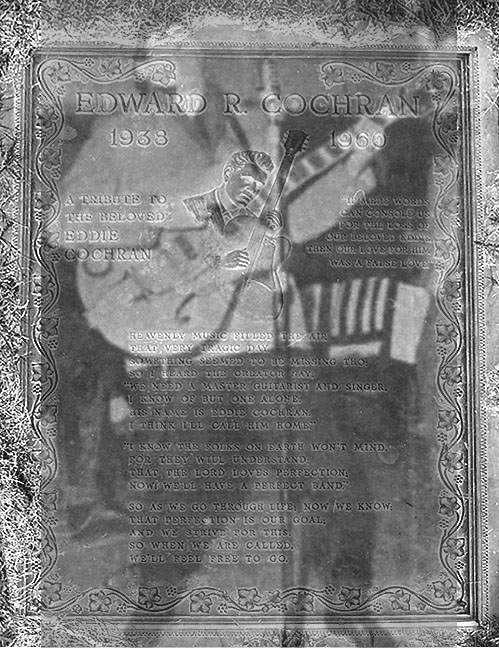
On February 18, 1959 the small plane carrying Buddy Holly, J.P. Richardson (The Big Bopper), and Ritchie Valens crashed killing all on board. Songwriter, Tommy Dee, wrote the song Three Stars which was subsequently performed by Eddie Cochran in memory of his 3 fallen peers:

Three Stars in Heaven

Look up in the sky, up towards the north
There are three new stars, brightly shining forth
They're shining oh-so bright from heaven above
Gee, we're gonna miss you, everybody sends their love

Ritchie, you were just starting to realise your dreams
Everyone calls me a kid, but you were only seventeen
Now Almighty God has called you, from oh-so far away
Maybe it's to save some boy or girl
Who might have gone astray
And with your star shining through the dark and lonely night
To light the path and show the way, the way that's right
Gee, we're gonna miss you, everybody sends their love

Buddy, I can still see you, with that shy grin on your face
Seems like your hair was always a little messed up
and kinda outa place
Now, not many people actually knew you or
understood how you felt
But just a song, just a song from you
could make the coldest heart melt
Well you're singing for God now, in his chorus in the sky
Buddy Holly, I'll always remember you with tears in my eyes
Gee, we're gonna miss you, everybody sends their love

I see a stout man, the Big Bopper's your name
God called you to heaven, maybe for new fortune and fame
Keep wearing that big Stetson hat and ramble up to the mike
And don't forget those wonderful words, you know what I like

Look up in the sky, up towards the north
There are three new stars, brightly shining forth
They' re shining oh—so bright from heaven above
Gee, we're gonna miss you, everybody sends their love

The cruel irony of this is that, on his way to Heathrow airport at the conclusion of his tour of England, the limo carrying Duane Eddy, Eddie Cochran, and Eddie's girlfriend crashed. Cochran, age 21, was killed, and Duane Eddy suffered a serious leg injury that led to a gimp he still suffers from today. Cochran became the “4th star” in heaven, just over a year after Holly, Valens, and Richardson were taken from us.

While Cochran has been inducted into the Rock and Roll Hall of Fame, his songs have been covered by the likes of The Who, Brian Setzer, Led Zeppelin, Blue Cheer, Faces, and the Sex Pistols to name a few—he’s not really been given the same level of attention as some of his peers and contemporaries.

The British Invasion was a reaction from “across the pond” to our very own homegrown talents like Eddie Cochran, Ritchie Valens, Buddy Holly, Chuck Berry, Little Richard, and Elvis Presley—On Cochran’s one and only British tour, a young George Harrison would lie about his age to get into Cochran’s shows, and a young Paul McCartney got into a certain band-- The Quarrymen-- on his ability to play and sing Cochran’s Twenty Flight Rock—and while the bands and musicians they inspired—The Beatles, The Rolling Stones, The Who, The Kinks, etc. etc. are well respected within the pantheon of classic rock history. Guys like Eddie Cochran, Ritchie Valens, Duane Eddy, The Big Bopper remain mere cultural footnotes.

I’m not saying the likes of the Beatles, Stones, Who, Kinks, et. al. don’t deserve credit for their musical accomplishments—they certainly do. And maybe it was the brevity of their lives and careers, but the forebears of the British “musical pioneers” American music fans and critics cream their jeans over have not stood the test of time near as well as the bands that they inspired. Isn’t it about time these guys finally got the level of respect they so richly and rightly deserve?

Thursday, May 25, 2006

"What if?" unreleased albums

Over the years, due to personnel changes, record label resistance, or any myriad of other reasons there have been albums which were either never finished, or finished but never released-- at least not in their original form. These are some of my favorite rock and roll album "what ifs?":

Beach Boys Smile (1966): While Brian Wilson did finally realize his musical vision in 2004, and over the years the Beach Boys did release various tracks that were supposed to be on this-- "teenage symphony for God." I do wonder how the Beach Boys would stack up next to the Beatles today had this musical vision been realized at the time of Wilson's initial creative inception.

REO Speedwagon Ridin' the Storm Out (1973): The album was almost finished, the cover art had even been completed when lead vocalist Kevin Cronin opted to leave the band to pursue a solo career. All tracks were re-recorded with new lead vocalist, Mike Murphy, and Cronin's face was airbrushed out of the cover art and replaced with Murphy's face. One track from the original Kevin Cronin sessions was released on REO's A Decade of Rock & Roll: 1970-1980 (Son of a Poor Man), but as of now the rest of the material from the original Kevin Cronin sessions remains unreleased. Incidentally 3 years and 3 albums later, Mike Murphy left the band and was replaced by... Kevin Cronin, whose "successful" solo career had never materialized.

Toto Isolation (1985): Bobby Kimball has said in interviews this album was almost done when he was fired for drug abuse in 1984. Fergie Frederiksen was hired to replace Kimball and the album was re-recorded with a bit of a different track listing. As much as I love Frederiksen's soaring falsetto, I'd still love to hear what Isolation would have sounded like had Kimball never been fired. A few of the tracks that were recorded for the original Kimball-ized version of Isolation did show up on Toto's 20th anniversary rarities collection XX, it has been rumored from time to time that with Kimball back in the band (after a 14 year "vacation") the band may actually release Isolation as it was originally intended-- with Bobby Kimball on lead vocals.

Chicago Stone of Sisyphus (1994)*: Unlike the other "unreleased" albums mentioned, bootleg copies of SoS were leaked out to fans and have been circulating for years. So I have actually heard it in its entirety. This is easily Chicago's best material since the departure of Peter Cetera-- possibly even their best since the untimely passing of Terry Kath in 1978. The record label absolutely hated it and it was inevitably shelved. For the full story, you can read my review of Stone of Sisyphus. This album has been the source of tremendous fan frustration-- not just due to the fact it's still unreleased, but because next to the recently released XXX it is a masterpiece. Where XXX is sterile and vapid, Stone of Sisyphus, had balls. Where XXX is evidence of a band going through the motions making music in a vain attempt in a less than half-hearted effort to score another hit and "preserve their legacy", SoS is a band firing on all cylinders, making music they believe in for the sake of the music-- not the sake of their "legacy." And the sad thing is, if the band had put even half as much heart into XXX as they put into SoS they might still have a legacy worthy of preservation.

*three different versions of Stone of Sisyphus (in 3 different states of completion) are temporarily available for download here

Tuesday, February 28, 2006

Chicago Transit Authority (1969) - Multiple Aurgasms

So I'm listening to Chicago Transit Authority-- which has been one of my favorite albums since I was about 14 or 15. This was the first and only time Chicago recorded live in the studio as a group. I've read interviews with sound engineers and the guys in the studio saying that recording this album was a nightmare. Getting 7 guys to come together "just so" required an obscene amount of takes.

When this album was released, no one outside LA and Chicago had heard of these guys, and even those from Chicago may not have even realized it was the same group they had known as "The Big Thing."

These were wet behind the ears guys, younger then than I am now. They gave up their royalties so they could get this double LP debut released back in 1969.

They weren't popular yet, they didn't have over 100 million record sales worldwide yet, they weren't the hit machine they would become in the mid-70s and into the early-80s. They were just making this music for the love of the music and because they believed not only in themselves but in the music they were creating.

I could be wrong, but I believe this album didn't chart until after their 2nd album was released a year later.

On one of the days that this album was being recorded, most of the band was taking a break. Guitarist Terry Kath, opted to just stick around the studio and mess around on his guitar. I mean he just went totally apeshit. One of the sound engineers decided to roll tape on it and caught one of the most brilliant "love songs" ever. It's not so much a song, as it is Kath making love to his guitar in a 6+ minute free form jam that at times sounds more like a motorcycle wreck than anything resembling music. But what comes through his intense free-form jamming is a level of energy and passion for his guitar that no structured song could ever really capture.

Chicago's first 3 double LP studio albums and their 1971 4 LP (3 CD) Live at Carnegie Hall album contain some of their best, and most experimental music. It was all recorded before a concerted change in the band, a change that saw them shift from experimenting to trying to score hits. There are diamonds in the rough of some of their later albums. But Chicago Transit Authority, Chicago II, Chicago III, and Live at Carnegie Hall all have a certain magic to them... and there's just something about this debut, the start of something magical, 7 guys making music they love for the sake of the music, not for the sake of selling records.

I may have expanded my musical horizons, I may listen to a lot of other groups now-- but it never fails, I always come back to this album. Days, weeks, years may pass but I know I can always come back to this CD and experience some monstrous aurgasms!

*This post originally appeared on July 21, 2004 in my Livejournal blog.