Showing posts with label 2000s. Show all posts

Thursday, September 29, 2011

Forgotten Music Thursday: Uli Jon Roth - The Metamorphosis of Vivaldi's Four Seasons (2003)

Every once in awhile I stumble upon a CD that is a pure joy to listen to from start to finish, one I can’t stop listening to, where I can’t get the music out of my head even long after the banality of life has forced me to remove my headphones. Uli Jon Roth’s Metamorphosis is such a CD—an aural treat from start to finish, pure ear candy!

Uli Jon Roth got his start in the German metal band, Scorpions, back in 1972. During his six year tenure in Scorpions he displayed a strong Jimi Hendrix influence and both psychedelic and neo-classical tendencies which eventually led to his departure from Scorpions in 1978 to pursue a solo career that would allow him to stretch out in ways he hadn’t been able to within the context of his former band.

Initially Roth struggled to find himself musically walking a tightrope between his Hendrix influenced psychadelia and neo-classicism. But in the first few years of the new millennium he finally seemed to find a style that suited him perfectly, an interesting fusion of psychadelia, heavy metal, and neo-classicism. It’s in Metamorphosis that Roth’s fusion of those styles was fully realized.

Metamorphosis is Roth’s “interpretation” of Vivaldi’s Four Seasons. Backed by the fifteen-piece Sky Orchestra, Roth is at his absolute best in this brilliant fusion of musical styles. He has a sense of melody and adventure, putting his own spin on Vivaldi, making it sound new and fresh, as if it were written today and not in 1723. The first 13 tracks feature Roth sticking close to Vivaldi’s original and the final 14 tracks feature Roth’s re-imagining/re-interpretation of Vivaldi’s work, which at times sounds reminiscent of some of the more familiar work of Trans-Siberian Orchestra. But the album is best enjoyed when listening start to finish without interruption—or at least the first 13 or final 13 tracks should be listened to in single sittings.

The only drawback to this exceptional CD; and it’s one that’s, quite fortunately, easy to completely ignore are the spoken word intros to several of the pieces. Roth was/is a consummate flower child, and his neo-hippy spoken word intros don’t really add anything to the exceptional music, and without headphones they’re often not even audible over the nature sound effects Roth used for “background” during those intros.
This CD does beg the question, what more musical adventures does Roth have up his sleeves, and when can we expect another brilliant offering such as this one? Hopefully, this isn’t an isolated occurrence for Roth as he’s truly found his musical niche.

Related Links:
The Four Seasons (Wikipedia Entry)
Antonio Vivaldi (Wikipedia entry)
Uli Jon Roth (AllMusicGuide.com)
Uli Jon Roth (Official Site)
Uli Jon Roth (Authorized Site)
Metamorphosis (AllMusicGuide.com Review)

The Metamorphosis of Vivaldi’s Four Seasons (Wikipedia entry)

Saturday, August 13, 2011

One Track Mind: Toto - Falling In Between (2006)


Toto has long been one of my favorite bands. Their willingness to take risks and try a variety of different styles of music has always impressed me as has their brilliant talent. After all Toto is a band of session cats. These are the guys the other bands call on to perform on their albums.

Heck these guys started out backing up Boz Scaggs on his Silk Degrees album and after the unprecedented success of their 1982 album IV they were tapped by Michael Jackson to play on his Thriller album.

In 2006 Toto released what would inevitably be their final studio album, Falling In Between.  Some would argue this was their best album ever and most would agree it was their best album since IV.  They certainly went out with a bang.

The album opened with the title track.  From the first time I heard Falling in Between, it swiftly became one of my favorite Toto songs.  It had a fiery drive to it I'd not heard since Gypsy Train on their 1992 Kingdom of Desire album.

Between Steve Lukather's fiery guitar work and the powerful vocals of original lead vocalist Bobby Kimball (who rejoined the band in 1998 after a 14 year absence), the tasteful background vocals and keyboard work of grammy winning keyboardist Greg Phillenganes, and the precise and tasteful drumming of Simon Phillips Falling In Between has it all.  It inevitably set the tone for the entire album.

Related Link
Falling in Between (album review)


Thursday, January 27, 2011

Forgotten Music Thursday: John Barry - Themependium (2007)

With a career spanning over 5 decades, John Barry has made a name for himself as one of the most in demand film score composers-- perhaps only second to John Williams. 

Included in this exceptional box set are not only Barry's more well known works for the Bond films (including the signature theme) but also material from his Oscar winning scores for Born Free, Out of Africa, The Lion In Winter, & Dances With Wolves. 

The set is rounded out by a handful of some of Barry's lesser known works including TV themes and material from his scores for Raise the Titanic (easily the best part of this Golden Razzie winner of a bomb), Somewhere In Time (the hauntingly beautiful theme that yanks on the heartstrings and some might argue is more memorable than the film) not to mention material from Day of the Locusts, Body Heat, Frances, Peggy Sue Got Married and many more.  For fans of film scores this is a must have as Barry's  scores were so brilliant they at times were even superior to the films he was scoring (Raise the Titanic and Frances are cases in point).

While it could be argued that much of the material on this box set is well known (the Bond themes in particular) much of it is not.  And pulled from the context of the movies and shows the music is taken from, much of the "forgotten" and even some of the more well known gems are what stand out the most as they are strong enough to stand on their own even without the films they are from as a frame of reference. 

There's a distinct and haunting beauty to much of Barry's work.  Considering the length, scope, and breadth of Barry's career a single CD collection would not do him justice.  This box set is an excellent place to start delving into Barry's extensive body of work and could conceivably inspire the listener to delve deeper into some of the full scores that are merely hinted at in this set.

Related Links
John Barry (wikipedia)
John Barry - The Man With the Midas Touch

Thursday, November 04, 2010

Steve Lukather - All's Well That Ends Well (2010)

In his latest outing Steve Lukather shows he's still at the top of his game.  While his last album, Ever Changing Times, was thoroughly enjoyable;  All's Well That Ends Well, shows that Lukather is at his best when he's at his most personal.  Much like with his 1997 album, Luke, Lukather gets a bit more personal than on his other solo releases.

The album opens with Darkness In My World.  The opening is somewhat ambient in nature until almost two minutes into the song when Lukather shifts gears with an infectious rhythm groove.  This is one of the more melodic examples of AOR I've heard in awhile.  Despite the advent of iTunes and single-serving music, Lukather proves album oriented music still has its place.

On My Way Home sounds like it wouldn't have been out of place on Ever Changing Times.  The style is reminiscent of that album.  Lukather has said that this album is a continuation of that album and On My Way Home is certainly a track that bridges the styles of the two different albums together. The vocals are tight and the song has those trademark jazz fusion influences that Lukather is known for.  The guitar solo hints to one of Lukather's influences and close friends, Larry Carlton.

Can't Look Back is Lukather's look back at looking forward in his life.  The song captures Lukather's nature of restlessness.  He's been a perpetually active musician since before Toto's inception in 1977 between touring, recording, and doing sessions at a pace that would drive many of us to exhaustion.  The song features a soulful guitar solo, the kind Lukather has come to be known for.

Don't Say It's Over is one of Lukather's trademark ballads lyrically reminiscent of Toto's I'll Be Over You but musically it completely fits into the musical jigsaw of this album.

Flash In the Pan is a hard driving rocker displaying Lukather's trademark lack of restraint.  The song is balls to the wall from start to finish.  One of the more amusing and fun songs on the album.

Watching the World displays Luke's growing disenfranchisement with the political establishment and the general state of the world.  "Sitting here watchin' the world, fallin' apart, oh, what can you do?, Standing in the shadows of lies and deceivers, When does it end?"

You'll Remember can best be described as a fusion rocker.  It would not have sounded out of place on Ever Changing Times and is one of the "common threads" that ties this album to its predecessor.  The guitars and vocals are definitely pop rock, but the keyboards and rhythm speak more to Luke's fusion influences.

Brodie's has a bad-ass blues vibe it's the pissed off bitter counterpoint to the more melancholy Watching the World.  The lyrics are fortunately (or unfortunately, depending on how you look at it) have a fair share of pop-cultural references to big-screen TVs and Facebook pages.  It makes the song prescient for our times but over time will likely "date" the song to this era.

The album closes with the instrumental fusion rocker, Tumescent (You've got to love Luke's highbrow sophomoric sense of humor-- great song title for an instrumental piece!).

From start to finish the album is one of Lukather's best. Mixing the polish of 2008's Ever Changing Times with the dark personal vibe of 1997's Luke for an album that works on many levels.

Related Links
All's Well That Ends Well promo video clip

Steve Lukather (official site)
Steve Lukather (wikipedia)

Thursday, October 28, 2010

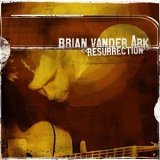
Forgotten Music Thursday: Brian Vander Ark - Resurrection (2004)

It was once said of Billy Joel that his mass appeal is due to his ability to write songs which can be so personal and individual for so many different people. Each of his songs can conceivably mean something different to every listener. Where Billy Joel has left off, others have risen to the challenge of writing songs that have that similar mass appeal. Brian Vander Ark is such a singer and his album, Resurrection shows some of the best material of one of the best singer/songwriters of his generation, picking up the torch left by the likes of Elton John, Billy Joel, and Bruce Springsteen, but with a style all his own.

Despite the success of their 1997 hit The Freshman few people (outside of Michigan at least) are familiar with The Verve Pipe in general and the songwriting talents of their lead singer, Brian Vander Ark in particular.

While the Verve Pipe didn't grab me at first, there's no denying that Vander Ark's songwriting has only improved with each successive album. His solo album, Resurrection, follows in the natural progression of the Verve Pipe's 2000 release, Underneath. The two albums make excellent companions to one another.

The opening track, 1229 Sheffield has some of Vander Ark's more clever turns of phrase:

Returning our bottles for ten cent deposits
I'll drink us two dollars more...

The pet names you once gave me, we soon gave to the pets
I still come when you call them, just to be sure

There's a naked honesty to Vander Ark's songwriting that some may describe as "angsty" but to pigeonhole it would do it a great disservice. Another highlight to the album, And Then You Went Away probably best captures Vander Ark's "heart-on-the-sleeve" angst:

You hung your favorite picture so you could see it everyday
Then you went away, then you want away
It's by the window garden you said you'd water everyday
Then you went away, then you went away...

Slipped on the velvet curtains you had custom made
Then you went away, then you went away
And there's my new best friend, the one you took in as a stray
Then you went away, then you went away

Much like many of his Verve Pipe songs, there's a common theme of the evolution of relationships-- people growing together, growing apart, and the circumstances we face in relationships and the effect those events have on the relationship-- sometimes making it stronger, other times tearing it apart. This theme, tackled initially on the opening track, 1229 Sheffield is revisited on Mileage:

Pass by the high school
A memory rerun
When I was seventeen couldn't wait for twenty-one
I pass by the church
Where I married you
When you were twenty-one and I was twenty-two...

So I speed past the building
I always wanted to
Since I was twenty-one, almost twenty two
If I'd had the nerve
I'd have quit there before
You turned twenty-three and couldn't take me there any more...

The album as a whole is Vander Ark at his very best. His voice is soothing and consistently interesting. The songs never falter, there's not a "weak" or "skippable" song on the CD-- if anything most songs fall victim to the repeat button and with each new listen provide the listener with the gift of a new perspective. This is an album that only improves with each listen. So listen and enjoy!

Friday, October 15, 2010

Steve Hackett - Out of the Tunnel's Mouth (2010)

Every once in awhile a song, an album, or even just a simple solo-- be it vocal, guitar, keyboard, or some other instrument will send chills up and down my spine.  Admittedly that hasn't happened in a long time.  There have been albums I've enjoyed.  And while I've dared music and musicians to wow me it's been quite awhile since I've been gobsmacked by an album.  Steve Hackett gave me a much needed and long overdue musical sucker punch with his latest release.

While not as well established or known as his former bandmates, Steve Hackett has developed a respectable and devoted cult following since his departure from Genesis following their Wind & Wuthering album in 1977. 

In the years since his departure from Genesis, Hackett has explored several different musical styles-- classical, flamenco, world music, jazz, and even the prog rock that he'd come to be known for in his five years with Genesis.

Of all of the albums that he has recorded since his debut, Voyage of the Acolyte, none of them has married all of the music styles that he drew upon for influence as well as Out of the Tunnel's Mouth.  The Genesis influences are unmistakable and it leaves one wondering if this album is what Genesis might sound like today had Hackett been the driving creative force in the band instead of Banks, Rutherford, and Collins.  Incidentally, the album also features Hackett's predecessor, Anthony Phillips, playing 12 string guitar.

 The album starts with the hauntingly beautiful, Fire On the Moon, there's a dark haunting quality in the opening of the song thanks to the music box that complements Hackett's guitar and vocals throughout the song.  At about 1:10 the song shifts from haunting to transcendent and majestic before shifting back to haunting at 1:37.  The song shifts back and forth between haunting and majestic throughout.  Hackett's vocals are reminiscent of Pink Floyd's, Roger Waters and David Gilmour.  The guitar solo that comes in at 2:46 is one of the most emotive solos Hackett has recorded since Firth of Fifth on Genesis Selling England By the Pound.  Hackett graces the song with a second guitar solo starting at 4:36 that picks up where the first had left off at 3:25.  There is a beautiful keyboard piece that dances around Hackett's guitar solos.  It never over-powers the guitar it merely accents the better elements of Hackett's fretwork.

Nomads starts with a brilliant flamenco flavored acoustic guitar solo that further showcases Hackett's versatility.  As with Fire On the Moon the vocals on Nomads are more used like an instrument than for lyrical effect.  Heck the phone book could be sung to the same melody and make the song just as satisfying.  That being said the lyrics are well written and certainly leave some of Hackett's fans wondering why Banks, Rutherford, and Collins didn't utilize Hackett's talents more when they had the opportunity to do so.  The flamenco guitar resumes at 2:45 into the song before Hackett switches from the acoustic flamenco to his trademark electric guitar at 3:07 for another brilliant solo that is nearly as enjoyable as the solos in Fire On the Moon.

The style and mood of the album shifts from the light and airy flamenco tinged Nomads to the pastoral prog-rock vibe of Emerald and Ash, a song that would not have sounded out of place on a Caravan album back in the seventies.  The song is chocked full of imagery.  The song is also colored with some beautiful sax playing by Rob Townsend.  This song also features not only Hackett on electric guitar but Anthony Phillips on 12-string acoustic guitar.  The two former Genesis guitarists sound absolutely brilliant together.


Tubehead is a more straight ahead instrumental rocker with Yes's Chris Squire guesting on some frenetic bass playing.  Where the previous material was lighter and more relaxed. Tubehead has a dark crunchy edge and plays like a train running full speed ahead.

The mood shifts to somber and melancholy on Sleepers.  Much like with Fire On The Moon, Nomads, and Emerald and Ash there's a haunting beauty to Sleepers making for yet another brilliant track on an album that had already been consistently brilliant.  The mood on the song shifts from melancholic to dark and sinister at 4:53.  If ever there was a song that screamed of Halloween, Sleepers is it.  Hackett's guitar playing evokes spooky haunted houses on chilly fall evenings.

Ghost In the Glass has a light jazz fusion vibe to it.  The percussion suggests a dimly lit jazz club after closing.  The acoustic guitar work of Anthony Phillips gives way to the haunting electric work of Hackett whose electric playing is augmented by a string section of violins and violas.  Much like the keyboard work on Fire On the Moon the additional strings accent Hackett's guitar playing.

Still Waters is deceiving in its title as it has a rolling blues vibe to it adding yet another musical style this already musically diverse album. 

The album closes with Last Train to Istanbul which has more than subtle hints of Middle Eastern influence.  You can hear the train chugging along at a moderate but steady pace through the Turkish countryside.  There is a lot going on in the song and it's easily the "busiest" song on the album.  With so many different styles coming into play and so many different influences you can listen to the song multiple times and hear something new and different each time. 

What makes Out of the Tunnel's Mouth so enjoyable from start to finish is its accessibility.  Not all of Hackett's explorations into other musical styles have come together as well as this album.  Despite featuring so many different musical styles there is a cohesiveness to the album.  All of the songs sound like they belong on the same album.  And all of the songs, despite the myriad of different styles, are distinctly Steve Hackett.  I'm willing to go out on a limb here and say this is the best solo album of any member of Genesis past or present and better than any of the albums Genesis has recorded since Hackett's departure  (Five out of Five Stars... or if you prefer a PERFECT TEN on a scale of 1 to 10!)

Related Links
Steve Hackett (official site)
Steve Hackett (wikipedia)

Sunday, October 10, 2010

Black Country Communion - Black Country (2010)

Sometimes music jumps out and grabs you on the first listen, other times it merely plants a seed that slowly grows inside you.  Black Country is an interesting mix of songs that do both. 

The opening title track, Black Country, grabs the listener and holds on tight with Glenn Hughes vocals and driving bass along with Jason Bonham's exceptional drumming leading the way for much of the song with Joe Bonamassa playing some solid guitar throughout.  This is the perfect opening track for the album as it is a force unto itself.  Hughes vocals are just as powerful as they were in his days in Deep Purple.

One Last Soul was the lead single released in mid-August.  While catchy with some killer vocals by Hughes, it's actually one of the weaker tracks on the album.  It lacks the punch and attitude of Black Country and some of the stronger tracks that come later on the album.

The Great Divide chugs along on the backbone of Hughes bass playing Bonham's drumming.  Hughes vocal wails are reminiscent of Robert Plant at his vocal peak in the seventies showing that even pushing sixty he still has a tremendous range and can still rock harder than many guys half his age.

While there are no weak tracks on the album and Black Country Communion is to 2010 what Them Crooked Vultures were to 2009 (THE supergroup of the year), easily the best tracks on the album are Song of Yesterday and Too Late For the Sun.  The latter of which features an extended jam that really shows what this band is capable of when allowed to stretch out and improvise, whereas the former is the antithesis of Too Late for the Sun, it's a beautiful and well constructed song from start to finish.  Where Too Late For the Sun has pure unbridled raw energy, Song of Yesterday has a more refined polish to it.  Joe Bonamassa shines throughout the album but Song of Yesterday is easily his best track on the album.  That's saying a lot given the overall strength of the album.

This album was recorded rather quickly, most songs were cut with as few takes as possible which gives the album a very pure energy.  There's a rawness to the material that speaks to the general spirit of classic rock and at the same time enough polish to really display the brilliant talents of each of the band members.

Black Country Communion has captured the spirit and vibe of the bands that inspired them.  If you're jonesin' for some twenty-first century classic rock this album should top your list!

Related Links
One Last Soul live

Interview with Glenn Hughes

Glenn Hughes & Joe Bonamassa performing Medusa

Black Country Communion (official site)
Glenn Hughes (official site)
Glenn Hughes (wikipedia)
Joe Bonamassa (official site)
Joe Bonamassa (wikipedia)
Jason Bonham (official site)
Jason Bonham (wikipedia)
Derek Sherinian (official site)
Dereik Sherinian (wikipedia)


Thursday, September 23, 2010

Gotye - Like Drawing Blood (2006)

Normally electronica is not a musical genre I pay much attention to.  Other than my forays into the solo work of former Dream Theater keyboardist, Kevin Moore, under the Chroma Key moniker I've given electronica a rather wide berth.  That's not to say I dislike electronica more that it's never really been on my radar.


I was recently introduced to Gotye by the husband/wife musical blogging duo YourZenMine who were generous enough to send me Gotye's 2006 album, Like Drawing Blood.  Given Wally De Backer's rather transient nature, the story behind the recording of the album reads like lost chapters from John Birmingham's He Died With a Felafel In His Hand- as the album was recorded in various Melbourne bedrooms between 2003 and 2005. 


Gotye (pronounced go-ti-yay, like you would pronounce the French "Gaultier") is Belgian born, Australian bred Wally De Backer and while somewhat unknown here in the United States, De Backer is an ARIA award winning singer-songwriter who derives his music (self-admittedly) about 99% from sampling. 

Like Drawing Blood is a delightful lo-fi album with a decidedly indie feel that is thoroughly enjoyable from start to finish.  De Backer's voice is very listenable and well suited to his music.  The mastering however is purely brilliant and betrays the lo-fi nature of the recording of the album giving this lo-fi gem a well polished hi-fi feel.


There's an ambience to the music that feels perfect for long relaxed drives with the windows down.  While the CD is still only available as an import here in the United States it is available for download from Amazon's mp3 store for a very reasonable $6.99.  The album is well worth such a reasonable price tag.  Given its accessibility and pop sensibilities I'd argue that this is the perfect "gateway" album to either introduce new listeners to electronica or to win over listeners who in the past have been rather apathetic to the genre. 


Related Links

Hearts a Mess video


Learnalilgivinanlovin' video


Like Drawing Blood (YourZenMine review)
Like Drawing Blood (wikipedia)
Gotye (official website)
Gotye (wikipedia)

Saturday, September 18, 2010

Dream Theater - Train of Thought (2003)

After the rather uneven double CD, Six Degrees of Inner Turbulence, Dream Theater showed a tremendous return to form in this prorgressive heavy metal onslaught.

Where previous releases and even subsequent releases featured a somewhat more polished or refined brand of metal...  Train of Thought has a gritty and raw edge that sets it apart from much of the rest of Dream Theater's musical oevure.

Its this grittiness that makes this one of Dream Theater's best albums, if not their best overall.  From start to finish, with a short respite in the middle of the album with Vacant there's an edge to this album that seemed to have been missing from Six Degrees of Inner Turbulence.

The album opens with As I Am.  While the lyrics are almost groan-inducingly bad at times, the music more than makes up for the song's subpar lyrics ("I've been trying to justify you/in the end I will just defy you"- c'mon guys, we know you can do a lot better than THIS!). 

And thankfully after the lyrical hiccup of As I Am the album improves substantially with This Dying Soul the 2nd part of Mike Portnoy's Twelve Step Suite which he began on Six Degrees of Inner Turbulence with The Glass Prison detailing Portnoy's battle with and recovery from alcoholism.  Many of Dream Theater's fans have gained inspiration from Portnoy's suite and the band does a brilliant job of giving Mike's story a fantastic musical voice. 

On Endless Sacrifice the band really stretches out with some brilliant solos.  And as one who has never been tremendously keen on James LaBrie's vocals I'd argue this song features some of his best vocals since Images & Words.  The song builds slowly until about the 2:07 mark when the band shifts from gentle and melodic to raw and crunchy and back again.  It's easily one of the best songs on the album as it shows the versatility and breadth of the band's talents.

Honor Thy Father is one of the heaviest songs the band has ever recorded.  It starts chugging along building in intensity like a freight train with no brakes.  There's a greater anger and bitterness to the lyrics that the band had not really exhibited since 1994's Awake.  This also features some of Jordan Rudess' better keyboarding.

Vacant is a brief slow, somber, and melancholic piece and at just shy of 3 minutes easily the shortest song on the album-- it gives the listener just enough of a respite to catch his or her breath before the metal onslaught continues with Stream of Conciousness and In the Name of God which finishes out this brilliant album.

For many fans this was the album they'd been waiting for since Awake.  For others it was just a bit too raw and crunchy and lacked enough of the band's softer and gentler side and polish of some of the band's other albums.  But for this listener, this was the album that put the METAL back into progressive metal for Dream Theater, and it did so with a large bold-faced exclamation mark!

Related Media & Links
As I Am video

This Dying Soul video (Pt. 1)

This Dying Soul video (Pt. 2)

Endless Sacrifice video

Honor Thy Father video

Dream Theater (official site)
Dream Theater (wikipedia)
John Petrucci (official site)
John Petrucci (wikipedia)
Mike Portnoy (official site)
Mike Portnoy (wikipedia)
John Myung (wikipedia)
James LaBrie (Official Site)
James LaBrie (wikipedia)
Jordan Rudess (Official site)
Jordan Rudess (wikipedia)

Thursday, August 19, 2010

The Cat Empire - s/t (2003)

If you were to look "Party Band" up in the dictionary you'd find a photo of The Cat Empire performing live.  These guys are the epitome of what a party band should be. 

Take a bit of ska, a pinch of funk, a few hints of funk, a cup of reggae, a teaspoon of rap, and a tablespoon or two of jazz toss it in the blender, set it to puree... and you'll get The Cat Empire.

The band is comprised of Felix Reibl (percussion & vocals), Harry James Angus (trumpet & vocals), Ollie McGill (keyboard & backing vocals), Will Hull-Brown (drums), & Jamshid "Jumps" Khadiwhala (decks & percussion).  The band is often backed by the brass duo, The Empire Horns (Kieran Conrau/trombone, Ross Irwin/trumpet flugelhorn & backing vocals, & Carlo Barbaro/tenor sax).

As a lover of horns, I'm especially pleased that The Cat Empire does not skimp on the horns when the songs warrant a good solid wall of brass but also know when to show restraint when the material doesn't warrant any brass. 

One might not expect such an eclectic mix of different styles would mix well, but The Cat Empire mixes various different genres with a deft skill that speaks volumes to their musical talent and overall creativity.

Their 2003 debut album starts out with a festive, catchy bang with How to Explain which remains a staple of their live shows to this day.  Days Like These is a catchy fun romp as well, although not quite as fun as How to Explain. 

The album picks up speed again with The Chariot with catchy, upbeat lyrics and an infectuous beat that is near impossible to avoid dancing to.  The band would re-visit this song with a slightly different arrangement on their 2nd album, Two Shoes, but this version has a catchier groove than the more recent updated 2005 arrangement.

The lyrics are at times at empowering and other times downright amusing:

And my knees were shaking
And my jaw was dropping
And my eyes were squinting
And my smile was growing
And my pants were bulging
And my hands were sweating
And my chest was beating
So I cry 'excuse me,
What is the secret to your song?'

Cause when you're walking along
When you're walking along:

Your legs are a melody my hands
Would like to play
And your hips are a note
That does take me away
And your face and your eyes and your hair
And your waist and your smile
Drive me to distraction - excerpt from The Rhythm
After The Rhythm the album downshifts and borrows more from the band's jazz influences.  The material is no less enjoyable and it puts on display the full breadth of their musical talents.

While The Cat Empire has released several more exceptional albums, and their 2005 follow-up Two Shoes is easily superior to this debut.  The album is the best place to start as it whets the appetite for the even better music that was yet to come.

Related media & Links
How to Explain video

The Rhythm video

The Chariot video

Days Like These video

Hello video

The Cat Empire (official website)
The Cat Empire (wikipedia)
The Cat Empire (CD) (wikipedia)
Felix Reibl (wikipedia)
Harry James Angus (wikipedia)
Ollie McGill (wikipedia)

Thursday, August 12, 2010

Robert Lamm - Subtlety & Passion (2003)

The fourth time was the charm for Robert Lamm.  While he'd had success as a member of Chicago, writing hits and fan favorites like Beginnings, Does Anybody Really Know What Time It Is?, 25 or 6 to 4, and Saturday In the Park; his solo material was rather uneven. 

His debut, Skinny Boy, was overly self-indulgent and generally pretentious.  The only tracks worth listening to at all, let alone repeat listens were the title track which was also found on Chicago VII and Fireplace & Ivy.  And with his solo version of Skinny Boy the horn chart had been removed making it somewhat lacking compared to the Chicago version.

The material on Life Is Good In My Neighbourhood was a substantial improvement.  The lyrics were what his fans had come to expect given the material he had composed for Chicago.  However, due to an over-reliance on synthesizers the album ended up sounding more like a collection of demos than a finished product. 

In My Head saw 3 duets with Phoebe Snow.  Now Ms. Snow is a fine singer and her voice complements Mr. Lamm's quite nicely.  However including 3 duets with her on one album was a bit of overkill.  Not all was lost as there is some strong material on the album; Watching the Time Go By featuring Gerry Beckley from America and the late Carl Wilson from the Beach Boys is at least as good as the version included on the 2000 Beckley/Lamm/Wilson trio project, Like a Brother a year later, Love of My Life features some of Robert's best vocals since he was in his vocal prime in the late 60s/early 70s and the alternate arrangement Robert includes on Sleeping In the Middle of the Bed Again from the then unreleased Stone of Sisyphus album, while not as good as the Chicago version, is certainly still worth listening to. 

But finally with Subtlety & Passion Robert was firing on all cylinders.  This is the solo album his fans have been waiting for for years.  Considering that all of the then current members of Chicago performed on this album in some capacity or another and Lamm even wrote a song around an unreleased guitar solo by the late Terry Kath (Intensity) it could be argued that Subtlety & Passion was much more a Chicago album than Chicago XXX ended up being a few years later with its over-reliance on session cats standing in for members of the band. 

Most of the songs feature horns and most of the horn parts are played by Chicago's horn section giving even greater credence to this being more of a Chicago album than Chicago had recorded in a long time.  And what makes the songs so enjoyable is that they sound like Chicago SHOULD have sounded in the years since the passing of Terry Kath and departure of Peter Cetera.  There's an easy-going and likable familiarity to the material which makes it reminiscent of Chicago's long string of hits throughout the seventies.

Some of the standout tracks include the I Could Tell You Secrets, Another Sunday, Gimme Gimme, The Mystery of Moonlight, and the aforementioned Intensity.  The album, from start to finish, is a bit of a return to form for Lamm whose material in the eighties left a bit to be desired-- especially when compared to the brilliance of Chicago's early years when he was largely the band's principal songwriter. 

This, not Chicago XXX, is the Chicago album that their fans had been waiting for for years.  And unlike XXX, most of Chicago actually performed on the album and it wasn't over-produced to the point of sounding completely sterile.  If you are or were a fan of Chicago, skip Chicago XXX and pick up Subtlety & Passion.  The former will leave you scratching your head wondering what happened to this once great band, the latter will put a smile on your face and make you believe that they've still got it... well at least one of them does.

Related Links & Media
Somewhere Girl live

Another Sunday live

I Could Tell You Secrets live

Intensity live

Gimme Gimme live

The Mystery of Moonlight live

Robert Lamm (Blue Infinity)
Robert Lamm (wikipedia)

Thursday, July 01, 2010

Dream Theater - Black Clouds & Silver Linings (2009)

Dream Theater doesn’t ever really do anything “small.” They are the quintessential band of musician’s musicians. Even those who aren’t necessarily fans tend to respect them for their musicianship.

Black Clouds & Silver Linings is no exception to that rule. The album is essentially a return to form that takes all of the things the band did right on 2007’s Systematic Chaos and builds on them making for a truly exceptional album.

They also delivered in spades by releasing the album in 2 different formats—a single CD standard version with a very attractive sub $10 price tag (depending on where you purchase it) for those minding their budgets in these economically difficult times and a more auspicious 3 CD Deluxe edition which features not only the full album on Disc 1, but also a CD of Dream Theater covering some of their favorite material by the likes of Rainbow (Stargazer), Queen (a medley of Tenement Funster/Flick of the Wrist/Lily of the Valley), The Dixie Dregs (Odyssey), Zebra (Take Your Fingers From My Hair), King Crimson (Larks Tongue in Aspic Pt. 2), and Iron Maiden (To Tame a Land), and a third disc featuring an instrumental version of the album. The instrumental version of the album truly gives the listeners a chance to hear things they might have missed, those delightful moments that sometimes get hidden underneath the operatically trained vocals of James LaBrie.

Whether you choose to get the standard or the deluxe edition, you’re in for a treat. This is arguably the band’s best and easily their heaviest album since 2003’s Train of Thought.

With A Nightmare to Remember the album starts with a crack of thunder followed by a soft but ominous keyboard intro in minor chords by Jordan Rudess before Petrucci and Portnoy join in on guitar and drums respectively. Portnoy’s drumming is frenetic yet precise like a runaway train with Casey Jones as the engineer—no brakes but still fully in control. Thanks largely to Rudess’s keyboard work, the song sounds and feels like a classic horror movie. It tells the story of a car accident and how it changes the lives of those who survived it and the general loss of innocence experienced following the accident.

A Rite of Passage is one of the most accessible and radio friendly songs on the album. Anchored by a killer guitar riff by John Petrucci the song is about secret societies and organizations (in particular the Masons). The vocal harmonies are some of the strongest on the album (perhaps surpassed only by the harmonies on the Queen covers on Disc 2 of the Deluxe edition) and the guitar riff has hints of both Led Zeppelin and Metallica but when Petrucci’s guitar solo starts at about 5:18 into the song it’s purely Dream Theater. The solo is trademark Petrucci at his absolute finest.

Wither is also quite accessible but not quite as catchy as A Rite of Passage. It’s also easily the slowest yet shortest song on the album, giving the listener a brief (five minutes, 25 seconds) respite before the band kicks it back into high gear.

The Shattered Fortress is the final piece of Michael Portnoy’s 12 Step Suite that he began on 2002’s Six Degrees of Inner Turbulence with The Glass Prison and has continued with a new piece on every studio album since then. It’s a brilliant finale to his seven plus years in the making musical epic. With thematic elements of the other pieces in the suite, the band has brought the 12 Step Suite full circle and given it an exclamation mark of an ending.

Sadly, Mike Portnoy’s father died in the time between this and Dream Theater’s last album (Systematic Chaos) prompting Portnoy to write The Best of Times, a moving tribute of his love for his father. His bandmate, John Petrucci did the same on 1997’s Falling into Infinity with Take Away My Pain. As different as the two songs are, they are both rather moving expressions of grief suffered at the loss of a parent. The song starts with a subtle and beautiful piano solo by Jordan Rudess that segues into a moving guitar/piano duet with John Petrucci before Petrucci’s acoustic guitar is replaced by an electric one at about two minutes and forty seven seconds into the song. Unlike Take Away My Pain which was a moving plea from a grieving son, The Best of Times, is more a celebration of a life. Portnoy’s lyrics reflect on the happy times he spent with his father and the positive influence his father had on his life.

On the Count of Tuscany, the guitar work by Petrucci is exceptional as always. The sense of harmony in his work on this song is brilliant. He and Jordan Rudess play guitar and keyboard (respectively) so tightly that the two instruments nearly sound as one. At over nineteen minutes long The Count of Tuscany makes for a long and quite musically adventurous closing to the album. The vocals don’t even begin until almost four and a half minutes into the song (@ 4:21). The song also marks a continuation of John Petrucci’s penchant of telling fictional stories in his lyrics. Some fans enjoy this lyrical approach, but personally it’s the music far more than the lyrics that grab this listener.

From start to finish Black Clouds & Silver Linings is a technically proficient, hard and driving heavy metal onslaught of an epic album. It is best enjoyed start to finish in one sitting, if you can manage the time to do so. Given the skill and talent of the band, there is so much depth in this music that it’s quite easy to listen to this album several times and never hear it in quite the same way twice.

Related Links
Dream Theater (official site)
Dream Theater (wikipedia)
Mike Portnoy (official site)
Mike Portnoy (wikipedia)
John Petrucci (official site)
John Petrucci (wikipedia)
John Myung (wikipedia)
James LaBrie (official site)
James LaBrie (wikipedia)
Jordan Rudess (official site)
Jordan Rudess (wikipedia)

Friday, June 25, 2010

Between a Heart and a Rock Place by Pat Benatar

Katy Perry, Lady Gaga, the Donnas, Fergie... the list goes on and on.  But their careers likely would have been considerably rockier and likely even a bit less successful had women like Pat Benatar not paved the way for them.


Most of us know her hits Heartbreaker, Hit Me With Your Best Shot, Love is a Battlefield, Invincible, and We Belong to name but a few.  But there's so much more to her story than her hits and the path not only to her success but once she attained it was far more difficult than most realize.


Even if you're not a big fan of Ms. Benatar's music, and admittedly prior to being approached for this review my familiarity with her work was largely limited to her hits, Between a Heart and a Rock Place is a thoroughly enjoyable read.


Pat gives a very candid snapshot of the music industry of the late seventies and throughout the eighties-- its superficiality, its obsession with image, and the many double standards applied to female musicians that weren't necessarily applied to male musicians-- at least not to the same extent.


The stories that are told of record label executives and the peek behind the curtain to see the Wizard that Ms. Benatar provides throughout her book shows the considerably less glamorous and far less savory side of the music industry;  How they tried to tell her how to look, how to dress, discouraged her relationship with her guitarist and later husband Neil "Spyder" Giraldo, and even attempted to hide her pregnancy for her first daughter and make her feel ashamed of it; all of it would make for quite an incredible novel but what makes it even more chilling-- it's all true!


Without giving too much away-- this book is a must read for any fan of music, anyone curious about how the recording industry works, and certainly for any aspiring musicians whether or not you happen to be fans of Pat Benatar as a musician.  The insights provided give a glimpse of how much popular music has evolved from the late seventies to the present and it's all through the eyes of one of the most successful female rockers in the history of rock and roll!


Related Links & Media
Promo video for the book's release:

Pat Benatar(official site)
Pat Benatar (wikipedia)

Friday, June 11, 2010

Fate Warning - Disconnected (2000)

Fates Warning were arguably one of the first bands that could be described as progressive metal. From the beginning they’ve been fusing elements of both genres into a style all its own. Other bands, such as Dream Theater, Queensryche, and Opeth may or may not do it better (depending on who you ask), but Fates Warning pre-dates them all in this brilliant hybrid that might best be described as Yes meets Metallica.

After the departure of original vocalist, John Arch, in the late eighties Fates Warning took a few years to really regain their footing with Ray Alder. They arguably hit their creative peak with A Pleasant Shade of Grey, but I’d argue that was merely the first of several strong albums. 2002’s Disconnected, is both more accessible and slightly less adventurous. But in being more accessible, I’d argue it’s the best of Fates Warning’s albums for the uninitiated to start with. As with A Pleasant Shade of Grey, ex-Dream Theater keyboardist, Kevin Moore, lends his talents to Fates Warning. Its his collaborations with Fates Warning that later led to his partnership with Jim Matheos in their band, OSI that married the harder edged metal guitar chops of Matheos with Moore’s more ambient keyboard influences.

Starting with the ominous Disconnected Part 1, Disconnected draws the listener in. It’s in this opening that Kevin Moore’s influence is most evident. There’s a haunting ambience with an abrupt end before the heavy metal onslaught of One.

One is arguably one of Fates Warning’s strongest songs. Alder’s vocals are soaring and brilliant. Moore’s keyboard influences are a bit more subtle and less obvious but still noticeable.

So picks it back up where Disconnected Part 1 had left off. Matheos gives the intro a haunting ambience before the riffing comes in with Moore’s keyboard and shortly thereafter Alder’s vocals. While at a slower tempo than One, the crunchy guitars and Alder’s soaring vocals are trademark prog-metal.
Pieces of Me picks up the pace a bit. There’s a chugging and steady yet frenetic intensity to the song. It also suggests musical themes that would later be more fully explored by Matheos & Moore on some of the more uptempo music from the first OSI album in 2003.

There’s a general ambience throughout the album that is generally lacking on albums of many of Fates Warning’s contemporaries. If you're new to Fates Warning, there's not a better place to start than Disconnected!

Related Links
One (Live in Athens)

Disconnected (Wikipedia)
Disconnected (AllMusicGuide review)
Fates Warning (Official Website)
Fates Warning (Wikipedia)
Jim Matheos (Wikipedia)
Ray Alder (Wikipedia)
Joey Vera (Wikipedia)
Mark Zonder (Wikipedia)
Kevin Moore (Wikipedia)

Monday, June 07, 2010

Ian Moss - Six Strings (2005)

As the guitarist for the definitive Australian pub rock band, Cold Chisel, Ian Moss is an Australian icon. He’s also one of their better kept secrets. During Cold Chisel’s long hiatus (1983-1998) Moss recorded and released a small handful of solo albums.


Six Strings is probably the closest Moss has come to a greatest hits package. This live acoustic set shows Moss performing acoustic arrangements of some of his better known songs both as a solo artist and as a member of Cold Chisel.

In the early volatile years of Cold Chisel that saw Jimmy Barnes frequently quitting and rejoining the band Moss was frequently called upon to step up and sing lead for Cold Chisel. This gave Moss some good practice as a vocalist. While not in the same league as Barnes, his smoother vocals gave Cold Chisel a different weapon in their musical arsenal. Even after Barnes would return to the band, Moss would sometimes continue contributing lead vocals. With some of those songs like Saturday Night and Bow River that were included in this collection the acoustic arrangements while enjoyable lack the swagger of the Cold Chisel versions. It’s the lack of Barnes raspy growl on the background vocals that takes some of the steam out of the acoustic versions. However the acoustic arrangements of The Party’s Over, Never Before and My Baby give the songs a new life. The Cold Chisel versions sound considerably dated compared to Moss’s acoustic updates.

The acoustic arrangements of Moss’s solo back catalog are thoroughly enjoyable. Tucker’s Daughter, Two Seconds Too Long, and Angel Eyes are all excellent arrangements. Moss provides brief introductions to many songs indicating who wrote them. Many were long time Cold Chisel bass player, Phil Smalls, compositions as Moss has recorded many of Smalls works both as a member of Cold Chisel and as a solo artist.

The applause throughout is light. It gives the performance a very relaxed and intimate small coffee house feel. As far as live albums go, this one is a gem to be listened to on a pair of high end headphones with the lights turned low.

Related Links
Tucker's Daughter (live)

Bow River (live)

Saturday Night (live)

Ian Moss (official site)
Ian Moss (wikipedia)
 

Tuesday, April 20, 2010

Lindsay Aline - Illusion (2009)

I was recently approached by the management of Lindsay Aline requesting that I review her debut album, Illusion. 

Upon first listen I'll be the first to admit this is not normally the kind of music I would listen to.  It's generally a bit too light for my tastes.

That being said there's no denying Ms. Aline's talent her voice is reminiscent of Evanessence's Amy Lee.  Her style is closer to My Immortal than to Wake Me Up Inside. 

There's a haunting yearning in her vocal delivery on most songs.  While there is some variance of style from song to song there's a bit too much similarity for my tastes.  All of the songs are relaxing and easy to listen to and could easily stand on their own.  But the sum of the whole does show a lack of variety.

All of that aside, this is Ms. Aline's debut album and as far as debut albums it's certainly a worthy outing.  I can't help feeling that she's holding back though.  As I listen to songs like What Would It Be Like (easily my favorite on the album or Pop My Collar with its beautiful muted trumpet backing her hauntingly beautiful voice. I can't help but feel Lindsay is giving but a glimpse of herself...  She's giving just enough of herself to whet the listener's appetite.  There is an undercurrent of untapped potential that resonates under each song.  Even if that talent is never FULLY realized Lindsay is talented enough that she'll have a respectable career.  But if she ever really taps into her full potential she will be a force to be reckoned with.

If you're looking for a relaxing Sunday afternoon CD, Illusion should certainly fit that bill, but I do challenge Ms. Aline dig deeper, the talent is undeniably there.  She's given us a taste of what she's capable of, next time I hope she feeds us the meal. (7 out of 10)

Related Links
Lindsay Aline

Tuesday, March 09, 2010

John Petrucci - Suspended Animation (2004)

As far as guitarists go, John Petrucci is a master of his craft. While not quite as well known as some of his contemporaries (Steve Vai and Joe Satriani come to mind) he’s more than proven himself as the guitarist for Dream Theater.

Given Petrucci’s level of talent it could be easily argued that a solo album from him was long overdue. But in 2004 he finally released Suspended Animation. Much of the material that appears on Suspended Animation was written for and performed on many of the G3 tours which Petrucci participated in with Steve Vai and Joe Satriani through the mid 2000s.

The album is completely instrumental and reminiscent of the material on the Liquid Tension Experiment albums recorded in the late nineties with bassist Tony Levin and his Dream Theater bandmates Mike Portnoy and Jordan Rudess. The big difference being that those albums were musical collaborations that at times allowed all members of the quartet to shine either collectively or individually—Suspended Animation focuses, and rightly so, on Petrucci’s guitar playing.

Perhaps what is most striking about this release is Petrucci’s strong sense of melody. While this is also noticeable on his work with Dream Theater, when the focus is more strictly on Petrucci that strong sense of melody is considerably more noticeable.

Petrucci’s playing also dispels the myth that progressive metal lacks emotion. Every song on this release displays a depth of emotion and a genuine love of the guitar.

Each song brings a little something different to the table Glasgow Kiss has a traditional Scottish vibe to it with Petrucci’s guitar replacing where one might expect to hear bagpipes.

Tunnel Vision features some excellent multi-tracking and the intro is reminiscent of some of the more experimental material from the Liquid Tension and Liquid Trio Experiment releases.

Wishful Thinking is essentially an instrumental power ballad. It has all the elements a hair metal power ballad minus the lyrics and vocals. It further displays Petrucci’s versatility on guitar. Where other tracks on the album display Petrucci’s sense of melody, much of Petrucci’s fretwork on Wishful Thinking is more a demonstration of his skill at harmony. Vocals aren’t really necessary as Petrucci does an excellent job of making his guitar “sing.” The song is also a welcome respite after the relatively hard driving musical onslaught of the first 3 tracks. It allows the listener to catch his breath before launching back into a more metal oriented onslaught on Damage Control.

Curve is another example of Petrucci using his guitar to play “vocalist” much like on Wishful Thinking the guitar is played where one might normally expect the vocals. Curve is considerably more up-tempo.

Lost Without You is another ballad. This one has been around awhile as Petrucci was playing it live at Dream Theater concerts off and on for a few years before it finally has seen official release on Suspended Animation. It has less a metal and more a jazz fusion feel at first but with occasional metal-oriented rhythm guitar work added as accents to Petrucci’s leads. The most apt description would be metal/jazz fusion an interesting combination of musical styles that isn’t traditionally explored (kind of like Icelandic/Vietnamese fusion food).

The album closes with the longest track, Animate-Inanimate in which all of the musical elements and styles Petrucci explored on the previous seven tracks come together like a delicious stew.

Unfortunately, this album has not, to date, been released domestically in the United States. While it’s certainly worth the price of a traditional domestic CD, I wouldn’t recommend it to casual listeners at the rather steep import price tag of $34.99. Not releasing the album domestically is doing Petrucci fans a tremendous disservice as the music certainly is enjoyable and should be heard. The import price tag just makes it a bit too prohibitive for more casual listeners

Related Links
John Petrucci (official site)
John Petrucci (wikipedia)

Suspended Animation

Wednesday, February 03, 2010

Bill Champlin - No Place Left to Fall (2008)*

In his first solo release since 1996, Bill Champlin demonstrates he's still got "it." For those unfamiliar, Champlin is a grizzled veteran vocalist, organist, songwriter who cut his teeth with his namesake band, the Sons of Champlin in the late sixties and through the seventies before stringing together a couple of Grammys (in 1979 for co-writing the Earth Wind & Fire hit, After the Love Is Gone and in 1983 for George Benson's R&B hit Turn Your Love Around) and a twenty-eight year stint as one of Chicago's three primary lead vocalists.

Towards the end of his tenure in Chicago, Champlin found the time to move from southern California to Nashville and record No Place Left to Fall. Ever the consumate professional, there is a definite polished quality in his production. But, at the same time, No Place Left to Fall is a departure from his previous albums. The material is considerably "swampier" than what fans of Champlin are likely used to. The blue-eyed soul is still there, but where on his previous albums the organ was there, on No Place Left to Fall it's no longer merely "there," it's quite prominent. Bill's love for his B-3 is evident throughout.

Throughout the album, Champlin explores his influences, the soul and R&B influences are never far from the surface but he does inject hints of country (on Angelina) and the aforementioned tight production is a product of his 28 plus years in Chicago. Where he does Chicago one better is he knows when to stop polishing. Some of Chicago's more recent releases were produced to the point of sterility where no emotion was left in the songs. Champlin knows when to keep polishing and when to show restraint and allow a bit of grit to seep onto the album.

He even takes one of Chicago's biggest hits, Look Away, which he and Chicago took to number one all the way back in 1988 and rearranges it and sings it the way HE wants to, on his own terms. Where the Chicago version sounded forced, Champlin's acoustic arrangement sounds more soulful and Champlin is decidedly more comfortable in his own skin than he was when singing the Chicago version all those years ago (and for several years since, night after night, year after year on the road).

All in all this album is bittersweet. Chicago had Champlin's talents at their disposal for twenty-eight years. It's his solo material that really shines a light on how under-utilized Champlin was during his tenure in Chicago. Perhaps if they'd loosened the leash on Champlin, he could have restored some credibility to their music, credibility that started to slip away even before the untimely passing of Terry Kath in 1978. His membership in Chicago was a musical gift, and for 28 years, that gift was largely squandered and reduced to singing Terry Kath-karaoke.

If you think you know Champlin based on his contributions to Chicago, prepare to be pleasantly surprised. No Place Left to Fall blows away even his best contributions to his now former band and affirms its place as one of his best solo endeavours.

*released digitally and on CD in Europe and Japan in 2008. Not released on CD in the US until August 4, 2009

Related Links
No Place Left to Fall (allmusic.com)
Bill Champlin (official site)
Bill Champlin (wikipedia)