Showing posts with label Genesis. Show all posts

Wednesday, March 03, 2010

Steve Hackett - Voyage of the Acolyte (1975)

Released while he was still in the band, Steve Hackett’s debut solo album, Voyage of the Acolyte, is the Genesis album that wasn’t. Even the cover art is reminiscent of the style used on the covers of Foxtrot and Selling England By the Pound. Following Peter Gabriel’s departure from the band after the over-indulgent The Lamb Lies Down on Broadway Hackett released this hauntingly beautiful album in which his remaining Genesis bandmates Rutherford, Collins & Banks contributed to in various ways shapes and forms.

The album at different times offers glimpses into what the post-Gabriel Genesis would sound like (at least initially) and at other times shows glimpses of what Genesis COULD HAVE sounded like following Peter Gabriel’s departure had Hackett been granted more creative control on the first two post-Gabriel studio albums (A Trick of the Tail and Wind & Wuthering). Instrumentally the Genesis influences are so unmistakable that one might be left wondering if some of this material might have ended up on a Genesis album had Peter Gabriel NOT left.

Hands of the Priestess Pts. 1 & 2 features some beautiful flute solos reminiscent of Peter Gabriel’s solo in Firth of Fifth (from Selling England By the Pound). And throughout, Hackett dares to defy the stereotype that progressive rock lacks emotion. There’s a poignant beauty throughout both pieces that leaves the listener wanting for more.

A Tower Struck Down is more a preview of the musical offerings that Hackett would release following his own departure from Genesis a few years after Peter Gabriel than anything Genesis might have recorded during or after Gabriel’s tenure in the band.

Star of Sirius features guest vocals by Phil Collins and would not have sounded out of place on A Trick of the Tail. Hackett’s guitar is gentle and understated allowing Collins vocals to carry the song and at the same time providing a gentle accompaniment to those vocals.

The album closes with Shadow of the Hierophant a nearly 12 minute epic that starts softly and gradually crescendos with increasing intensity and volume before fading to silence in a gentle anti-climax.

For fans of the classic Peter Gabriel era Genesis this is a must have. It’s largely a musical bridge between The Lamb Lies Down on Broadway and A Trick of the Tail. While predominantly instrumental the musical themes have a distinct Genesis sound.

Related LinksSteve Hackett Voyage of the Acolyte (Wikipedia)
Steve Hackett Voyage of the Acolyte (Allmusic.com)
Steve Hackett (Official Site)
Steve Hackett (Wikipedia)

Tuesday, January 16, 2007

Genesis - Nursery Cryme (1971)

After finding their footing on their first two albums, and some key personnel changes—the departure of drummer John Mayhew and guitarist Anthony Phillips and the arrival of their replacements drummer Phil Collins and guitarist Steve Hackett—Genesis released the first of several albums which would mark their creative zenith, Nursery Cryme.

While not as strong as Genesis later releases, Nursery Cryme, marked a significant step forward from the band as the material was markedly superior to that which appeared on their first two albums. Collins who would later come into his own as the band’s vocalist, truly shines on the drums and while Phillips had been an exceptional guitarist in his own right, Hackett’s style better fit the more lush melodic style the band had started to take with this album.

Opening with The Musical Box, which was a staple of the live shows in the Peter Gabriel era of the band. Nursery Cryme makes a strong statement that Genesis was a band that people should take notice of and really showcased Genesis shift from more folk-oriented and influenced material to the more classically influenced material this incarnation of the band would become known for. The musicianship of Messrs. Gabriel, Rutherford, Banks, Collins, and Hackett is undeniable and clocking at nearly ten and a half minutes The Music Box allows the band to really stretch out and show what they’re capable of.

For Absent Friends marks Phil Collins first lead vocal performance with Genesis. It’s a rather light-segue between The Music Box and The Return of the Giant Hogweed. Collins falsetto on this song, while unremarkable when compared to his better-known vocal performances, does give a glimpse of things to come in the wake of Gabriel’s departure a few years later.

Where For Absent Friends served as an excellent introduction to the band for Phil Collins, The Return of the Giant Hogweed served as Steve Hackett’s introduction to the band. Where many early Genesis songs were largely keyboard driven, this track was instead driven by Hackett’s raw and fiery electric guitar work.

The album closes as strongly as it began. The Fountain of Salmacis and The Music Box are the two strongest songs on this album and make great bookends for an album that truly laid the foundation for the subsequent albums. Lyrically speaking, it’s one of the most interesting rock songs ever written, telling the story of Hermaphroditus who was seduced by Salmacis, becoming one with her and thus becoming just as much female as he had been male and giving birth to the term “hermaphrodite.” The Fountain of Salmacis features the trademark vocal role-playing that Peter Gabriel would become known for on subsequent albums and features some excellent Mellotron playing by Banks and guitar playing by Hackett.

If you were tracking the band’s evolution, Nursery Cryme, marks the beginning of the great things yet to come and the promising start of the careers for two exceptional musicians, Phil Collins and Steve Hackett, giving a mere glimpse into their talent and potential.

Thursday, February 16, 2006

Steve Hackett - The Tokyo Tapes (1997)

Awhile back, I picked up this great live set by the former lead guitarist of Genesis (1972-1977), Steve Hackett.

Hackett's back-up band reads like a who's who of progressive rock:
John Wetton (ex-Asia, ex-King Crimson, ex-UK, ex-Uriah Heep) - bass & vocals
Ian MacDonald (ex-King Crimson) - Flute & Sax
Steve Hackett (ex-Genesis, ex-GTR) - Guitar & Vocals
Julian Colbeck (Yes, touring band) - keyboards & piano
Chester Thompson (Genesis touring band) - drums & percussion

The song selection and the arrangements of the songs they chose to play is what makes it such a great set though.

They cover material from King Crimson (In The Court of the Crimson King and I Talk To the Wind), Genesis (Watcher of the Skies, Firth of Fifth, Horizons, Los Endos and I Know What I Like (In Your Wardrobe)), Hackett's solo career, and even some of Wetton's material (including a beautiful acoustic version of the Asia hit Heat of the Moment).

MacDonald really shines on his flute and sax solos, Hackett (as always) is brilliant on guitar, Wetton's vocals are spot on (even on the Genesis material) and Colbeck and Thompson really pull the whole group together.

Wednesday, January 11, 2006

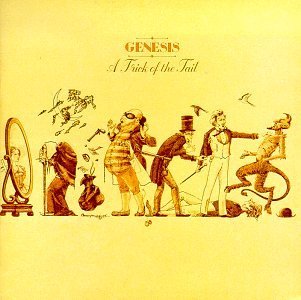
Genesis - A Trick of the Tail (1976)

Many people see Peter Gabriel as the creative mind behind Genesis, but a few listens to A Trick of the Tale or Wind & Wuthering may quickly dispel that myth for many. This is an oft-overlooked period in Genesis musical history. The band was seemingly searching or grasping for a new identity in the wake of Peter Gabriel’s departure.

Dance of the Volcano is the first evidence that despite the departure of a very creative and pivotal member of their band, Genesis was still on solid footing. One might expect Genesis to be struggling, or that this album might be weaker than its predecessors in light of Gabriel’s absence. In which case, one would be quite wrong in each case. From the opening notes and through the entire CD, Genesis displays a self-assurance that is quite conspicuous in its presence.

Indeed, Phil Collins steps up from behind his drum kit to handle lead vocals with a level of confidence that betrays his relative vocal inexperience. This isn’t a slam on Peter Gabriel, so much as a testament to the band’s adaptability and growth.

Much of their material from this era is lush and full that it might more accurately be described as “soundscapes” than as mere “music.” These aren’t just musicians, they’re artists, your eardrums are their canvas and throughout songs like Entangled, Ripples, and Los Endos they paint vivid and lush musical paintings.

Their continued musical growth is largely attributable to their extremely talented and oft-overlooked guitarist, Steve Hackett. Hackett is a musical chameleon, both as a guitarist and a songwriter. And many, myself included, would argue that Hackett, moreso than Peter Gabriel was the driving creative force behind Genesis. They didn’t truly come into their own until he joined the group in 1973, just in time for their Nursery Cryme album and they maintained a certain level of musical creativity and excellence until his departure following the Wind & Wuthering album.

Another facet of Hackett’s talent was his ability to draw the best out of messrs. Collins, Banks, and Rutherford.

Some may scoff, some may chortle, but songs like Ripples and Los Endos remain some of the best in Genesis long and accomplished canon—both easily stand up to classics from the Peter Gabriel era such as Watcher of the Skies, Supper’s Ready, Firth of Fifth, and Cinema Show.

In lesser bands, the mere level of talent of the individual members of the band led to personality clashes and a certain level of one-upmanship. What made Genesis work so well in the “Hackett-era” was a certain level of musical respect, allowing each member their chance to “shine” and allowing their talents compliment, rather than overshadow that of their bandmates.

While their Foxtrot and Selling England By the Pound albums are considered classics. One would be remiss to leave A Trick of the Tail off that list as it truly is a continuation of meeting the bar set very high by those albums. While not superior to the Peter Gabriel era material, it is certainly equal to it.

Monday, November 21, 2005

A few of my favorite guitarists

Every time I listen to music I pick up something different. I go through phases where I notice one instrument more than the others. For some groups that I listen to it's the guitar, for others the bass, for some it's drums, and with other groups it depends on the song or album...

Lately I've been on a guitarist kick. Running errands after work the other night I was listening to Arie on Chicago VII. A jazzy instrumental piece. Chicago VII hasn't been one of my favorites in the past... but for some reason, lately Terry Kath's guitar playing has been leaving my jaw on the floor. The guitar solo in Arie is one of his better ones, and for some reason-- at least by me, it's been one of his more oft overlooked solos. It's very soulful and passionate and I was reminded once again why I fell in love with the music of Chicago.

Yesterday, while working, I was listening to Genesis Selling England By the Pound CD. I always pick up on Steve Hackett's solo in Firth of Fifth but this time I was picking up on his subtle accents in other songs and admiring his work even more than I already do/did. I was moved by how his subtle guitar work in More Fool Me matched the melancholy feel of Phil Collins' voice (one of the few Genesis songs he sang lead on when Peter Gabriel was still in the band).

I'm also, of course, a huge Dream Theater fan... While it was the insanely brilliant drumming of Mike Portnoy that initially caught my ear, and later on it was jaw-dropping classical piano chops of Jordan Rudess-- I've come to develop an ear for John Petrucci's guitaristry. And "guitaristry" is the best way to describe it. Normally when people think of prog-rock or prog-metal they think of technique at the expense of feeling. That isn't the case with Petrucci at all. From his softer more relaxed work on Liquid Tension Experiment's State of Grace or Hourglass to his hard driving solos on Fortune in Lies, As I Am and Home the man plays with passion and feeling in a musical genre not necessarily known for exemplifying either of those things.

Despite the extreme differences in the playing styles of all three, lately I honestly can't say I prefer any one of those styles over the other... It's all a matter of the mood I'm in. There's a time and place for each of them.