Showing posts with label Jimmy Barnes. Show all posts

Thursday, November 25, 2010

Forgotten Music Thursday: Jimmy Barnes - s/t (1985 - US) )For the Working Class Man (1985 - Australia)

The combination of 14 Australian Top 40 albums for Cold Chisel and 13 charting solo albums, including nine No. 1s, gives Jimmy Barnes the highest number of hit albums of any Australian artist.  Yet in the United States, Barnes is virtually unknown.

In 1985 Jimmy Barnes, took another stab at the US market, this time as a solo artist.  His band, Cold Chisel had, at best, a lukewarm reception when they'd attempted to crack the American market a few years earlier.

Unfortunately, largely due to poor timing, Barnes was met with a similar lack of enthusiasm on his solo attempt.  While he was arguably far more talented than Bryan Adams, his music was far too similar to that of the Canadian rocker who had beat him to the punch for people to take much notice.

Luckily for Barnes the album was a smash hit that went multi-platinum outside the United States and even yielded 1998, 2003, and 25th anniversary (2010) re-releases in Australia.  Working Class Man (penned by Journey keyboardist and the album's co-producer, Jonathan Cain) was even used in the American film Gung-Ho (featuring actor Michael Keaton).  The title song was so popular in Australia that the film was re-titled Working Class Man for its Australian release.   

Incidentally Cain thought so highly of Barnes that he approached him about possibly replacing Steve Perry in Journey.  An offer which Barnes thankfully politely declined.

The album features some solid blues tinged rockers that have aged far better than much of the material from the eighties.  While the track order was changed substantially for the re-releases the album is equally enjoyable whether the songs are listened to in the American track order:
1. No Second Prize (Barnes)
2. I'd Die To Be With You Tonight (Sandford)
3. Working Class Man (Cain)
4. Promise Me You'll Call (Barnes)
5. Boys Cry Out For War (Barnes)
6. Paradise (Barnes)
7. Without Your Love (Arnott, Barnes)
8. American Heartbeat (Cain)
9. Thick Skinned (Arnott, Barnes)
10. Ride The Night Away (Jordan, Little Steven)
11. Daylight (Barnes)
Or with the Australian track order:
1. I'd Die To Be With You Tonight (Sandford)
2. Ride The Night Away (Jordan, Little Steven)
3. American Heartbeat (Cain)
4. Working Class Man (Cain)
5. Without Your Love (Arnott, Barnes)
6. No Second Prize (Barnes)
7. Vision (Barnes) (Bonus track not on original release)
8. Promise Me You'll Call (Barnes)
9. Boys Cry Out For War (Barnes)
10. Daylight (Barnes)
11. Thick Skinned (Arnott, Barnes)
12. Paradise (Barnes)
Admittedly the first time I heard Jimmy Barnes voice (his duet with fellow Aussie vocalist, John Farnham, When Something Is Wrong With My Baby)  I was not a fan.  His rasp grated on my nerves.  Unbeknownst to me at the time, Barnes voice had snuck under my skin and started to fester.  Over time a voice that I once found grating I've grown to absolutely love. 

While some might argue that Barnes is best enjoyed within the confines of Cold Chisel, I'd counter that his solo material challenges that argument quite convincingly.  While his solo material is not necessarily superior to his material with Cold Chisel it is certainly on the same level of quality.  If Barnes voice doesn't grab you at first, give it time.  He has a swagger to him that demands to be noticed and inevitably enjoyed.

There's an easy enjoyability to this album from start to finish.  The album is augmented by guest contributions including late 70s/early 80s pop chanteuse Kim Carnes, the aforementioned Jonathan Cain, and the highly respected Aussie vocalist Renee Geyer.

In hindsight I can understand why, within the context of the mid-eighties, this album failed to generate a stir in America.  However, at the same time, I'd argue this album has aged far better than many of the albums that were far more popular at the time of its release.  It lacks the oversynthesized keyboard saturation that was so prevelant on other releases from that era that was so welcome at the time but now makes those releases sound so dated.  The tracks written and produced by Jonathan Cain even show him exhibiting far more restraint with Barnes than he exhibited in Journey.  (**** out of 5)

Related Links & Media
Working Class Man video (Australian)

Working Class Man video (American)

I'd Die To Be With You Tonight video

Ride The Night Away video 

Boys Cry Out For War video

No Second Prize video

Daylight video

Jimmy Barnes (official site)
Jimmy Barnes (wikipedia)

Monday, January 25, 2010

Cold Chisel - Cold Chisel (1978)

Starting as heavy metal covers band, Orange, in 1973, Cold Chisel changed their sound, shifted its line-up a bit, relocated from Adelaide then to Melbourne, and inevitably to Sydney before being signed by Warner and recording their debut album in 1978.

Little did anyone know at the time that this workingman's pub rock band would become one of the seminal, pivotal, and definitive Australian rock bands.

In the years since, history has shown that Cold Chisel is generally a band that's better enjoyed live than in the studio but their raw energy and bluesy swagger shines through even on their studio releases.

In the years paying their dues in the pub and club circuits of Adelaide, Melbourne, and Sydney keyboardist/organist Don Walker had emerged as the band's primary songwriter. So it's little surprise that all but one of the songs on Cold Chisel's debut were written solely by Walker (he and vocalist Jimmy Barnes collaborated on Juliet).

The nice thing about this album not being recorded until about five years after the band's inception-- many of the kinks were worked out. Jimmy Barnes had left and rejoined the band several times due to the somewhat volatile relationship with his bandmates. Being a Scot his relationship with Liverpool born drummer Steven Prestwich was particularly heated. Barnes absences in the band's beginnings also allowed guitarist, Ian Moss, to exercise his vocal chops as he often took over on vocals during Barnes' absences from the band.

Going into the studio to record this debut, the kinks were for the most part smoothed over, the material was strong as some of it had been performed in the club circuits over the years and there was a tightness and raw energy in the band's sound that gave them instant appeal across a broad spectrum of the population.

From the opening notes of Juliet to the closing notes of Just How Many Times the band is firing on all cylinders. You can feel your feet sticking to the stale beer soaked floors, see the paint peeling off the walls, smell the acrid ammonia stench emenating from the hallway where the restrooms lurk on every blues-tinged hard rocking note they play.

While Jimmy Barnes handles most of the vocals with his gritty vodka drenched swagger (reminiscent of a cross between AC/DC's Bon Scott and Brian Johnson) Ian Moss does contribute his considerably smoother vocals to One Long Day and Rosaline which keeps the album's vocals consistently interesting. There's not a throwaway track on this release, although admittedly other than the live staple Home and Brokenhearted and the Vietnam anthem, Khe Sanh the material on Cold Chisel's debut is not as recognizable as what would come on later releases.

While this may not be the definitive Cold Chisel album, it does show the band in their somewhat humble beginnings. And the great thing about this band is that they never lost their swagger, drive, or energy. To hear them from the beginning is a real treat that should be enjoyed and savored.

Related Links
Khe Sanh

Cold Chisel (official website)
Cold Chisel (wikipedia)
Jimmy Barnes (official website)
Jimmy Barnes (wikipedia)
Ian Moss (official website)
Ian Moss (wikipedia)
Don Walker (official website)
Don Walker (wikipedia)
Steve Prestwich (official website)
Steve Prestwich (wikipedia)
Phil Small (wikipedia)

Thursday, January 22, 2009

Cold Chisel - Ringside (2003)


Cold Chisel, the definitive Australian pub-rock band are best enjoyed in the context of a live setting. While their studio albums are enjoyable, they lack the spitfire energy of Chisel’s live releases. There’s a chemistry between Ian Moss (guitar/vocals), Don Walker (piano/keyboard), Jimmy Barnes (vocals), Steven Prestwich (drums & percussion), Phil Small (bass), and guest musicians Andy Bickers (saxaphone), David Blight (harmonica) that is at its fullest when the band is performing live.


In 2003 Cold Chisel embarked on a reunion tour. Ringside, captures the enthusiasm and energy of that tour to full effect, making this one of the best live albums released by ANY rock band from ANY country… ever.

The performances on this album from the piss and vinegar misogyny of Goodbye Astrid to the somber melancholy of When the War Is Over are all powderkegs of energy and emotion.


With 32 songs on 2 CDs clocking in at over two and a quarter hours, this release captures an excellent sample of the best music this band has given to Australia over the entire tenure of their careers. From their self-titled debut in 1978 to their 1998 reunion album, The Last Wave of Summer this live release covers an excellent mix of up-tempo (Home and Brokenhearted, Khe Sanh, Hound Dog, The Things I Love In You), mid-tempo (Cheap Wine, Rosaline, Saturday Night, Shipping Steel, Forever Now), and slower material (Flame Trees, Lovelight, Four Walls, Water Into Wine).


The vocals are shared between the gravelly growl of Jimmy Barnes, the Warren Zevon-eque rasp of drummer Steven Prestwich, and the smooth tenor of guitarist Ian Moss giving the concert as a whole a very vocally balanced feel. Perhaps the greatest illustrations of the vocal diversity of Chisel are the 2 versions of All I Wanna Do that close out both CDs 1 and 2. Steve Prestwich’s vocals on the song at the end of disc 1 bear a stark contrast to Jimmy Barnes more gravelly delivery of the same song at the end of disc 2.


Don Walker’s keyboard and piano playing is also highlighted on this release—whether it’s the somber tones he adds to When the War Is Over or the roadhouse boogie feel he adds to songs like Goodbye Astrid and The Things I Love In You his talent continues to shine.


Whether you’re familiar with or new to Cold Chisel, Ringside is a must have.


Related Links
Cold Chisel - Khe Sanh (Live 2003)


Cold Chisel - Bow River (Live 2003)

Cold Chisel - Goodbye Astrid (Live 2003)

Cold Chisel - HoundDog (Live 2003)

Cold Chisel - Flame Trees (Live 2003)

Cold Chisel - When the War Is Over (Live 2003)

Cold Chisel (Wikipedia entry)
Cold Chisel - The Best of Cold Chisel (1998) review
Various Artists - Standing On the Outside: The Songs of Cold Chisel (2007)review
Back to Index of Articles

Monday, December 29, 2008

Various Artists - Standing On the Outside: The Songs of Cold Chisel (2007)

Tribute albums are very hit or miss affairs, and unfortunately more often than not and despite the best intentions of the bands playing tribute on them, they tend to miss.

Luckily this collection "hits" more than it "misses." Some of the covers are too close to the originals leaving the listener to wonder why the band even bothered recording a cover in the first place. And others are so far removed from the original the listener is left scratching his/her head wondering if the band performing the cover had ever actually listened to the original version.

The highlights on this collection include Paul Kelly's folky melancholic Khe Sanh. Where the piss, vinegar, and swagger was with the original-- Kelly has replaced it with a somber disillusionment. I never thought the banjo could be made to sound like a sad instrument but it gives Khe Sanh a certain lost yearning. The Waifs give a similar interpretation on Four Walls. The Living End give a nouveau rockabilly (a la Brian Setzer) feel to Rising Sun that makes the listener want to get up and dance. Sarah Blasko's Flame Trees, and Shane Nicholson's Cheap Wine are all quite enjoyable as well.

This album also serves as an excellent introduction to some of the better bands that Australia has been keeping secret from the world. If you can find the special 2 disc collection which features a 2nd disc with the original Cold Chisel versions of all the songs thare are on disc 1 I highly recommend picking it up as it's an excellent introduction to one of the most seminal (yet rarely heard of beyond their borders) Australian bands ever.

Related Links
Standing On the Outside (Wikipedia entry)
Standing On the Outside (Amazon.com)
Cold Chisel Chisel: The Best of Cold Chisel (review)
Standing On the Outside: The Songs of Cold Chisel promo video:

Return to Index of Articles

Friday, April 14, 2006

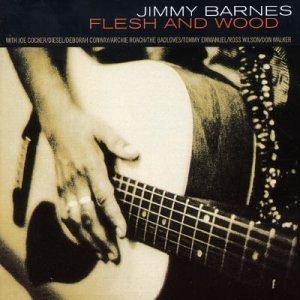
Jimmy Barnes - Flesh & Wood (1994)

After his Soul Deep collection of covers of the soul songs which had inspired his career as a singer, Jimmy Barnes decided to take his music in yet another direction with 1994's Flesh and Wood. Comprised of a mixture of covers and original materials this album perhaps allows Barnes to show his vocal capabilities better than any of his previous albums ever had.
Not having to compete with amplified instruments it's much easier to hear and appreciate Barnes gritty soulful vocals. Whether it's Barnes own It Will Be Alright or his emotive cover of The Band's classic The Weight. These stripped down acoustic arrangements show the best of what Barnes was and is capable of.

When you toss in a duet with Joe Cocker (Guilty) and some guest spots with Aussie rock luminaries like Diesel, Tommy Emmanuel, and Archie Roach. The mix ends up being an even more well-rounded and a delightful treat.

This is the kind of CD you play when you're drinking alone with friends like Johnny Walker, Jim Beam, Jack Daniels, Jose Cuervo, or Captain Morgan. Dim the lights, take a sip of your poison of choice and savor the cocktail of music and alcohol on its slow burn through your insides.

From start to finish its got that hot humid rainy night, chirping cricket, bottle of single malt Scotch feel to it.

The performances are relaxed but not restrained and completely unpretentious and the vocals are some of Barnes' strongest. The only truly weak moment is his cover of Elvis Presley's Love Me Tender which neither adds nor takes away anything from the original performance making it an unoffensive, if not bland, cover.

Highlights include Barnes cover of the Cold Chisel classic Flame Trees, Ride the Night Away, and his stirring duet with Deborah Conway-- Let It Go.

Friday, March 17, 2006

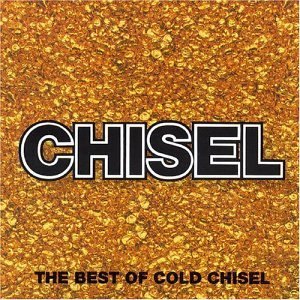
Cold Chisel - The Best of Cold Chisel (1998)

Australia has a handful of secrets they've kept close to their chest over the years. Among their better kept secrets is the pub-rock band, Cold Chisel.

The Dylan-influenced keyboardist, Don Walker, is responsible for most of Cold Chisel's lyrics. The vocal duties were often split between Walker, guitarist Ian Moss, and lead vocalist Jimmy Barnes.

Generally I try to avoid reviewing greatest hits compilations-- but for a band which is all but unknown in the United States, I can think of no better way to get acquainted with this band's great song catalog than to pick up this CD.

Some of Cold Chisel's highlights include the bluesy rockers Standing On the Outside and The Rising Sun, and Breakfast at Sweethearts. But Cold Chisel is best known, at least in Australia, for their more political material like When the War Is Over and Khe Sanh (the latter of which has gone on to become one of the most requested songs on Australian radio stations).

Khe Sanh details the general displacement of an Aussie Vietnam vet (yes, something many Americans don't realize is that Australians fought alongside the Americans and South Vietnamese in 'Nam) after returning home after the war. It's also one of the best examples of Walker's superlative songwriting. While there are a handful of Aussie-specific references in the song, it could just as easily be about the sense of displacement American vets felt returning after the war.

When the War Is Over is another shining example of Cold Chisel's musical versatility. The moving ballad was later covered, to great effect, by John Farnham during his brief tenure as the lead singer of Little River Band in the mid-eighties. While the Cold Chisel version lacks the vocal power of the LRB cover it has a rawer and even more desperate melancholy to it.

Admittedly Barnes voice isn't for everyone and for those more used to the smoother tenors and baritones of singers like American Robert Lamm or Brit Paul Rodgers, Barnes vodka soaked raspy growl will take a little bit of getting used to. Maybe the best way to describe Cold Chisel-- think Bad Company with Brian Johnson of AC/DC as the lead singer instead of Paul Rodgers and you're almost there.

The harmonies are often tight, the melodies are often catchy, and the music as a whole provides an exceptional snapshot of Australian music of the late seventies and early eighties. While they never enjoyed the success of their fellow countrymen, Little River Band or AC/DC, they are an excellent antidote for those who may have found LRB to be a little pedestrian and AC/DC a little too loud for their tastes. Cold Chisel provided a happy and more accessible medium between those two extremes.

Sunday, November 20, 2005

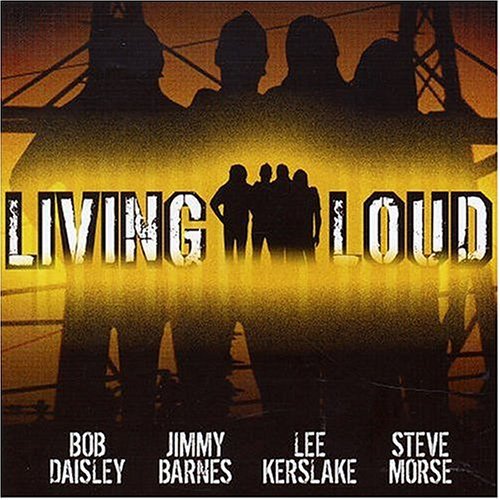
Living Loud (2004)

What do you get when you mix members of Deep Purple, Uriah Heep, Cold Chisel, Whitesnake and Black Sabbath performing 5 Black Sabbath covers and 7 new songs of their own?

You get Living Loud:

Steve Morse: Guitar (Dixie Dregs, Deep Purple)
Bob Daisley: Bass (Ozzy Osbourne, Gary Moore, Black Sabbath)
Lee Kerslake: Drums (Uriah Heep)
Don Airey: Keyboard (Whitesnake, Gary Moore, Deep Purple)
Jimmy Barnes: Vocals (Cold Chisel)

The new tracks are quite enjoyable, rollicking and fun-- the Sabbath covers take some getting used to. Morse is an exceptional guitarist and puts his own stamp on these Randy Rhoads classics and make them his own. The problem comes with Barnes voice-- and I'm a huge fan of Jimmy Barnes, he's an Australian institution. I think the problem is that both Ozzy and Barnesey have distinct voices-- and their voices are so distinctly different. Barnes voices is a cocktail of equal parts Joe Cocker and Brian Johnson (of AC/DC). The more I listen to the CD the more Barnes treatment of the Sabbath covers grows on me, but it's certainly taking a lot to get used to. At first listen I wanted to throw the CD out the window because there was something about Barnes voice on THOSE songs that wasn't quite meshing in my head. It was only after I was able to open my mind and listen to the Sabbath covers as if I was listening to them for the first time that I finally started to enjoy Jimmy's treatment of the material. ***1/2 (out of 5)

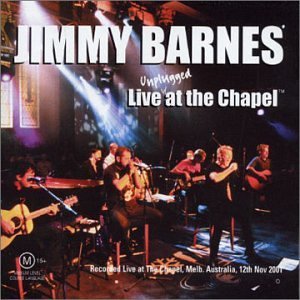
Jimmy Barnes - Live at the Chapel (2002/2004)

His raspy growl conjures mental images of a rough-around-the-edges Joe Cocker. The Scottish-born, Australian-bred, Jimmy Barnes sings every song as a force to be reckoned with. His voice may not ever be described as “pretty” his delivery may never really be “pleasant”—but he is always, pound for pound and dollar for dollar putting everything he has into each and every note he sings. He is to Blues vocals what Steve Ray Vaughn was to Blues guitar. An icon, an example of how it’s done right!

The best way to experience Barnes is either live or on a live album. As good as some of them are, his studio albums just don’t capture him at his absolute gritty, piss-and-vinegar balls-on best. With his repertoire of live material, both as a solo musician and with his band, Cold Chisel, there is—luckily plenty of material to choose from. But the cream of the crop, the album that rises above all his other live material is his Unplugged Live at the Chapel CD.

From the opener, a very bluesy take on the classic Hound Dog, to the closing cover of the Bee Gees staple To Love Somebody which he puts his own bluesy stamp on the album captures Barnes at his raspy finest. The CD evokes, from start to finish the feel of Saturday night at your favorite dark-and-dusty, sticky floored, dive bar.

Barnes also covers a handful of songs from his tenure in Cold Chisel, from the Vietnam anthem Khe Sanh, to Flame Trees, and Cheap Wine… I realize none of these songs are at all familiar to an American audience—they are some of Australia’s best kept secrets just waiting to be discovered by an open-minded American audience sick of the dime-a-dozen, cookie-cutter, flavor-of-the-month starlet or boy band.