Showing posts with label Bootleg. Show all posts

Thursday, January 07, 2010

Toto - Live @ Montreux 5/7/1991

By 1991 Toto had more than proven themselves. They'd had a string of hits in the eighties and a mantle full of Grammy Awards collected for Toto IV and Rosanna at the 1983 Grammy Awards.

They also had soldiered through a revolving door of lead singers-- Bobby Kimball, Fergie Frederiksen, Joseph Williams, and Jean-Michel Byron (the last of which the band and most fans try to forget).

But you take the good with the bad and after the sour taste that Byron had left them with, Toto decided to soldier on with guitarist Steve Lukather handling the lion's share of lead vocals.

The 1991 Montreux Jazz Festival in Switzerland was the first glimpse Toto gave of their then upcoming album, Kingdom of Desire.

What the band didn't know, and couldn't have known at the time was that this would end up being one of Jeff Porcaro's final concerts with the band before his untimely passing in August 1992. As such this bootleg is arguably the highest quality and one of the only bootlegs available featuring Porcaro playing material from his final album with the band.

Toto's set starts out with the fiery On the Run (which, incidentally, didn't make it onto Kingdom of Desire) an uptempo rocker, and easily one of the heaviest and hardest rocking songs that Toto had ever recorded. It would not have sounded out of place on Kingdom of Desire which ended up being, arguably, Toto's heaviest, hardest, and rawest album. (On the Run did inevitably make it onto Toto's 1997 twentieth anniversary rarities collection, XX.)

The band also plays Kingdom of Desire and the intensely grooving instrumental Jake to the Bone from Jeff Porcaro's final album.

In addition to the new material the band also dips into their back catalog with the Lukather penned and sung ballad I'll Be Over You, the smash hits-- Africa, Rosanna, and Hold the Line. In the absence of a regular tenor vocalist on Rosanna and Hold the Line Toto taps background singers (Fred White and Jenny Douglas respectively) to handle the tenor vocals. At times the background singers are equal to the task but for the most part their vocals fall thin compared to Bobby Kimball's vocals on the originals.

A couple of covers round out Toto's set, the Hendrix cover Red House that lets Steve Lukather cut his teeth a bit more on guitar and the seemingly out of place throwaway Ike & Tina Turner cover, I Wanna Take You Higher featuring Toto's female back-up singers (Jenny Douglas & Jackie McGhee) singing lead. While this cover might not have sounded out of place at a Toto concert in the late seventies, given the rest of the songs in this early nineties set, it sounds woefully out of place and sticks out like a sore thumb.

That being said, this bootleg is definitely worth adding to any collection largely on the strength of On the Run, Jake to the Bone, Kingdom of Desire, and the Hendrix cover Red House. And for any Toto fan, this is a must given its significance as the first time any material from Kingdom of Desire was performed live (and by Jeff Porcaro to boot!).

Related Links
Kingdom of Desire (wikipedia)
Toto (official site)
Jeff Porcaro (wikipedia)
Steve Lukather (official site)
Steve Lukather (wikipedia)
David Paich (wikipedia)
Mike Porcaro (wikipedia)

Monday, December 28, 2009

Chicago Transit Authority - Live at the Itchy Foot Moose Sept. 1, 1968

Imagine, if you will, getting to hear your favorite band before they hit it big. Chicago Transit Authority (originally "The Big Thing" and later just "Chicago") was formed by a gentleman's agreement in woodwind player, Walt Parazaider's apartment in February 1967. The original six members Terry Kath, Danny Seraphine, Robert Lamm, Walt Parazaider, James Pankow, and Lee Loughnane were augmented a few months later by tenor vocalist/bass player, Peter Cetera who left the group he'd been with, the Exceptions, to join The Big Thing.

Through the rather fortuitous friendship of James William Guercio and Walt Parazaider, The Big Thing were pitched to Columbia Records. One of Guercio's first steps as producer/manager of the band was to change their name to Chicago Transit Authority, after the public transportation he'd grown up riding and held a special nostalgia for.

This bootleg is a snapshot of that era, before Chicago became Chicago, before their 3 worldwide #1 hits, before becoming only second to the Beach Boys in record sales by an American band-- the band playing on this bootleg is a younger, hungrier, and much more raw band than what they'd later turn into.

The Setlist
1. It Better End Soon (later released on Chicago II)
2. Girl (later released as Someday on Chicago Transit Authority with completely different lyrics referencing the '68 Democratic Convention in Chicago)
3. Once Upon a Life (never released)
4. Terry's Blues (cut ending)
5. Terry's Blues (one hell of a showcase of guitarist Terry Kath's talents, at the end of the song he refers to the song as Toe Jam)
6. Questions 67 & 68 (later released on Chicago Transit Authority)
7. Johnny B. Goode (Chuck Berry cover, sung by Terry Kath with interesting "new" lyrics interespersed with the Chuck Berry lyrics making reference to marijuana)
8. Rock Around the Clock (Bill Haley & His Comets cover sung by Peter Cetera)
9. Gimme Some Lovin' (Spencer Davis Group cover sung by Robert Lamm, I have a bootleg from the 80s that features Peter Cetera singing this instead of Robert Lamm)
10. Listen (later released on Chicago Transit Authority)
11. Does Anybody Really Know What Time It Is? (later released on Chicago Transit Authority)
12. Mississippi Delta City Blues (later released on Live in Japan in 1972with a new arrangement, and on Chicago XI in 1978 with yet a different arrangement)
13. Got to Get You Into My Life (Beatles cover sung by Peter Cetera)
14. It's Not Unusual (Tom Jones cover sung by Terry Kath)
15. Poem 58 (later released on Chicago Transit Authority)
16. I'll Be Back Again (Beatles cover sung by Robert Lamm & Peter Cetera)
17. Dedicated to Girl Number One (unreleased, this is the song Chicago recorded as their demo. The demo is apparently lost forever somewhere in the Sony vaults. This is one of two live versions I know of, sung by Robert Lamm)
18. Liberation (later released on Chicago Transit Authority)

The sound quality is uneven. On some songs its surprisingly good but on all tracks, despite a few flubs here and there, it's very listenable. This is one of three Chicago bootlegs from 1968 known to be floating around fan collector circles. Of the three, this one has the best sound quality although one of the other two bootlegs (both recorded at Barnaby's) have arguably a superior song selection with covers of Hendrix (Hey Joe, Foxy Lady, & Purple Haze), Cream (Sunshine of Your Love), the Beach Boys (Darlin'), the Beatles (Lady Madonna, Sgt. Peppers, With a Little Help From My Friends), Marvin Gaye (One More Heartache), Martha & the Vandellas (Dancing in the Streets), Brenda Lee (Losing You), and Wilson Pickett (99 and a Half Just Won't Do).

Hearing the band at this stage in their careers is quite refreshing considering what the band has turned into in more recent years. Members have come and gone and the hunger has been replaced by greed. There's a love for the music they're performing-- both the covers and the original material that is, arguably, lacking in the current incarnation of the band's performances.

But all in all this is how Chicago should be heard, young and hungry. Full of energy, a balls-on horntastic blast of music.

Related Links
Chicago (Official Site)
Chicago (wikipedia)
Peter Cetera (Official Site)
Peter Cetera (wikipedia)
Terry Kath (Official Site)
Terry Kath (wikipedia)
Danny Seraphine (wikipedia)
James Pankow (wikipedia)
Walt Parazaider (wikipedia)
Lee Loughnane (wikipedia)
Robert Lamm (Official Site)
Robert Lamm (wikipedia)

Monday, August 28, 2006

Chicago - Live at the Fillmore August 1969

Before the hits, before Peter Cetera made his name nearly synonymous with "prom ballad"-- before Chicago was even "Chicago" they were the Chicago Transit Authority.

After relocating from the Windy City to LA and becoming the house band at the Whiskey, the CTA started making a name for themselves opening for and touring with the likes of Jimi Hendrix, Janis Joplin, and a handful of other big names of the era.

In August 1969 someone had the foresight to lay down tape and capture directly from the soundboard, one of the CTA's shows at Bill Graham's famed Fillmore West.*

This is one of the earliest known soundboard live recordings of this band-- a band that was still young & hungry. They were still very much a hard rock band with horns and not the pop band they would later become.

The mix is imperfect, as are the performances but that's what makes them so enjoyable. Chicago's debut album had a raw energy to it that producer Jimmy Guercio would seemingly "polish" out of them on their later recordings.

This live bootleg captures that rawness and energy. On the guitar heavy tracks like Poem 58, Liberation, and It Better End Soon Terry Kath's guitar is pushed to the front of the mix. On songs like Does Anybody Really Know What Time It Is? Robert Lamm and Peter Cetera's vocals are pushed closer to the front of the mix.

If anything, when compared to live bootlegs from recent years, this set speaks volumes of the change in direction this band has taken over the years. Chicago Transit Authority in 1969 was a band that had something to say and wanted to make sure their message was heard whether it was the anti-Vietnam message of It Better End Soon or the historically significant Someday which chronicled the riots at the 1968 Democratic National Convention. In this music can be heard a band that was trying to make a difference and still had the youthful idealism to believe they could effect that change or at least play some part in changing the world... The Chicago of 2006 is a band wresting on their laurels sleepwalking through sets weighed down by insipid saccharine ballads and their various hits over the years.

If Chicago were remembered for what they once were-- the band that played a kick ass ballsy concert at the Fillmore back in 1969 and not the tired old nostalgia act they've become, they'd surely be in the Rock & Roll Hall of Fame today. Instead after fourteen years of elgibility they've not even so much as been nominated for a place in the famed hall.

*the image is the handbill from the exact concert this bootleg was recorded at (thanks Google)

Related Links
mp3s
Poem 58 (15MB) (temporary link)
It Better End Soon (12MB) (temporary link)
25 or 6 to 4 (10MB) (temporary link)

Articles and Reviews
Chicago Transit Authority (wikipedia)
Chicago Transit Authority (AllMusicGuide)
Chicago Transit Authority (Review Revue #1)
Chicago Transit Authority "Multiple Aurgasms" (Review Revue #2)
Chicago II (Wikipedia)
Chicago II (AllMusicGuide)
Chicago II (Review Revue)

Tuesday, March 14, 2006

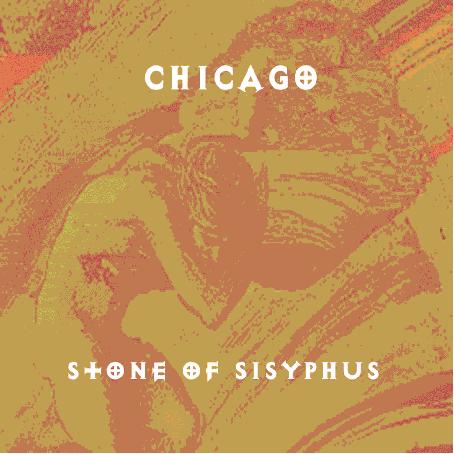
Chicago - Stone of Sisyphus (1994)

On March 22, 1994 Chicago's twenty-second album, Stone of Sisyphus was scheduled for release. The band was forgoing their usual numerical titles. This album was to be a reinvention of sorts.

March 22nd became April 12th. April 12th turned into April 26th. And then April 26th became "September." At some point in this chronology, a decision was made to shelve this album. It was never "officially" to see the light of day.

To this day, while bits and pieces, the occassional song here and there have been released as bonus tracks on various greatest hits compilations. Alternate "solo" versions of certain songs were released by various band members on outside projects. But, truth be told, this album in its original format, has it was originally intended to be released has never "officially" seen the light of day.

But fans remained undeterred. Throughout the mid and late nineties the album did find its way into the hands of the loyal fans who had not forgotten of this band. The more generous of fans rated this the best album Chicago had recorded since the untimely death of guitarist, Terry Kath, in 1978. But even those who were less complimentary went so far as to say it was the best album since the 1985 departure of bassist/vocalist Peter Cetera.

Indeed. If this album had been released on that original Tuesday in late March 1994, the album would have been incredibly well received by the legions of fans who remained disappointed after the overly saccharine Chicago 19 and the rather pedestrian Twenty-1. It had punch, it had balls, and it had that wall of brass that had been so conspicuously absent on the band's eighties albums.

The album opens with All the Years, a Robert Lamm penned tune hearkening back to the political sensibilities he'd injected into Chicago's material of the late sixties and early seventies. A horn-less version had already appeared on Lamm's 1993 solo album, Life Is Good In My Neighbourhood.

The title track is possibly one of the best surprises the band has offered in years. Written by then-guitarist, Dawayne Bailey. Stone of Sisyphus features Lamm and Bailey trading off on the lead vocals with Lamm handling the verses and Bailey handling the choruses and bridge. Bailey's unique sense of humor is present in the lyrics:

Blood sweat and tears turn faith into will

A subtle nod to Chicago's sixties horn-rock contemporaries of years past.

One of the few ballads on the album, Bigger Than Elvis, is bass player Jason Scheff's tribute to his father, Jerry, who once upon a time played bass for Elvis. It's a stirring and shining example of a son's paternal love.

Sleeping In the Middle of the Bed Again, another Lamm penned tune even, at one point, features an attempt at rap. Lamm would later include an alternate and much different arrangement of this song on his 1997 solo release, In My Head. The newer version would lack the infectious groove and the brass punch of the Chicago song.

Mah Jongg, is catchy and laidback with a gentle groove. After being conspicuously absent on the first four tracks, we finally hear Bill Champlin's gritty and soulful vocals. An alternate version of this with Brandon Fields on sax and vocalist Jason Scheff handling vocals ended up on Scheff's obscure solo album, Chauncy a few years later.

Unfortunately, try as they may, Chicago could not completely abandon the insipid or saccharine ballads that had turned their music into prom fodder just ten years earlier. Let's Take a Lifetime is everything long-time fans of this band love to hate about the worst this band has given them over their long tenure.

During the 1993 summer tour, in anticipation of this album's impending release, Chicago performed The Pull. This song has one of the better horn charts I've heard on any of their material in awhile. No longer relegated to the background with the intermittent blats to remind the fans that horns were still part of the band-- as they'd had to resort to in the eighties, the horns remain an integral part of the song from start to finish... Acting almost as another "vocalist" as they had in the band's heyday in the seventies.

While Chicago was not done giving their fans ballads, Candle For the Dark (Here With Me) is much less offensive and considerably less saccharine than Let's Take a Lifetime. It features Robert Lamm, Jason Scheff, and Bill Champlin all taking turns on lead vocals and rather than a synthesized sax solo like in Let's Take a Lifetime the horns actually play throughout the entire song-- if Chicago truly must play the occassional ballad it's nice to see that they remembered to give their horn section something to do, other than just reading the newspaper or "playing" a redundant third or fourth keyboard.

With Twenty-1 Chicago had given the executives at Warner Brothers/Reprise just what they wanted. A rather pedestrian album with a few catchy ballads to be released as singles. That album tanked so bad that only one song from it has ever been performed live. Plaid was Chicago's giant middle fingers to the executives for inflicting the damage of Twenty-1 on the masses. Incidentally, the song probably didn't help convince those same executives to release Stone of Sisyphus.

Proving that Robert Lamm isn't the only one in the band who knows how to write songs with a message, Bill Champlin contributed Cry For the Lost. In 1995 Champlin would release a considerably different version with alternate lyrics titled Proud of Our Blindness on his Through It All solo album. Both versions are interesting, but given Champlin's distinguished grammy-winning songwriting career they are, by comparison, rather forgettable.

In what is probably the most lyrically unusual song in Chicago's canon, Get On This, features hard driving guitars, soaring vocals and lyrics that detail a strange dream. One could almost say that while Robert Lamm stays up until "25 or 6 to 4" trying to write songs, Dawayne Bailey instead waits till morning and tells of the dreams had the night before. Bailey has indicated that many of the lyrics were inspired by the poetry of his then girlfriend, Felicia Parazaider. Trombonist, James Pankow added an assist and the end result is the type of song Chicago had never done before and will, more than likely, never do again.

The album closes with The Show Must Go On an autobiographical song co-penned by Bill Champlin. A very different version of this song with a completely different set of lyrics had appeared on the Fixx album, Ink, a few years before. The Fixx version was titled Falling In Love. Musically, however, it's obvious the two songs were cut from the same cloth.

This is one of the best "could've been" albums to ever sit gathering dust in the vaults. It was certainly better than Chicago's worst material and it was even better than much of the more mediocre half-assed efforts they'd spoonfed fans over the years. If in your Internet travels you stumble across a torrent of this, add it to your download queue. If you miss the Chicago of old, this album will not disappoint. While it has not aged well, it's still aged better than their ill-fated attempts at disco on Chicago XIII and has that brass punch that Chicago SHOULD have had in the eighties when they seemingly forgot they had a horn section.

Tuesday, December 20, 2005

Chicago - Live @ Park West 8-6-1982

After Terry Kath’s death in January 1978, Chicago had a bit of trouble finding themselves. While the 1978 tour with former Steve Stills side-man, Donnie “Hot Licks” Dacus on guitar and vocals was full of the fire and energy of a band embarking on a new beginning with a new producer and guitarist. The 1979 disco follow-up XIII saw a significant drop in sales and the departure of Dacus.

After departing longtime label, Columbia Records. Chicago found resurgence with their new guitarist, Chris Pinnick, keyboardist/vocalist Bill Champlin, and svengali producer David Foster.

This bootleg captures the energy of that new beginning. For the first time since Terry’s death, the band had someone to cover Terry’s soulful vocals on songs like Make Me Smile in Bill Champlin.

While this soundboard recording is exceptional, the performances seem to be sped up, as if the band had gotten caught in the cocaine infused blur of the late seventies and early eighties. Kicking it up from 33 to 45 RPMs—even their prom-fodder; If You Leave Me Now and Hard to Say I’m Sorry sounded a bit more frenetic than on their studio releases.

There are some interesting flourishes like the organ intro replacing the normally instantly recognizable piano intro to Saturday In the Park and Chris Pinnick’s hard driving guitar solo on Follow Me—one of Chicago’s most underrated songs. The drum solo which in recent years has been performed by Tris Imboden on the tail end of Beginnings is found instead being performed by original drummer, Danny Seraphine, at the end of the Spencer Davis Group classic I’m a Man. Another interesting addition to the set is Spencer Davis Group’s Gimme Some Lovin’. While I’ve always enjoyed the song, it doesn’t quite sound right with Peter Cetera’s tenor vocals. Bill Champlin’s more soulful baritone would have done much more justice to this classic.

One of my disappointments of this set is the lack of vocal interplay between Peter Cetera and Bill Champlin. Part of what made Chicago 16 and later Chicago 17 so appealing was the combination of Champlin’s soulful baritone and Cetera’s soaring tenor. Their vocal styles complimented each other in a way Chicago had not experienced before and has not really experienced since. It’s to Chicago’s detriment that they did not take advantage of the vocal chemistry the two vocalists shared.

Despite the shortcomings this is an excellent set from an all-too-brief period in this band's long history.