Showing posts with label British. Show all posts

Thursday, December 17, 2009

Juliet, Naked by Nick Hornby

Having been disappointed with the last two Nick Hornby novels that I've read (How to Be Good and A Long Way Down) I was a little wary when I started Juliet, Naked would this be a continued slump or would it be a return to form of his first two novels (High Fidelity and About a Boy)?

While still not as good as either High Fidelity or About a Boy, Juliet, Naked is a step back in the right direction.

Annie and Duncan have been together 15 years. Duncan is a huge fan of a fictitious Dylan meets Springsteen meets Leonard Cohen type musician, Tucker Crowe. He writes articles about him, goes on pilgrimages of places of notoriety from Tucker's life and career. He not only listens to but dissects every Tucker Crowe recording he has.

While on tour in Minneapolis in the eighties, Tucker Crowe went to the loo and then left the bar where he was watching a local band that had been recommended to him. He promptly cancelled his tour and retreated from the public eye. In his absence from the public eye, his legend grew within his small but rabid circle of devoted fans which included, Duncan.

With the money running low, Tucker agreed to the release of the demoes and rehearsal recordings from his final and most critically acclaimed album, Juliet. This new version aptly titled Juliet, Naked (perhaps a tip of the hat to The Beatles Let It Be... Naked). Upon receiving a pre-release copy of the album Duncan is giddy with delight and posts a glowing review on one of the many Tucker Crowe message boards that he frequents.

Upon hearing the album, Annie, who has been following Duncan's fervor for Crowe, decides to post a review of her own. One considerably less glowing... How could this album with stripped down early versions of Crowe's greatest album be superior to the much more polished finished product?

Her honesty prompts a thankful email from the reclusive Crowe himself... and that's where the story really takes off.

The one consistency in all of Hornby's novels, even his sub-par ones, is a sense of natural empathy. He includes just the right details to make the characters seem that much more real to the readers. Being such a devout lover of music himself, he understands what makes those of us who have over the top fascinations with our favorite bands tick.

The book is at times an examination of what it means to be a music fan. And without coming out and asking it, one of the questions the book poses-- when being a fan of music, are you a fan of the music that has been created or a fan of the person or people who created that music? Is it possible to be a fan of one and not the other. The book is also an examination of the songwriting process. The very things that made Tucker Crowe such a great songwriter also proved to be his undoing as a father and a husband.

At the same time this is a very human story about two people at a crossroads in their respective lives taking stock of where their lives have been and whether or not they can change the kinetic momentum of the past pushing them to perpetuate the mistakes of their past. And these two people make a very real and tangible connection. On that level this book can appeal to just about anyone.

If you are or ever have been a die-hard fan of a band or musician, if you've ever had a staggering devotion to that band, gone on pilgrimages to sites pivotal in the history of those bands, followed some of that band/musician on tour, collected bootlegs of that band, or analyzed consumed and digested the entire discography of that band this book WILL resonate with you. It speaks to the music fans in all of us.

Related Links
Juliet Naked on Amazon.com
Juliet, Naked (wikipedia)
Nick Hornby (Official Site)
Nick Hornby (wikipedia)
The Blue Scarf (a blog inspired by Nick Hornby's Songbook)

Friday, May 16, 2008

Def Leppard - Songs From the Sparkle Lounge (2008)

So the "Sparkle Lounge" sounds more like Liberace's living room than anything one might associate with Def Leppard. But in reality, the "Sparkle Lounge" was where the band would get together while on tour to work on new material. This album is the fruits of those musical labors.

Simply put this is a step back in the right direction after the terrible misstep of 2002's X which left some fans (including this one) wondering if in addition to being deaf, the Lep might also be a eunuch.

2006's cover album Yeah! showed some promise, but being a covers album it was tough to discern whether the Lep had regained their swagger or if they were just aping the swagger of the bands/musicians they were covering.

Luckily, Songs from the Sparkle Lounge confirms that the Lep has indeed regained their swagger and attitude. With only one slow song, Love the album is considerably more uptempo and rollicking than the band has been since 1999's Euphoria album. If anything the material is considerably stronger than that on Euphoria making this possibly their strongest album since the passing of guitarist Steve Clark.

The music is catchy and upbeat, the harmonies are there, the driving guitars are there, and you can even hear Lep tipping a hat to the likes of ELO and Queen on Love which, with its grandiose strings and tight harmonies, is one of the band's best slow songs in quite awhile.

The one weak point-- the lyrics. Granted, Def Leppard's lyrics have never been within the realm of deep or profound and the one album in which they did go deep (1996's Slang) was not well received because it was largely not what the fans had come to love and expect of the band. The lyrics are traditional Def Leppard, simple and to the point but the low point on the album is Bad Actress which musically is a solid song but the lyrics are so cheesy and lamer than any of the recent ill-fated Kentucky Derby horses that it really takes away from a song that had the potential to be so much better.

Returning to good fun hair metal that put them on the map in the eighties was a recipe for success and this album is a true return to form of what this band is truly capable of. Fans of the High 'n' Dry through Hysteria era should be quite happy with this album.

Related Links
Def Leppard Songs from the Sparkle Lounge on Amazon.com
Def Leppard Slang review
Def Leppard Euphoria review
Def Leppard Yeah! review

Monday, March 24, 2008

Supertramp - Even In the Quietest Moments (1977)

While, on the whole not as strong or consistent as Crime of the Century or Crisis? What Crisis?!; Even in the Quietest Moments has some absolutely brilliant moments and gave glimpses of the musical brilliance yet to come with their 1979 masterpiece, Breakfast in America.

The album starts with a bit of a surprise, Give a Little Bit. Supertramp has never been considered much of a guitar-oriented band-- so starting an album off with the acoustic guitar driven Give a Little Bit is a rather ballsy move. A move that however paid off as Give a Little Bit remains an FM classic rock radio staple to this day. The album also closes with a bang; arguably one of their most adventurous and daring songs, Fool's Overture. Clocking in at just under eleven minutes, Fool's Overture is an homage to all the prophets of history who were seen as fools in their own time, their brilliance often not realized until after their prophecies came to fruition. The song is beautiful, melodic, and quite touching.

Supertramp has never been a band that's been easy to pigeonhole. They've often been considered "progressive rock" by the mainstream, but at the same time rarely do the get mentioned in the same breath as groups like Yes, King Crimson, ELP, Genesis, Rush, Caravan, or even Starcastle. Perhaps the biggest difference between Supertramp and groups that are traditionally considered to be progressive rock is the emotive level of Supertramp's music. Most progressive rock is considered "thinking man's music" largely due to the technical prowess of the musicians which perform it. Supertramp in contrast have often been able to generate not just an appreciation of their technique but also genuine emotion. And even though it's not as strong as many of their other albums, Even In the Quietest Moments is no exception. The music is poignant, almost like an old friend reminding you he/she is there. You may not need that old friend right now, but it's always nice to know you have a friend like Supertramp when you need it.

Perhaps what keeps this album from attaining the high quality of Crime of the Century or Crisis? What Crisis?! is that with only seven songs clocking in at only forty-three minutes, the album merely whets the appetite whereas the two previous albums not only whet the appetite but sated the musical hunger of the listener. With the album ending on such a strong note with Fool's Overture it really leaves you wanting more making the album feel as though it has ended far too abruptly.

Related Links
Give a Little Bit


From Now On

Fool's Overture

Wednesday, March 12, 2008

British Classic Rock

On a message board I frequent, the subject of British Classic Rock came up. Here was my artist by artist take on a handful of solid British bands:

Rolling Stones - While I appreciate the influence they've had on other bands, I've never really understood their appeal. I only own one of their albums (Beggars Banquet) and I do appreciate many of their singles, but all in all I think this is a band that for a long time has simply been famous for being famous, not because they're still actually any good-- seeing the Stones live today is kind of like seeing Sinatra long after he'd lost his singing voice-- bragging rights and nothing more.

The Who - I consider The Who's Next to be one of the greatest classic rock albums ever. I find it superior to Tommy, Quadrophenia, and just about everything else they ever recorded. It IS a masterpiece! I find these guys to be more talented than Led Zeppelin ever was.

Led Zeppelin - It often gets glossed over that Page & Plant were largely musical plagiarists. They were talented musicians, but much of their songwriting comprised of filching styles and even material from others-- sometimes giving credit where it was due-- sometimes not. The intro to Stairway to Heaven, for example, was taken from an instrumental piece by Spirit titled Taurus. I appreciate the impact these guys had on music and their musicianship but they lose boku points with me for their plagiarist tendencies.

Genesis - I'm a big fan of the Steve Hackett era (1972-1977). Hackett joined Genesis as their guitarist just in time for the Nursery Cryme album and left shortly after the Seconds Out live album. I'm not a big fan of The Lamb Lies Down on Broadway as I find it to be a bit to overindulgent and pretentious. Selling England By the Pound is a superior album as are A Trick of the Tail and Wind & Wuthering-- the band's first 2 post-Peter Gabriel solo albums. Foxtrot while excellent isn't quite as consistent as Selling England By the Pound.

Yes - I'm in the minority here, my favorite Yes album is Drama (1980), the only album to NOT have Jon Anderson on vocals. This isn't a slam on Anderson-- it's just that there's a musical chemistry between guitarist Steve Howe and keyboardist Geoffrey Downes that I find to be superior even to the chemistry of Howe and Wakeman. Drama is also a precursor to what would become the supergroup Asia.

King Crimson - After a revolving door of lead singers-- Greg Lake, Gordon Haskell, Boz Burrell (who left to play bass for Bad Company), and John Wetton (later the lead vocalist of Asia) the band finally split up in 1975, after Red. They of course re-grouped with a different line-up and new lead singer, Adrian Belew, in the early eighties... But the original era of the band is what holds my interest, in particular the albums featuring Greg Lake or John Wetton on vocals.

Bad Company - Their debut album was a masterpiece! One of the best and most consistent debut albums ever. Their sophomore release, Straight Shooter has some strong moments but isn't quite as good as their debut. After those 2 albums however the quality of their albums fell off sharply.

Emerson, Lake, & Palmer - The first real supergroup. Tarkus and Brain Salad Surgery are both excellent albums showing the trio in top form. They had some other solid albums but over time their material grew increasingly weaker. They started with a bang and petered out to a whimper.

Pink Floyd - The best British psychedelic band, arguably the best psychedelic band bar none when they started out. After the departure of the enigmatic and troubled Syd Barrett, their material grew much stronger and quite a bit more ambient. The partnership of David Gilmour and Roger Waters produced far stronger material than that of the troubled Barrett. However, given that much of their later material was done as a tribute to or in honor of Barrett, it could be argued that he remained a member of the band long after he left it.

The Beatles - They're the standard bearers. They took what they heard coming from across the pond, put their own stamp on it, perfected it, made it their own and became not only musical but also cultural icons. Their influence is undeniable.

Badfinger - These guys were on the way to becoming the NEXT Beatles, but then it all fell apart.

Electric Light Orchestra - After the untimely demise of Badfinger, Jeff Lynne picked up where the Beatles left off mixing Beatles-esque harmonies and songwriting with strings and a fantastic stage show to boot.

T-Rex - Marc Bolan was the Godfather of Glam, he got the world ready for David Bowie. Bolan was an exceptional guitarist but a bit too full of himself. His songs like 20th Century Boy and Bang a Gong (Get It On) are glam staples and glimpse of what was to come from hair metal bands like Def Leppard (a band that was admittedly heavily influenced by T-Rex/Bolan) in the eighties.

Spencer Davis Group - If not for Steve Winwood, these guys would be a mere musical footnote. Their songs like Gimme Some Lovin', I'm a Man, and Keep On Runnin' were infectiously catchy even if not the most technically challenging. Something tells me if not for these guys we never would have experienced Blind Faith or Traffic a few years later.

Supertramp - The combination of Roger Hodgson and Rick Davies vocals and John Helliwell's solid woodwind skills combined with strong lyrics of loss, confusion, and alienation set these guys apart from their contemporaries with a sound that was truly all their own. After 2 mediocre albums and 3 year hiatus they finally found their footing with 1974's Crime of the Century and maintained that footing until 1983's Famous Last Words before Hodgson left to pursue a solo career.

Friday, October 19, 2007

Def Leppard - Euphoria (1999)

After exorcising their demons on the deeply personal (and some would argue overly somber) Slang album 3 years prior, Def Leppard seemed to have regained their footing with 1999's Euphoria.

The band seems to have picked up where they'd left off with 1992's Adrenalize, there's a fun energy to Euphoria that's reminiscent of their Pyromania and Hysteria albums. Someone apparently neglected to remind the Lep that it was no longer 1992, and while many of the songs on this album would have likely been hits in a pre-grunge era. The sonic wall of guitars and vocal harmonies that Mutt Lange had perfected as their producer on their eighties albums is certainly still there. Their tongues are still planted firmly in their cheeks with songs like Demolition Man, All Night, and Back in Your Face Again (the latter of which would not sound out of place at an NHL hockey game), and their softer side was evidently still present on songs like Goodbye and It's Only Love.

It's never been any secret that Def Leppard was influenced by the late Marc Bolan, and perhaps they've found the perfect match to Bolan's 21st Century Boy with their very own 21st Century Sha-La-La Girl. A tip of the hat to the late Bolan, perhaps?

Ten years earlier and this album would have been a huge hit to follow up on the success of 1987's Hysteria. Sadly the audience of 1999 wasn't as conducive to the fun-loving rock of this enjoyable, if underrated band. Thus the album went largely ignored by the general listening public, much to their detriment.

Wednesday, August 23, 2006

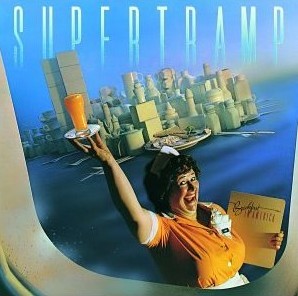
Supertramp - Breakfast in America (1979)

Despite initially getting off to a rocky start with two albums that were essentially ignored by the public in the early seventies (their debut and it's immediate follow-up, Indelibly Stamped), Supertramp more than made up for it with 1974's Crime of the Century and with that album the band also seemed to find it's footing-- putting out a series of exceptional albums; Crisis?! What Crisis?, Even In the Quietest Moments, and then this-- their smash hit, the pinnacle of their success, Breakfast in America.

While this isn't their best album, it is their most accessible and radio friendly. Spawning the hits Goodbye Stranger, Breakfast in America, The Logical Song, and Take the Long Way Home radio and the general public could not get enough of this gem.

And listening to the album start to finish, it's not difficult to understand why. The album is infectious, it grabs hold of the listener on Gone Hollywood and doesn't let go until Child of Vision.

Despite this not being their best album, it is certainly still one of their better, in the succession of albums they released between 1974 and Roger Hodgson's departure in 1983. The vocal chemistry between Hodgson and Davies is the best it had been since Crisis?! What Crisis? The songs are crisp and exceptionally executed and capture the overall dour melancholia that was so pervasive in that era.

This album could not be duplicated today, it's a capsule of a place in history and perhaps better than just about any other album from that era, Breakfast in America is a snapshot of the overall mood of the western world at the time of the album's recording. What was not captured in the album's lyrics was certainly captured in the music and the overall performance of the album as a whole.

Related Links
Roger Hodgson - Open the Door (2000) review
Supertramp - Crisis?! What Crisis? (1975) review
Supertramp - It Was the Best of Times (1999) review

Goodbye Stranger

Breakfast in America

The Logical Song

Take the Long Way Home


Monday, June 12, 2006

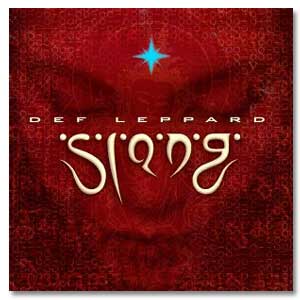
Def Leppard - Slang (1996)

By the mid-nineties the very style of music which had made Def Leppard's Pyromania (1983) and Hysteria (1987) albums so popular was as good as dead. After hiring former Dio guitarist, Vivian Campbell to replace the late Steve Clark, Def Leppard opted to re-invent themselves in the image of the music of that era.

Disposing of not only the logo but also the bombastic, fun, over-the-top glam/hair metal that had graced all of their previous albums the Lep entered uncharted territory.

While some may argue that Slang was a failed experiment-- credit must be given to Def Leppard for at least attempting to reinvent themselves, rather than sticking to the same tried and true formula of their previous albums.

Other than the title track, there's nothing on this album that would have fit on any other Def Leppard album. The musical style is more spare, minimal, and generally "naked." Some would say that the greatest flaw of Slang is that much of the music is far too serious or too dark. People who were expecting the fun of Rocket, Rock of Ages, Pour Some Sugar On Me, or Armageddon It instead got songs that dealt with death, suicide, and other similarly somber topics. This wasn't the Def Leppard the fans had come to know and love in the eighties and the resulting lukewarm reception was quite evident in its modest sales.

Stand-out tracks include Breathe a Sigh (which has my favorite misheard lyric EVER*), Slang, Work it Out, Pearl of Euphoria, and Where Does Love Go When It Dies. But, that being said, this isn't a singles album-- the album as a whole is actually greater than the sum of its parts.

With over ten years having passed since Slang's release one can offer a bit more objectivity-- hindsight, if you will. While this wasn't the "fun" Def Leppard of the eighties it, very likely, was an album the band HAD to make. Prior to this album, the band hadn't really dealt with the death of guitarist, Steve Clark. As much as it is a change of direction, it was the band's way of getting past Clark's death and moving on with their lives.

Three years later with Euphoria the band would get back to that fun-loving, happy-go-lucky pop-metal of the Hysteria era. But sometimes a band needs to take a step in a different direction, a personal re-evaluation, before they can move forward. Slang was just that for the Lep.


*the first time I heard the lyric "I more than long for your affection" as "I mow the lawn for your affection."

Friday, June 02, 2006

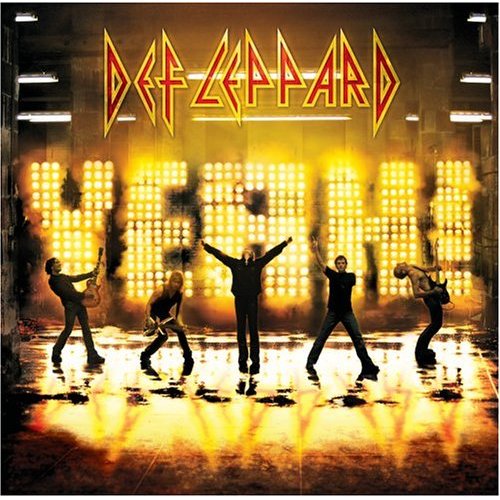
Def Leppard - Yeah! (2006)

Sometimes you want music that makes you think—that makes you re-evaluate certain long held opinions you may have. Other times you just want music that’s just plain fun—pure mental vacation. This is the music that doesn’t take itself too seriously. It’s not music for the sake of music, it’s not music for the sake of the almighty dollar, it’s music purely for fun.

Def Leppard is fun, they always have been, their new album Yeah! is no exception. Generally cover albums are “stop-gaps” to buy time for the band to finish working on original material without the band falling out of the public spotlight. Generally they’re hit or miss, and many fans consider them “cop-outs”—after all we fans have heard the same old song before. We want something new!

What makes Yeah! work where other cover albums have failed is Def Leppard’s song selection. These are all songs by bands that influenced the various members of Def Leppard in their youth. With many of the groups/musicians they chose to cover—they didn’t go with the obvious—with T-Rex a lesser band would have covered Bang a Gong (Get It On), Def Leppard chose 20th Century Boy; for Sweet one might expect Ballroom Blitz or possibly Fox on the Run, but they chose Hell Raiser; for Free just about anyone would expect All Right Now, but instead they went with Little Bit of Love, with ELO the obvious would have been Don’t Bring Me Down (or possibly Do Ya?), but Def Leppard instead went with 10538 Overture.

Some of these songs Def Leppard is exactly the band you’d expect to cover them—Hell Raiser is probably the most obvious. On their Retro-Active CD the Lep chose to cover Sweet’s Action to great effect. Perhaps because Sweet was to the seventies what Def Leppard was to the eighties. Pure glam-rock fun, not at all pretentious, just good old fashioned rock and roll fun (with a bit of hairspray thrown into the mix for good measure).

Other songs are less obvious, although still (in some cases surprisingly so) quite respectable covers—The Kinks Waterloo Sunset, ELO’s 10538 Overture, David Essex’s Rock On, and Roxy Music’s Street Life all fall within that category.

After 2002’s X, which bored me to tears after only a couple of spins in my CD player, I was a bit apprehensive, but the price was right and I figured after High ‘n’ Dry, Pyromania, and Hysteria Def Leppard had more than earned a second chance. These guys may not be the band to make you think about the ills of the world, their music isn’t what one might hear in a Starbucks, and it certainly will never be considered high art—but there’s already plenty of that kind of music out there. Def Leppard is fun, that’s what people listen to them for and Yeah! is just the kind of album that can re-establish their reputation with a new generation of fans.

Thursday, March 02, 2006

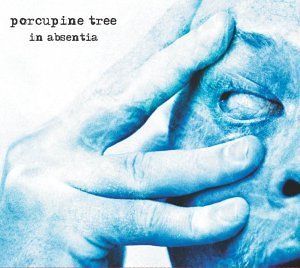
Porcupine Tree - In Absentia (2002)

Steve Wilson is a master painter and his canvas is your eardrums. In Absentia is Porcupine Tree's U.S. debut. And finally it can be said that those of us on the far side of the pond are finally being exposed to what, up to this point, had been one of England's better kept secrets.

The Yes, Pink Floyd, King Crimson and Rush influences are unmistakable-- but when you mix all of those influences with Steve Wilson's imagination you get a new style, a new sound all its own.

There's a somber and ethereal feel to this album from start to finish, even when it verges close to metal on songs like Gravity Eyelids you still get that feeling that you're not just listening to the music, you're feeling it-- because one thing this album has an abundance of is ambience.

Initially I only "stumbled upon" this musical masterpiece after being exposed to Steve Wilson's guest vocals on shutDOWN on OSI's 2003 debut album. While that album is also wholly enjoyable (another review, for another occassion), shutDOWN really stuck out as being one of the best, if not THE best track on the album. I simply had to find out more about this Steve Wilson gent-- and where did that lead?

Straight to In Absentia! This band in general and this album in particular is not one that can be pigeon-holed. Mixing the styles of their prog-rock forebears and adding a strong ambient spin will almost get you there-- but rather than waste time trying to describe them, the best way to enjoy this band, and this album is to pop on a pair of headphones, close your eyes, shut up, and completely surrender yourself to the music. You won't be disappointed.

Wednesday, March 01, 2006

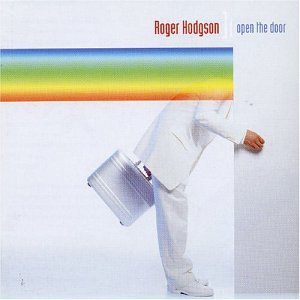
Roger Hodgson - Open the Door (2000)

Roger Hodgson's output since his departure from Supertramp can best be described as "intermittent." Thirteen years elapsed between his 2nd studio release, Hai Hai and Open the Door. But this album has been well worth the long wait.

This album is easily the most Supertramp sounding album since Famous Last Words, the last album Hodgson did with his former band before embarking on his solo career. It's even safe to say that this album sounds more like Supertramp than even Supertramp sounds without Hodgson.

Open the Door was recorded in the French countryside and the influences of Hodgson's setting and his use of French musicians in his backing band give the album a style all its own.

At times Christopher Negre's sax playing is so startlingly reminiscent of John Helliwell and the keyboarding tandem of Hodgson and Arnaud Dunoyer de Segonzac hearkens back to the chemistry that Hodgson shared with Rich Davies.

This is one of those rare albums where there's nary a bad track. It is truly seamless in its exceptional quality. But with the striking resemblance to classic Supertramp, it does leave us begging the question, When is the reunion? Hopefully this album will "open the door" on the possibility of a Supertramp reunion.

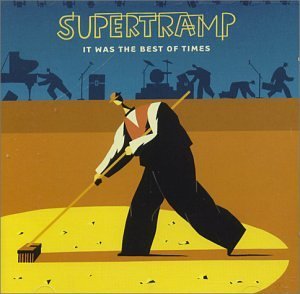
Supertramp - It Was the Best of Times (1999)

Known best for their 1979 Smash hit album, Breakfast In America, Supertramp reunited in 1997 after a long hiatus in the late eighties and early nineties.

The cornerstone of Supertramp, vocalists Rich Davies, Roger Hodgson, and sax player John Helliwell are largely responsible for Supertramp's signature sound. Unfortunately, this live set lacks the trademark falsetto of Roger Hodgson-- the voice of such Supertramp classics as The Logical Song, Take the Long Way Home, Goodbye Stranger, and Breakfast in America. In his place we find the Aussie, Mark Hart (of Crowded House). And try as he may, Hart is no Hodgson.

Still in the band are Davies, Helliwell, and drummer Bob Seibenberg. And despite the absence of Hodgson, this is still an admirable live set--doubling the size of John Helliwell's horn section is Tower of Power alum, Lee Thornburg on trumpet and trombone giving the horns on this live set a much fuller sound than was present on the classic Supertramp albums.

This is not a live set for Supertramp purists. If it's Hodgson's trademark falsetto that you seek, I recommend seeking out Supertramp's Paris album instead. Otherwise, this album is worth giving a chance. Rich Davies and company put forth a valiant and enjoyable effort. Davies voice is still in good form and the augmented horn section is a real treat.

Monday, November 21, 2005

Yes - Drama (1980)

Drama is often considered the "black sheep" of Yes albums as it's the only one without the trademark falsettos of founding member/vocalist Jon Anderson. Trevor Horn and Geoff Downes of The Buggles stepped in to replace Jon Anderson and Rick Wakeman.

After this album Horn effectively retired from singing to instead pursue production and Downes left Yes along with Steve Howe to form the group Asia.

I actually really enjoy this album, maybe it's because Asia is one of my favorite groups and this was a preview of what was to come-- a step in the evolution of a supergroup if you will.

Within the 10 bonus tracks are 4 songs which feature Jon Anderson and Rick Wakeman. It's like glancing through a mirror of "what if." It gives an interesting picture of what Drama would have sounded like had Wakeman and Anderson stuck around.

It's an album to set aside your preconceived notions of Yes, just enjoy it for its own sake.

Sunday, November 20, 2005

Supertramp - Crisis? What Crisis?!?! (1975)

Most of Supertramp's big hits ended up on 1974's Crime of the Century or 1979's Breakfast in America. Indeed, Crisis? What Crisis?!? doesn't contain any of those fun hummable and singable tunes that made those other albums such huge sellers. That being said, this album has something both those albums, lack-- CONSISTENCY.

While it lacks the big hits, it also lacks the clunkers that often fall victim to the "skip" button.

Every song on the album is trademark Supertramp, with Roger Hodgson's soaring tenor and Rich Davies' more somber melancholy vocals gracing every track.

There aren't many albums I can say this about, but Crisis? What Crisis?! is an album I never tire of. As much as I love Supertramp's hits, this album seems to have a little something extra their other albums lack. They start the album firing on all pistons and they don't let up on any song.

Why songs like Sister Moonshine and Soapbox Opera never got the airplay or acclaim that songs like Bloody Well Right and The Logical Song received is beyond me. The songs on this gem of an album are as good as anything else Supertramp has ever done.

If you're familiar with and enjoy Supertramp's hits, I dare you to take an excursion into this gem of an album to hear 10 pieces of aural candy that remain largely undiscovered outside the circle of Supertramp's more dedicated fans. And if you're already familiar with this album, maybe it's time to take a trip down memory lane by giving it another spin or two. You won't be sorry you did!

Marillion - Misplaced Childhood (1985)

Misplaced Childhood is one of those albums that, if you grew up on the wrong side of the big pond, you might have missed in the cocaine-powered perpetual motion haze of the eighties.

The story of the writing and recording of the album is a Lewis Carroll-esque fairy tale which is highly detailed in the CD sleeve of the new 2 CD 24 bit re-mastered version of this 1985 gem. After receiving a letter from an old girlfriend with a tab of acid and the not-so-subtle suggestion to ingest the envelope’s contents, the cover art and many of the lyrics were inspired during the subsequent acid trip taken by then lead singer, Fish (a.k.a. Derek Dick).

For those of you who did miss it the first time around, this concept album focuses on a loss of innocence or, as the album title suggests, a “misplaced childhood.” Fish has a flair for imagery, it’s his trademark and makes his lyrics very distinct. This album displays him in true form:

Huddled in the safety of a pseudo-silk kimono
Wearing bracelets of smoke, naked of understanding
Nicotine smears, long, long dried tears, invisible tears - from Pseudo-Silk Kimono

Do you remember chalk hearts melting on a playground wall
Do you remember dawn escapes from the moon washed college halls
Do you remember the cherry blossoms in the market square
Do you remember I thought it was confetti in your hair - from Kayleigh

I was walking in the park dreaming of a spark
When I heard the sprinklers whisper
Shimmer in the haze of summer lawns
Then I heard the children sing
They were running through the rainbows
They were singing a song for you
Well it seemed to be a song for you
The one I wanted to write for you - from Lavender

Fish is able to accomplish in words what many artists try and fail to accomplish with paintings and drawings—he paints lush and vivid pictures on the blank canvas of the mind’s imagination. Coupled with the exceptional musicianship of Steve Rothery, Pete Trewavas, and Mark Kelly this album makes a strong musical and lyrical statement from start to finish.

This re-release makes the package even sweeter by the 24 bit re-mastering, copious liner notes featuring lyrics, stories, and full album credits. Putting an exclamation mark on the re-release is the second disc containing rarities, demos, and alternate mixes.

So close your eyes, pop in disc one, and let Fish’s lyrics take your imagination on a wonderful journey, and maybe you too will find your own “misplaced childhood.”

Friday, November 18, 2005

Queen w/ Paul Rodgers - Return of the Champions (2005)

As a fan of classic rock, for me this 2CD live set is a must have. I'm a big fan of both Bad Company and to a SLIGHTLY lesser extent Queen.

Paul Rodgers is one of the best, and imho, most underrated rock vocalists out there.

When I first heard about this set I was slightly skeptical because as much as I like Queen and Paul Rodgers, I wasn't so sure how the combination of the two would go together. I mean I dig Led Zeppelin and Dream Theater, but I'm not sure I'd enjoy hearing Robert Plant singing Pull Me Under or James LaBrie singing Kashmir.

That being said, I kept an open-mind and started listening with cautious optimism. And boy did it ever pay off!

There is a definite chemistry between Rodgers and Queen and the energy of the audience is phenomenal. Listening to Rodgers interpretations of some of my Queen favorites like Fat Bottomed Girls and Tie Your Mother Down and Queen's interpretations of Free's All Right Now and Bad Company's Feel Like Makin' Love and Can't Get Enough make this a live set to be truly enjoyed.

If you enjoyed either Rodgers or Queen in their prime. I highly recommend snagging this live set, you won't be disappointed!

Asia - Enso Kai (Live in Tokyo) (2001)

I'm a HUGE fan of John Wetton, but I really must commend Greg Lake on his performances on this CD. His vocals are so close to Wetton's that it's hard to believe that it's not Wetton.

There's a good reason that Wetton "replaced" Greg Lake in King Crimson and it's with much similar reason that Lake briefly "replaced" Wetton in Asia... their voices are so eerily similar it's amazing. Lake's British accent shows a little bit more in his singing voice but only if you're really listening for it.

Carl Palmer's drumming is fantastic as always, Downes keyboard playing is exceptional and Steve Howe... well it's Steve Howe... what more needs to be said?

The sound quality on this disc is supposedly superior to the Live In Hallowed Halls CD with Wetton on vocals, but I don't have that CD so I have no room for comparison.

Good song selection but I miss Daylight and where's Don't Cry? I have an mp3 of Lake singing Daylight that's absolutely fantastic... Why it didn't make this CD release is beyond me. This disc would get 5 stars if not for the omission of those 2 tracks. Still a solid performance.

John Wetton - Akustika: Live in Amerika (1996)

Wetton may not be the best singer in the world but he is certainly one of the most passionate. Unfortunately, Wetton seems to tone down his performances on this CD, while they're still passionate they seem to lack that level of intense deep to the core of the soul passion that I know he's capable of after hearing some of his other live performances. I've heard live versions of Hold Me Now that have just about moved me to tears. Unfortunately this CD lacks that level of emotion.

The CD is still well worth getting if for no other reason than to hear Christina and Wetton's acoustic version of Don't Cry which is exceptional on this CD. Those 2 songs alone make this CD WELL worth getting, the rest of the material, while very good, isn't up to the standards I normally expect of Mr. Wetton however.