After the rather uneven double CD, Six Degrees of Inner Turbulence, Dream Theater showed a tremendous return to form in this prorgressive heavy metal onslaught.
Where previous releases and even subsequent releases featured a somewhat more polished or refined brand of metal... Train of Thought has a gritty and raw edge that sets it apart from much of the rest of Dream Theater's musical oevure.
Its this grittiness that makes this one of Dream Theater's best albums, if not their best overall. From start to finish, with a short respite in the middle of the album with Vacant there's an edge to this album that seemed to have been missing from Six Degrees of Inner Turbulence.
The album opens with As I Am. While the lyrics are almost groan-inducingly bad at times, the music more than makes up for the song's subpar lyrics ("I've been trying to justify you/in the end I will just defy you"- c'mon guys, we know you can do a lot better than THIS!).
And thankfully after the lyrical hiccup of As I Am the album improves substantially with This Dying Soul the 2nd part of Mike Portnoy's Twelve Step Suite which he began on Six Degrees of Inner Turbulence with The Glass Prison detailing Portnoy's battle with and recovery from alcoholism. Many of Dream Theater's fans have gained inspiration from Portnoy's suite and the band does a brilliant job of giving Mike's story a fantastic musical voice.
On Endless Sacrifice the band really stretches out with some brilliant solos. And as one who has never been tremendously keen on James LaBrie's vocals I'd argue this song features some of his best vocals since Images & Words. The song builds slowly until about the 2:07 mark when the band shifts from gentle and melodic to raw and crunchy and back again. It's easily one of the best songs on the album as it shows the versatility and breadth of the band's talents.
Honor Thy Father is one of the heaviest songs the band has ever recorded. It starts chugging along building in intensity like a freight train with no brakes. There's a greater anger and bitterness to the lyrics that the band had not really exhibited since 1994's Awake. This also features some of Jordan Rudess' better keyboarding.
Vacant is a brief slow, somber, and melancholic piece and at just shy of 3 minutes easily the shortest song on the album-- it gives the listener just enough of a respite to catch his or her breath before the metal onslaught continues with Stream of Conciousness and In the Name of God which finishes out this brilliant album.
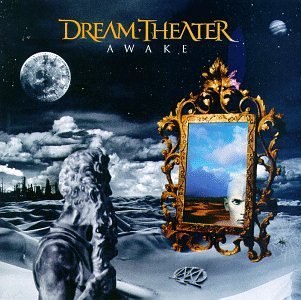
For many fans this was the album they'd been waiting for since Awake. For others it was just a bit too raw and crunchy and lacked enough of the band's softer and gentler side and polish of some of the band's other albums. But for this listener, this was the album that put the METAL back into progressive metal for Dream Theater, and it did so with a large bold-faced exclamation mark!
Dream Theater doesn’t ever really do anything “small.” They are the quintessential band of musician’s musicians. Even those who aren’t necessarily fans tend to respect them for their musicianship.
Black Clouds & Silver Linings is no exception to that rule. The album is essentially a return to form that takes all of the things the band did right on 2007’s Systematic Chaos and builds on them making for a truly exceptional album.
They also delivered in spades by releasing the album in 2 different formats—a single CD standard version with a very attractive sub $10 price tag (depending on where you purchase it) for those minding their budgets in these economically difficult times and a more auspicious 3 CD Deluxe edition which features not only the full album on Disc 1, but also a CD of Dream Theater covering some of their favorite material by the likes of Rainbow (Stargazer), Queen (a medley of Tenement Funster/Flick of the Wrist/Lily of the Valley), The Dixie Dregs (Odyssey), Zebra (Take Your Fingers From My Hair), King Crimson (Larks Tongue in Aspic Pt. 2), and Iron Maiden (To Tame a Land), and a third disc featuring an instrumental version of the album. The instrumental version of the album truly gives the listeners a chance to hear things they might have missed, those delightful moments that sometimes get hidden underneath the operatically trained vocals of James LaBrie.
Whether you choose to get the standard or the deluxe edition, you’re in for a treat. This is arguably the band’s best and easily their heaviest album since 2003’s Train of Thought.
With A Nightmare to Remember the album starts with a crack of thunder followed by a soft but ominous keyboard intro in minor chords by Jordan Rudess before Petrucci and Portnoy join in on guitar and drums respectively. Portnoy’s drumming is frenetic yet precise like a runaway train with Casey Jones as the engineer—no brakes but still fully in control. Thanks largely to Rudess’s keyboard work, the song sounds and feels like a classic horror movie. It tells the story of a car accident and how it changes the lives of those who survived it and the general loss of innocence experienced following the accident.
A Rite of Passage is one of the most accessible and radio friendly songs on the album. Anchored by a killer guitar riff by John Petrucci the song is about secret societies and organizations (in particular the Masons). The vocal harmonies are some of the strongest on the album (perhaps surpassed only by the harmonies on the Queen covers on Disc 2 of the Deluxe edition) and the guitar riff has hints of both Led Zeppelin and Metallica but when Petrucci’s guitar solo starts at about 5:18 into the song it’s purely Dream Theater. The solo is trademark Petrucci at his absolute finest.
Wither is also quite accessible but not quite as catchy as A Rite of Passage. It’s also easily the slowest yet shortest song on the album, giving the listener a brief (five minutes, 25 seconds) respite before the band kicks it back into high gear.
The Shattered Fortress is the final piece of Michael Portnoy’s 12 Step Suite that he began on 2002’s Six Degrees of Inner Turbulence with The Glass Prison and has continued with a new piece on every studio album since then. It’s a brilliant finale to his seven plus years in the making musical epic. With thematic elements of the other pieces in the suite, the band has brought the 12 Step Suite full circle and given it an exclamation mark of an ending.
Sadly, Mike Portnoy’s father died in the time between this and Dream Theater’s last album (Systematic Chaos) prompting Portnoy to write The Best of Times, a moving tribute of his love for his father. His bandmate, John Petrucci did the same on 1997’s Falling into Infinity with Take Away My Pain. As different as the two songs are, they are both rather moving expressions of grief suffered at the loss of a parent. The song starts with a subtle and beautiful piano solo by Jordan Rudess that segues into a moving guitar/piano duet with John Petrucci before Petrucci’s acoustic guitar is replaced by an electric one at about two minutes and forty seven seconds into the song. Unlike Take Away My Pain which was a moving plea from a grieving son, The Best of Times, is more a celebration of a life. Portnoy’s lyrics reflect on the happy times he spent with his father and the positive influence his father had on his life.
On the Count of Tuscany, the guitar work by Petrucci is exceptional as always. The sense of harmony in his work on this song is brilliant. He and Jordan Rudess play guitar and keyboard (respectively) so tightly that the two instruments nearly sound as one. At over nineteen minutes long The Count of Tuscany makes for a long and quite musically adventurous closing to the album. The vocals don’t even begin until almost four and a half minutes into the song (@ 4:21). The song also marks a continuation of John Petrucci’s penchant of telling fictional stories in his lyrics. Some fans enjoy this lyrical approach, but personally it’s the music far more than the lyrics that grab this listener.
From start to finish Black Clouds & Silver Linings is a technically proficient, hard and driving heavy metal onslaught of an epic album. It is best enjoyed start to finish in one sitting, if you can manage the time to do so. Given the skill and talent of the band, there is so much depth in this music that it’s quite easy to listen to this album several times and never hear it in quite the same way twice.
Fates Warning were arguably one of the first bands that could be described as progressive metal. From the beginning they’ve been fusing elements of both genres into a style all its own. Other bands, such as Dream Theater, Queensryche, and Opeth may or may not do it better (depending on who you ask), but Fates Warning pre-dates them all in this brilliant hybrid that might best be described as Yes meets Metallica.
After the departure of original vocalist, John Arch, in the late eighties Fates Warning took a few years to really regain their footing with Ray Alder. They arguably hit their creative peak with A Pleasant Shade of Grey, but I’d argue that was merely the first of several strong albums. 2002’s Disconnected, is both more accessible and slightly less adventurous. But in being more accessible, I’d argue it’s the best of Fates Warning’s albums for the uninitiated to start with. As with A Pleasant Shade of Grey, ex-Dream Theater keyboardist, Kevin Moore, lends his talents to Fates Warning. Its his collaborations with Fates Warning that later led to his partnership with Jim Matheos in their band, OSI that married the harder edged metal guitar chops of Matheos with Moore’s more ambient keyboard influences.
Starting with the ominous Disconnected Part 1, Disconnected draws the listener in. It’s in this opening that Kevin Moore’s influence is most evident. There’s a haunting ambience with an abrupt end before the heavy metal onslaught of One.
One is arguably one of Fates Warning’s strongest songs. Alder’s vocals are soaring and brilliant. Moore’s keyboard influences are a bit more subtle and less obvious but still noticeable.
So picks it back up where Disconnected Part 1 had left off. Matheos gives the intro a haunting ambience before the riffing comes in with Moore’s keyboard and shortly thereafter Alder’s vocals. While at a slower tempo than One, the crunchy guitars and Alder’s soaring vocals are trademark prog-metal. Pieces of Me picks up the pace a bit. There’s a chugging and steady yet frenetic intensity to the song. It also suggests musical themes that would later be more fully explored by Matheos & Moore on some of the more uptempo music from the first OSI album in 2003.
There’s a general ambience throughout the album that is generally lacking on albums of many of Fates Warning’s contemporaries. If you're new to Fates Warning, there's not a better place to start than Disconnected!
As far as guitarists go, John Petrucci is a master of his craft. While not quite as well known as some of his contemporaries (Steve Vai and Joe Satriani come to mind) he’s more than proven himself as the guitarist for Dream Theater.
Given Petrucci’s level of talent it could be easily argued that a solo album from him was long overdue. But in 2004 he finally released Suspended Animation. Much of the material that appears on Suspended Animation was written for and performed on many of the G3 tours which Petrucci participated in with Steve Vai and Joe Satriani through the mid 2000s.
The album is completely instrumental and reminiscent of the material on the Liquid Tension Experiment albums recorded in the late nineties with bassist Tony Levin and his Dream Theater bandmates Mike Portnoy and Jordan Rudess. The big difference being that those albums were musical collaborations that at times allowed all members of the quartet to shine either collectively or individually—Suspended Animation focuses, and rightly so, on Petrucci’s guitar playing.
Perhaps what is most striking about this release is Petrucci’s strong sense of melody. While this is also noticeable on his work with Dream Theater, when the focus is more strictly on Petrucci that strong sense of melody is considerably more noticeable.
Petrucci’s playing also dispels the myth that progressive metal lacks emotion. Every song on this release displays a depth of emotion and a genuine love of the guitar.
Each song brings a little something different to the table Glasgow Kiss has a traditional Scottish vibe to it with Petrucci’s guitar replacing where one might expect to hear bagpipes.
Tunnel Vision features some excellent multi-tracking and the intro is reminiscent of some of the more experimental material from the Liquid Tension and Liquid Trio Experiment releases.
Wishful Thinking is essentially an instrumental power ballad. It has all the elements a hair metal power ballad minus the lyrics and vocals. It further displays Petrucci’s versatility on guitar. Where other tracks on the album display Petrucci’s sense of melody, much of Petrucci’s fretwork on Wishful Thinking is more a demonstration of his skill at harmony. Vocals aren’t really necessary as Petrucci does an excellent job of making his guitar “sing.” The song is also a welcome respite after the relatively hard driving musical onslaught of the first 3 tracks. It allows the listener to catch his breath before launching back into a more metal oriented onslaught on Damage Control.
Curve is another example of Petrucci using his guitar to play “vocalist” much like on Wishful Thinking the guitar is played where one might normally expect the vocals. Curve is considerably more up-tempo.
Lost Without You is another ballad. This one has been around awhile as Petrucci was playing it live at Dream Theater concerts off and on for a few years before it finally has seen official release on Suspended Animation. It has less a metal and more a jazz fusion feel at first but with occasional metal-oriented rhythm guitar work added as accents to Petrucci’s leads. The most apt description would be metal/jazz fusion an interesting combination of musical styles that isn’t traditionally explored (kind of like Icelandic/Vietnamese fusion food).
The album closes with the longest track, Animate-Inanimate in which all of the musical elements and styles Petrucci explored on the previous seven tracks come together like a delicious stew.
Unfortunately, this album has not, to date, been released domestically in the United States. While it’s certainly worth the price of a traditional domestic CD, I wouldn’t recommend it to casual listeners at the rather steep import price tag of $34.99. Not releasing the album domestically is doing Petrucci fans a tremendous disservice as the music certainly is enjoyable and should be heard. The import price tag just makes it a bit too prohibitive for more casual listeners
Morning comes too early and nighttime falls too late
And sometimes all I want to do is wait
The shadow I've been hiding in has fled from me today
I know it's easier to walk away than look it in the eye
But I will raise a shelter to the sky
And here beneath this star tonight I'll lie
She will slowly yeild the light as I awaken from the longest night
Dreams are shaking
Set sirens waking up tired eyes
With the light the memories all rush into his head
By a candle stands a mirror
Of his heart and soul she dances
She was dancing through the night above his bed
And walking to the window he throws the shutters out against the wall
And from an ivory tower hears her call
"Let light surround you"
It's been a long, long time
He's had a while to think it over
In the end he only sees the change
Light to dark
Dark to light
Light to dark
Dark to light
Heaven must be more than this
When angels waken with a kiss
Sacred hearts won't take the pain
But mine will never be the same
He stands before the window
His shadow slowly fading from the wall
And from an ivory tower he hears her call
"Let the light surround you"
Once lost but I was found
When I heard the stained glass shatter all around me
I sent the spirits tumbling down the hill
But I will hold this one on high above me still
She whispers words to clear my mind
I once could see but now at last I'm blind
I know it's easier to walk away than look it in the eye
But I have given all I could take
And now I've only habits left to break
Tonight I'll still be lying here
Surrounded in all the light
I believe it's the overall vibe of spiritual renewal that permeates the song that hits me like a sucker punch to the soul. Lyrically speaking, it's one of the best songs Dream Theater has ever released. And musically, it's probably one of their most accessible songs. I believe the lyrics were written by keyboardist Kevin Moore who left the band after their 3rd album (Awake) to take his music in a different direction. While their current keyboardist (and Julliard alum) Jordan Rudess has filled the hole on keyboards. I don't think the band has ever fully recovered from the loss of Moore as a songwriter. Of all the members of the band, Moore was arguably the best lyricist.
Surrounded is also one of the most upbeat songs in Dream Theater's catalog. Over the past 9 to 10 years much of their material has trended more towards the metal end of the spectrum. Surrounded however is quite accessible to non-metal listeners.
And normally I'm not a big fan of the operatically trained James LaBrie's vocals, but I find his voice suits this song quite well. He shows uncharacteristic restraint when needed and lets loose on those parts of the song that need that little extra oomph.
It's not a wonder that even eight studio albums and seventeen years later this remains one of my favorite Dream Theater songs.
I first stumbled upon Shadow Gallery when I saw them mentioned on a Dream Theater message board. Their songs Destination Unknown from their Legacy album and I Believe from their concept album Tyranny came highly recommended.
Upon first listen-- WOW! Honestly these guys blew me away. I could hear elements of Alice Cooper, Iron Maiden, Judas Priest, Dream Theater, and even some hints of Queen with their elaborate church choir-esque harmony vocals not to mention the Yngwie Malmsteen meets Brian May guitar stylings of Brendt Allman and Gary Wehrkamp.
Tyranny is a concept album that starts to tell the story about the military industrial complex. The story continues on 2005's Room V. But this is really the album that made fans sit up and take notice.
Where Dream Theater is easily more technically proficient, there's something arguably more organic about Shadow Gallery's style. The way the vocals dance around the elaborate instrumentals. The way their heavy metal guitar work dances around the tight vocal harmonies really sets Shadow Gallery apart.
Unlike some of their contemporaries, Shadow Gallery is strictly a studio band. Since their inception in the early 90s they have been strictly a studio band which is likely the predominant reason why they aren't as well known as some of their contemporaries like Queensryche, Fates Warning, or Dream Theater. It's a shame as those who haven't yet experienced their unique sound are truly missing out.
There are some truly transcendent moments on Tyranny. The vocal harmonies that come in at about 5 minutes into the song on I Believe NEVER, and I do mean NEVER fail to give me chills. Mike Baker's vocals were in top form from start to finish. I Believe is easily the most upbeat song on the album as it expresses that no matter what there's always a hope for positive change. There's even a mention of Jesus's prophecy of a better world that lifts the spirits of the main character sung by Michael Baker. Dream Theater's James LaBrie steps in for guest vocals as he sings the part of the main character's father. It's a brief snippet early in the song but LaBrie's vocals are unmistakable.
What makes the album work is that it's not a full-on heavy metal onslaught. There's a serious amount of musical diversity including neo-classical influences as well as the trademark metal stylings that one would expect. Some songs waltz back and forth between melodic soft rock to driving crunchy metal.
If you're not familiar with Shadow Gallery and want to give them a try this is an excellent album to start with as it shows the true breadth of their musicianship much moreso than their first 2 albums (their self-titled debut and Carved in Stone).
On a sad post-script, lead vocalist Mike Baker, died of a heart attack on October 29, 2008.
The Glass Prison from 2002’s Six Degrees of Inner Turbulence (13:52) This Dying Soul from 2003’s Train of Thought (11:27) The Root of All Evil from 2005’s Octavarium (8:39) Repentance from 2007’s Systematic Chaos (10:43) The Shattered Fortress from 2009’s Black Clouds and Silver Linings (12:49)
My fascination with Dream Theater is unusual in that it was Mike Portnoy’s drumming that caught my ear before anything else. Unless one is a drummer (and lacking any sense of rhythm, I’m certainly not a percussionist or drummer by any stretch of the imagination), the drumming/percussion generally isn’t the first thing one notices about a band. Portnoy’s drumming is so fantastic that it actually got me to start appreciating the drums/percussion more in other bands I enjoy that much more as well.
Over the course of the past 7 years and 5 studio albums Mike Portnoy has chronicled his recovery from alcoholism with his 12 Step Suite. Some argument could be made, that the 12 Step Suite actually started on Dream Theater’s Awake album back in 1994 with The Mirror which thematically tackles facing oneself in the mirror and not liking the face looking back—there are multiple mentions in the suite about looking in a mirror that can be seen as a reference to the earlier song which predates the suite. However, for the purposes of this review, only the material that has actually been designated as part of the suite by Mike Portnoy will be discussed.
Each song covers a handful of steps in the 12 step plan of recovery. Together all 5 songs clock in at just under an hour in a predominantly heavy metal onslaught.
The Glass Prison has a long instrumental intro showcasing how and why Portnoy is one of the most respected and technically proficient drummers in the world, not to mention demonstrate the guitar prowess of John Petrucci. When the vocals finally do start (at about the 3:03 mark) they start as a call and response between Portnoy and the initially distorted vocals of James LaBrie. The vocals ride on hard driving locomotive-esque guitar riffing by Petrucci inspired by the late Dimebag Darrel of Pantera (Portnoy and Petrucci had attended a Pantera concert the night before they started composing The Glass Prison and the influence is not only evident, it’s quite conspicuous).
This Dying Soul picks up right where The Glass Prison leaves off without giving the listener a chance to catch his breath —Portnoy’s intense battery of the skins comes off as a racing heartbeat. LaBrie’s vocals joining in the instrumental onslaught at the 2:13 mark. Much like with The Glass Prison, there’s a use of distorted vocals, this time its Portnoy’s voice that gets distorted in an angry frenzy with a rapid fire staccato rap. Keyboardist, Jordan Rudess flexes his classical piano chops briefly at about the 5:43 into the song, in a way that sounds interestingly and unusually appropriate for a metal song before LaBrie and Portnoy continue their vocal onslaught. The song ends as it began, with an aggressive onslaught of drums and guitar.
The Root of All Evil showcases the keyboarding wizardry of Jordan Rudess with a slow build to a similar musical frenzy as the one which ended This Dying Soul with Portnoy, Petrucci, and bass player John Myung joining Rudess shortly into the song. LaBrie’s vocals start much earlier (at about 1:28) on this piece than on the previous two. The tempo is a bit slower but still features the crunchy guitar riffs of The Glass Prison and This Dying Soul. The vocals are the most melodic of the suite so far and clocking in at just under 8 minutes 40 seconds this is also the shortest movement in the suite making this the most accessible (to non-traditional Dream Theater fans) portion of the suite thus far.
Repentance shifts gears from angry to a more somber and melancholic vibe. The vocals start with the same lyrics as This Dying Soul:
Hello mirror So glad to see you my friend It’s been awhile
This time the lyric is sung by Michael Portnoy (instead of James LaBrie who opens with those lyrics in This Dying Soul) before James LaBrie takes over the vocal duties. Musically the themes are similar to that of This Dying Soul but with a slower tempo and the aforementioned melancholic vibe. Between John Petrucci’s emotive guitar solo and the samples of people speaking about repentance and regrets played over the somber theme that acts as the backbone to the song, if ever there was a song that captured not just the definition of the word Repentance but also the emotions associated with being penitent, Dream Theater hit the nail on the head with this song.
The Shattered Fortress pulls the musical and lyrical themes from the previous songs together in a musical summary that acts as an exclamation mark to the suite as a whole. The call and response element between Portnoy and LaBrie that was used to strong effect in certain previous movements makes another appearance. The song opens with a driving guitar riff not unlike a racing heartbeat over Portnoy’s rapid-fire drumming and keyboard wizardry of Jordan Rudess. Once again, as in Repentance, samples are used over the musical themes used in previous movements of the suite—this time the themes from The Glass Prison and The Root of All Evil are most obvious. There is a special 3CD edition of Black Clouds & Silver Linings which also includes an instrumental version of The Shattered Fortress which is also enjoyable to listen to, however in the context of the Twelve Step Suite, the absence of lyrics leaves the song wanting (On the other hand, in the context of Black Clouds & Silver Linings the instrumental version works quite well).
All in all, the 12 Step Suite is a musical tour de force, an onslaught of emotion and human struggle and introspection showcasing not just Portnoy’s recovery, but also his abilities as both a lyricist and composer. It’s almost unfortunate to note that in recent interviews Portnoy indicated that once the suite was complete that he’d likely be stepping away from songwriting to focus more on his drumming and leaving the songwriting to his bandmates. While his drumming will always be welcome and a joy to listen to, his songwriting talents will be missed on future Dream Theater releases. However, if this does indeed mark the end of Portnoy’s songwriting—as he has indicated-- he’s certainly chosen to step away at a definite high water mark with a very memorable bookend to an exceptional string of songwriting credits.
Heavy metal isn’t generally known for its ambience. Listening to any of OSI’s three releases it doesn’t appear that Kevin Moore or Jim Matheos received that memo. Their latest release, Blood, is a natural progression from its two precursors. Where 2003’s self-titled debut felt a bit tentative, 2006’s Free and their latest, Blood feel decidedly more certain.
While some may describe OSI’s music as being progressive metal, perhaps ambient metal is a more fitting descriptor. While the music does certainly bear the evidence of the progressive metal roots of both Matheos (Fates Warning) and Moore (Dream Theater)—Moore’s influence provides the music with a much more ambient feel that listeners only caught sparse glimpses of on his Dream Theater material.
After providing percussion on the first two OSI releases, Mike Portnoy bowed out for the third outing—in his place Matheos and Moore tapped Porcupine Tree’s Gavin Harrison. Given Porcupine Tree’s musical proclivities, one might argue that while Portnoy may have a better pedigree, Harrison’s style is a much better fit for this band than his predecessor.
With each successive release Moore’s vocals have seemed to fit better than the one before. While Moore is a mediocre vocalist at best, his sparse vocals fit the general ambience of OSI’s music. And much like on their debut in which Porcupine Tree’s Steve Wilson contributed his vocals to shutdown, OSI once again knew when to invite guest vocalists to step in—Mikael Akerfeldt (of Opeth) on Stockholm and Tim Bowness on No Celebrations (only available on the 2CD Digipak version).
In addition to No Celebrations, the two disc digipak version of this release also features a cover of the late Elliot Smith’s Christian Brothers and an extended version of Terminal.
All that being said, this release isn’t for everyone—if you’re a fan of the first two OSI releases, the recent albums of Fates Warning, and Kevin Moore’s Chroma Key releases, or if you’re willing to take a chance on something a bit different than the mainstream there’s a good chance you’ll enjoy this next leap in OSI’s musical evolution.
In 2005 Dream Theater released their 8th album, Octavarium, to some fanfare. The album showed them stretching out a bit, trying out different styles, but still staying true to the musical adventurousness which has set them apart from similar bands in their genre.
While Systematic Chaos still shows those eclectic tendencies it remains much closer to their metal roots with a more straight-ahead crunchy yet polished metal approach making it easily their heaviest album since 2002’s Train of Thought.
The album both opens and closes with the 2 part In the Presence of Enemies, which really makes an excellent set of “bookends” to open and close on.
Next come the albums 2 singles, Forsaken and Constant Motion—placed consecutively. Normally I’d criticize such placement, as it’s better to space out the album’s intended singles to get the listener to listen to the other tracks in between. But these days with the CD being a dying format and given the strength of all of the tracks on the album, placing the 2 singles consecutively matters far less than it might have five or ten years ago, especially given the high caliber and quality of musicianship and composition of the entire album.
The Dark Eternal Night is just an all around fun track. Starting with the exceptional musicianship of John Petrucci and Mike Portnoy, the heavily distorted Portnoy vocals don’t start until over a minute into the song followed shortly thereafter by LaBrie’s recognizable tenor.
Repentance is the next piece in Mike Portnoy’s 12-Step Suite which started detailing his struggle with alcoholism with The Glass Prison on 2002’s Six Degrees of Inner Turbulence album and continued with This Dying Soul (on Train of Thought) and The Root of All Evil (on Octavarium) it starts with the same melodic theme as This Dying Soul with the opening lyric from that song being sung by Mike Portnoy and segueing into LaBrie’s vocals. Generally Dream Theater puts one “slow” or “slower” track on each album for the listener to catch his/her breath before continuing. It’s nice to see this trend continue with Repentance.
With most of the material being written either by Petrucci, Portnoy, or the band as a whole—Prophets of War is the lone James LaBrie songwriting contribution. And what a strong contribution it is. If there’s a third single to be found on the album, this is it. The beat is catchy as is the rhythm guitar riff. And much like with LaBrie’s other political material he expresses a question with hints of discontent without showing the common celebrity pretension exhibited by other musicians in that he doesn’t suggest or offer a solution, just indicating that a solution needs to be found.
The Ministry of Lost Souls tells the story of a man who dies saving the life of another and the questions he would pose to the one he saved. Musically this could just as easily have appeared on Octavarium as it shows similar melodic themes to the title track on that album.
All in all it’s an exceptional album well worth picking up and is, unbelievably, a step up from Octavarium, which was an exceptional and highly impressive album in its own right.
Accusations of "been there, done that" would not be out of place when talking about Dream Theater's latest release. Being their 5th live album (although in all fairness, their Live at the Marquee album from the early nineties was an import-only release for stateside fans, so maybe that one doesn't really count).
The frequency of their live albums can be forgiven in this instance... The setlist on this exceptional release is considerably different than that of their Live at Budokan live set from 2004, and on two of the three discs they are backed by a full orchestra.
It's the orchestral arrangements on discs 2 and 3 that give this exceptional release a certain extra chutzpah to set it apart from their other live albums.
Both Octavarium and Six Degrees of Inner Turbulence benefit tremendously from the orchestral treatment. There are orchestral nuances and embellishments that really add tremendously to the performances of those songs in particular.
But it's not just those tracks that make this a must-have live set: the band dug into their archives for Another Won which is from their 1986 demo when they were still known as Majesty and fronted by the emminently unlistenable lead vocalist, Chris Collins. James LaBrie's vocals take a song that was previously unlistenable and make it an absolute treat to listen to. They also play Raise the Knife which had been recorded for 1997's Falling Into Infinity but had not made it onto the album itself. It's these extra tracks in addition to the orchestral arrangements which make this live set one that is thoroughly enjoyable from start to finish.
After taking a few years to re-group, change labels, and lead singers Dream Theater burst forth with what was the sophomore surge of all sophomore surges.
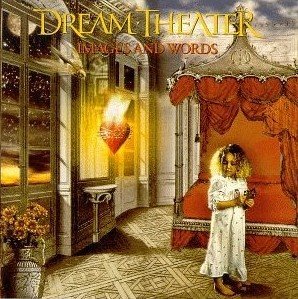
Their 1989 debut, When Dream and Day Unite, went largely unnoticed despite its superlative musicianship and finely crafted songs. Images and Words would not suffer the same fate.
Gone was Charlie Domenici, in his place was the operatically trained James LaBrie. And as good as the material on When Dream and Day Unite had been, it was and is imminently forgettable when compared to the calibre of the material on this stellar release.
The album opens with a bang on Pull Me Under, the song that put Dream Theater on the map and into heavy rotation on MTV's Headbanger's Ball with its music video. Pull Me Under doesn't just catch the listener's interest... it grabs the listener by the proverbial balls and doesn't let go for over eight minutes on a fantastic musical ride. To this day this song is a fan favorite at Dream Theater's live shows .
Another Day is a beautiful song written by John Petrucci for his father... Petrucci would mourn his father on 1997's Falling Into Infinity album with the song Take Away My Pain. Another Day bears a bit more optimism than the mournful Take Away My Pain but at the same time it doesn't have quite the emotional punch of the follow-up track.
While there are no weak tracks on this album, the best 1-2 punch are tracks four and five, Surrounded and Metropolis Pt. 1: The Miracle and the Sleeper. Surrounded is probably the most accessible song on the album, had it been released as a single it would have had serious hit potential-- it's a testament to keyboardist Kevin Moore's lyrical talents. Metropolis Pt. 1: The Miracle and the Sleeper is another musical journey, much like Pull Me Under it grabs hold of the listener from the start and doesn't let go until the song ends over nine and a half minutes later. The big difference being that it grabs hold even tighter than the album's opener.
Of the remaining tracks, Under a Glass Moon and Learning to Live are great uptempo tracks of the same mold as Take the Time, whereas Wait For Sleep is lyrically one of Dream Theater's best songs-- again penned by the talented Kevin Moore. After Moore's departure the band replaced his keyboard parts with an acoustic guitar when playing the song live. Either way the song is absolutely beautiful and shows a softer side of this emminently talented band.
While this isn't my favorite of Dream Theater's albums, it's status as a "classic" in a genre they helped create, progressive metal, can't be denied. Messrs. Portnoy (drums), Petrucci (guitar), Myung (bass), Moore (keyboards), and LaBrie (vocals) are all truly masters of their craft, and it is rarely more evident than it was on this sophomore release.
In 2003 OSI (Office of Strategic Influence) released their self-titled debut CD. Combining the songwriting, keyboarding, and vocals of former Dream Theater keyboardist Kevin Moore with the guitar chops and songwriting skills of Fates Warning's Jim Matheos and the impeccable time-keeping of Dream Theater drummer Mike Portnoy this prog-rock supergroup created a new sound all their own. A kind of techno-metal combining all the best elements of all 3 of the musicians involved.
Oftentimes when a debut is succesful a band will wrest on the laurels of the success of that debut with their sophomore release-- every once in a great while instead of wresting on those laurels a band will evolve and extroplate upon the music of their debut for their follow-up. OSI falls into the latter category as they've evolved and improved upon what had been a thoroughly enjoyable debut.
Kevin Moore's vocals sound a bit more self-assured than they had on the debut and while Moore doesn't have an exceptional voice-- he does have a voice which fits perfectly within the style of music this group performs.
But the strength isn't in the individual pieces which make up this band it's in the sum of the whole. During his tenure in Dream Theater, Moore's lyrics were often the best of any of the songwriters in the band and while Dream Theater has continued to evolve musically since his departure in 1994, lyrically they've never quite matched the punch they had when Moore was in the band. Add to the mix Fates Warning's Jim Matheos and Moore's former bandmate, Mike Portnoy and the musical chemistry is quite unmistakable.
Musically some of the songs bear a passing resemblance to the material on Fates Warning's Disconnected album. Which can be attributed not only to Matheos influence but also to Kevin Moore's occassional guest spots on keyboard with Fates Warning. Moore's keyboard work is quite melodic and the chemistry between Moore's keyboard and Matheos guitar work is some of the best I've heard since the Geoffrey Downes/Steve Howe chemistry on Yes Dramaalbum and on the first couple of Asia albums.
Much like on the debut, the last song on Free, Our Town, is a dramatic shift in gears from a techno-metal vibe to a more stripped down acoustic song. The addition of banjo and pedal steel makes for quite a stark contrast to the crunchy guitars and electronic flourishes which grace the rest of the album.
Given how busy both Matheos and Portnoy are with their respective bands, I won't hold my breath for an OSI tour, but if one were to ever happen I'd be one of the first in line for tickets.
When discussing progressive metal, it becomes near impossible not to mention Dream Theater. They set the bar of excellence for an entire genre-- they are the definitive band for that entire genre.
Unfortunately, as a result, many excellent bands oft get overlooked. Among those bands is Shadow Gallery.
What sets Shadow Gallery apart are there church choir-esque vocal harmonies. Where Dream Theater is so heavily focused on musical technique, Shadow Gallery's focus is firmly planted within the realm of harmony-- and it's not just with the vocals (although their vocal harmonies are generally the first thing new listeners notice when first "discovering" this band)-- instrumentally their harmonies tend to be significantly tighter than just about any other metal band (progressive or otherwise) that I've ever heard.
Incidentally it was on the recommendation of a Dream Theater fan that I decided to check out Shadow Gallery. I was not led astray. There was something almost angelic about their harmonies. But when you juxtapose the crunchiness of their guitars with their tight harmonies their music is transcendent.
I realize that one of the complaints many critics have of various forms of progressive rock is that it's overly indulgent and pretentious-- who needs 10, 20, 30 minute songs. Shadow Gallery are gross offenders of that stereotype-- Legacy only has 6 songs on it, 2 of which are over 7 minutes, 1 clocks in at over 15, but the most egregious offender is the 6th and final track, First Light clocking in at 34 minutes 18 seconds (including a 5+ minute "dramatic pause").
First Light is ALMOST a brilliant piece of musicianship which is marred by the aforementioned dramatic pause. Up until the start of that "pause" this is easily one of my favorite CDs... But that "pause" serves no purpose and is a glaring blemish on this otherwise exceptional album-- imagine if you will, a beautiful readhead, perfect in every way except she has a giant mole smack dab in the middle of her forehead with a hair growing out of it. This album is that beautiful redhead and that mole is that wholly unnecessary "pause."
Colors, Legacy, and ESPECIALLY Destination Unknown are some of the most exceptionally crafted songs I've ever heard. The harmonies are spot-on, and while progressive music is notorious for sacrificing emotion for technique-- these songs still manage to evoke some level of emotion in a genre typically not known for doing so.
If you can look past that mole, this beauty has a really great personality.
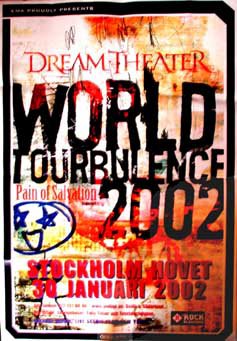
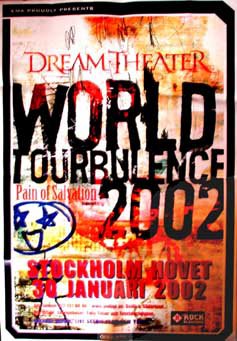
*Note: This post originally appeared in my other blog on 9/4/02, just a few hours after I returned from the concert. I lost my live Dream Theater virginity at this show... and the boys weren't at all gentle... THANK GOD! I loved every minute of it! I've never been that pumped or full of energy at ANY other concert I've ever been to... WOW, that's all I can say... 1/3 of the concert was okay (King's X), 1/3 was AMAZING (Satriani), and 1/3 was und*mnf*ckingpardonmewhileIgochangemyundiesbelieveable (Dream Theater). I mean they blew me away.
They played Six Degrees of Inner Turbulence in its entirety... (and held the audience in the palms of their hands for all 40+ minutes of the song). They also played 6:00, Home,New Millennium and their encore was Pull Me Under in which the audience sang along to... I was standing for most of Satriani's and Dream Theater's sets singing along to Pull Me Under with the rest of the crowd. James LaBrie has fantastic stage presence, he's a huge ball of energy (that looks like Fabio meets the Pilsbury Dough Boy up close) and the audience just feeds off that energy. I think the coolest part was they kept the Siamese Monster under cover until JUST before Dream Theater took the stage... Then one of the roadies pulled the cover away and there was the biggest (pardon my french here..) f*cking drum kit I have EVER seen... I mean, pardon me while I go back to Cleveland to pick my jaw up off the ground. The drum kit is so huge that the only time you see Mike Portnoy is when he stands up to play... from time to time you see sticks being tossed in the air mid-beat and caught (without missing a beat), and arms that are moving faster than the speed of light. When Portnoy left the stage before the encore a roadie put a prizefighter's robe on him (black w/ white trim), on the back of the robe it read: "Iron Mike Portnoy" (very tongue in cheek, Portnoy isn't that pretentious). As he came back for the encore, the robe was removed again and he went apesh*t on the drums for Pull Me Under. After the encore he threw his sticks and the tambourine out in the audience.
John Petrucci was ON... and John Myung started out by playing a Chapman stick... and Jordan Rudess was WOWing me with his keyboard wizardry (and since he's grown a beard and moustache... he also wowed me with his uncanny resemblance to Jesus. I mean, I was expecting him to start throwing loaves of bread and fish into the audience).
By the end of the night my hands were sore from clapping and my throat was sore from singing along to Pull Me Under at the top of my lungs... Queen once did a song called Pain is So Close to Pleasure now I know what they meant... No sweeter ache than that of sore hands and sore throat after a concert like that. At any rate... I still hear the concert CLEARLY in my head and I'm still riding the vibe from it... what a rush!
If music were sex, this song would be the orgasm. There's something magical and wonderful about the way Dream Theater seamlessly marries two very distinctly different styles of music-- Progressive rock and heavy metal-- in this song.
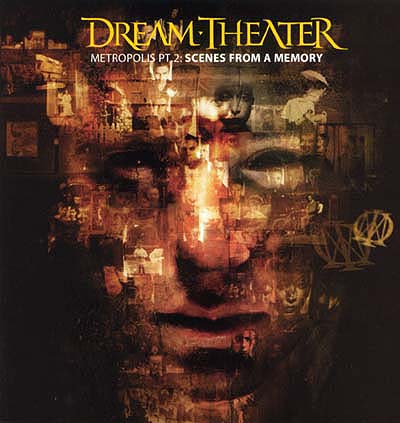
Part of their 1999 concept album Metropolis Pt. 2: Scenes From a Memory, this song is a piece of a much bigger whole. It's the climax of the tale they're telling through music, but unlike many of the other songs on the album, this song is able to stand alone.
The level of technical proficiency of the 3 former Berklee students (drummer Mike Portnoy, guitarist John Petrucci, and bass player John Myung), 1 former Julliard student (keyboardist Jordan Rudess), and operatically trained lead vocalist James LaBrie is probably more evident on this song than on any other in Dream Theater's long and very accomplished song catalog.
All of the groups I listen to have songs I really love... But there are very few songs that I would use the word "transcendent" on-- Home is one of those few. I don't just love this song for its musical brilliance, I love it because from the first time I heard it, it completely changed the way I listen to music. While I liked Dream Theater before I heard the song-- this was the song that really hit me over the head, turned my musical tastes inside out and made me fall in love with a whole new genre of music I'd never really given a solid chance beforehand.
On June 7th, Dream Theater released their eighth album, Octavarium. I've had the album for awhile, but with some bands I've learned it's best not to trust first impressions as their music either fades with time, or on the flip-side of that coin grows on you.
The opener, The Root of All Evil, is the 3rd part of drummer Mike Portnoy's ongoing opus about his struggle with alcoholism (the first part The Glass Prison was on 2002's Six Degrees of Inner Turbulence, the 2nd part, This Dying Soul was on 2003's Train of Thought). Each song has several movements, this most recent piece of the opus brings us up to part VII, all told there will end up with 12 parts (one part for each step of a 12 step program). It's heavy it's crunchy and makes reference to the previous two songs in the opus both musically and lyrically (mentioning "glass prison" specifically and repeating lyrics from This Dying Soul at another point). Much like with many of Dream Theater's other "heavy" works, the classically trained piano skills of Jordan Rudess tame some of the fire they put into their music.
As soon as you have the chance to catch your breath, Dream Theater picks the pace back up with These Walls. Luckily the song starts with a nice mid-tempo rhythm that builds in intensity. The song expresses feelings some of us have when we build walls to keep others out... many times we got lost behind the very walls we build and need someone to tear those walls down and rescue us from ourselves.
I Walk Beside You has "single" written all over it. It's the most radio-friendly (and at 4:29, the shortest) song on the album-- it could just as easily have been done by U2 or Coldplay. It's got a catchy refrain that compels the listener to sing along, "I walk beside you, wherever you are, whatever it takes, no matter how far, through all that may come, and all that may go, I walk beside you, I walk beside you." Despite having elements of U2 and/or Coldplay, instrumentally the song still has Dream Theater's fingerprints all over it.
And once again Dream Theater seems to shift from about 2nd gear into 5th (or 6th) with Panic Attack-- a song not at all for the faint of heart. It starts at about 90 and never seems to slow. There are parts where John Petrucci's guitar and Jordan Rudess keyboard seem to be going toe to toe in a duel.
Being ever adventurous, Dream Theater also decided to tackle "nu-metal" with Never Enough, a song vaguely reminiscent of what one might expect from Linkin Park or Limp Bizkit.
Sacrificed Sons is James LaBrie's 2nd offering on the album. A song about 9/11 in which LaBrie implores, "Who would wish this on a people, and say that His will be done?" The song remains politically ambiguous-- merely a search for answers that no one has and the frustration from the lack of answers.
The song closes with its title track, Octavarium is one of the most beautiful pieces of music I've ever heard. It's laden with symbolism, tributes to other bands (Yes, Genesis, and Pink Floyd to name a few). At 23:59 the song is a bit of a time investment, but despite it's rather cumbersome length, it's the one song I find myself going back to the most often. It starts with Pink Floyd-esque ambeince and introduces a King Crimson-esque flute before LaBrie's vocals enter the mix (a little over five minutes into the song). This song was a collaborative effort, there are 5 parts, each part written by a different member of the band-- "five" and "eight" are recurring themes in the CD sleeve and in the title track and throughout the album. There are several reasons- 8 notes in an Octave, 5 lines, 5 members of the band performing on their 8th album, etc. etc. For those who are more musically inclined than I, an entire phD thesis could be written about the musical and lyrical symbolsim used in this song. I'd even go so far as to say that this album is worth it for this song alone-- the other seven tracks are "gravy" and truly augment this brilliant piece.
All-in-all this is one of Dream Theater's best albums, and has quickly become not only for me, but also for several others, a fan favorite. (**** out of ****).
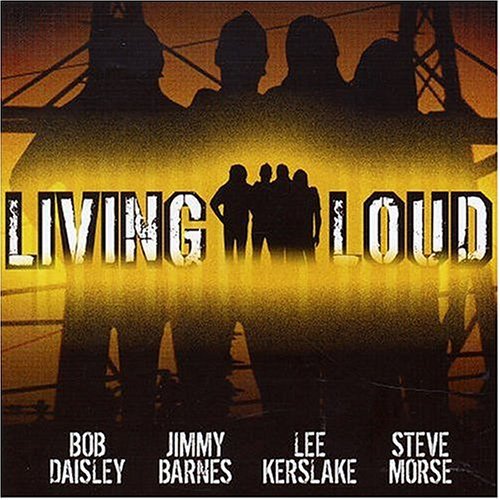
What do you get when you mix members of Deep Purple, Uriah Heep, Cold Chisel, Whitesnake and Black Sabbath performing 5 Black Sabbath covers and 7 new songs of their own?
You get Living Loud:
Steve Morse: Guitar (Dixie Dregs, Deep Purple) Bob Daisley: Bass (Ozzy Osbourne, Gary Moore, Black Sabbath) Lee Kerslake: Drums (Uriah Heep) Don Airey: Keyboard (Whitesnake, Gary Moore, Deep Purple) Jimmy Barnes: Vocals (Cold Chisel)
The new tracks are quite enjoyable, rollicking and fun-- the Sabbath covers take some getting used to. Morse is an exceptional guitarist and puts his own stamp on these Randy Rhoads classics and make them his own. The problem comes with Barnes voice-- and I'm a huge fan of Jimmy Barnes, he's an Australian institution. I think the problem is that both Ozzy and Barnesey have distinct voices-- and their voices are so distinctly different. Barnes voices is a cocktail of equal parts Joe Cocker and Brian Johnson (of AC/DC). The more I listen to the CD the more Barnes treatment of the Sabbath covers grows on me, but it's certainly taking a lot to get used to. At first listen I wanted to throw the CD out the window because there was something about Barnes voice on THOSE songs that wasn't quite meshing in my head. It was only after I was able to open my mind and listen to the Sabbath covers as if I was listening to them for the first time that I finally started to enjoy Jimmy's treatment of the material. ***1/2 (out of 5)
I bought this album a little over four years ago, and at first it didn't grab me. But about 8 months later I gave it another listen... Not only did it grab me... it never let go!
I'm not a big fan of The Trilogy, but other than that, I LOVE the CD. From the first moments of 6:00 and the catchy Caught in a Web the CD gets briefly weaker with track 3. Although I'm not a big fan of "The Trilogy" (Erotomania, Voices, The Silent Man) I will say that technically speaking, it's fantastic, it just doesn't grab me like the rest of the CD... After "The Trilogy" comes the crunching and angry The Mirror with its infamous Puppies on Acid intro, Lie picking up right where The Mirror leaves off. The Myung-penned Lifting Shadows off a Dream (excellent lyrics), the energetic and passionate Scarred and lastly, a farewell to Kevin Moore (this was his last album before going on to pursue a solo career under the name Chroma Key) with the extremely dark and personal Space Dye Vest.
Love is an act of blood and I'm bleedingA pool in the shape of a heart --Wow, they don't write lyrics like these any more....
Brilliant lyrics! Jordan Rudess may be a more talented keyboard player, but Moore's lyrical talent has been and continues to be missed on Dream Theater's later releases.