Showing posts with label Sci-Fi. Show all posts

Friday, August 26, 2011

One Second After by William R. Forstchen

Heavily inspired by Pat Frank's post-apocalyptic classic, Alas, Babylon, Forstchen fast forwards to the early 21st century and instead of Alas, Babylon's post nuclear world, Forstchen's cautionary tale is one of an America crippled by an EMP (ElectroMagnetic Pulse) attack.

On the surface the idea of an EMP attack seems far less severe than a nuclear attack as there's no fall-out to deal with nor any radiation sickness.  But stop and think about it, a sudden pulse that knocks out electricity across the country all at once.  Any device with ANYTHING electronic in it is fried.  Some cars (pre-1980) might still run but they'd be few and far between.  No Internet, no television, no radio-- basically we'd be completely cut off from each other.  Instead of a UNITED States of America government would suddenly be forced to turn completely local and we'd be scattered groups of city-states.

Without TV, radio, or Internet we would be left to speculate over what happened and who was responsible.  With Pearl Harbor there was radio to keep us informed, with the Kennedy Assassination there was TV and radio, with 9/11 there was TV, radio, and Internet to keep us informed.  Imagine being sucker-punched back into the 19th century....

And it gets worse-- 19th century technology can't support a 21st century population!  Something's got to give!

William R. Forstchen dares to imagine such a world in a cautionary tale in the tradition of great post-apocalyptic fiction like Pat Frank's Alas, Babylon and Nevil Shute's On the Beach.

What is especially chilling about Forstchen's book is stopping to take stock of your own situation as you read it. Would you be one of the lucky few survivors? or Would you be one of the unlucky many? If you're on prescription medication keep in mind there'd suddenly be a finite supply of it at your local pharmacy. If you suffer from any health ailments at all you'd find yourself more vulnerable with those who are stronger in the unenviable position of "triaging" the population to make sure the limited resources-- food, water, and medication go to those who are most likely to not only survive but help others survive as well.

While One Second After is not for the faint of heart or stomach it's an excellent read.  The characters are real and tangible-- you know these people or people like them.  Forstchen set the book in the town where he lives to give it a greater air of authenticity and making it all that more real to his readers.  ***** out of *****

Thursday, May 31, 2007

Soon I Will Be Invincible by Austin Grossman

Being a comic book geek I was really hoping, no EXPECTING to enjoy this book. And admittedly at times it was kind of quirky and fun, but I think going forward if I want to read about super-heroes I'll stick to the comic books and avoid novels like this.

Remember that movie, Mystery Men with Ben Stiller from a few years ago? This book had a similar feel to it... and much like Mystery Men it fell completely flat.

The characters are interesting enough but they're also quite two-dimensional. Comic book writers do a much better job at giving their characters depth-- whether the lack of dimension was an intentional spoof on the negative stereotypes of comic books or just poor writing is uncertain. The overall predictability of the plot and the ending which seemed to have come from left field could also have been an intentional lampoon of comic lore and legend or much like the lack of dimension of the characters it might just have been poor writing.

Either way, if this was a spoof it was rather poorly done and rather than poke fun at the negative stereotypes of comic books and comic book fandom it will only serve to perpetuate them or even if it was just poor writing, well the author might want to switch to material he's more familiar with and leave the super heroes to the pros over at DC and Marvel.

Monday, March 06, 2006

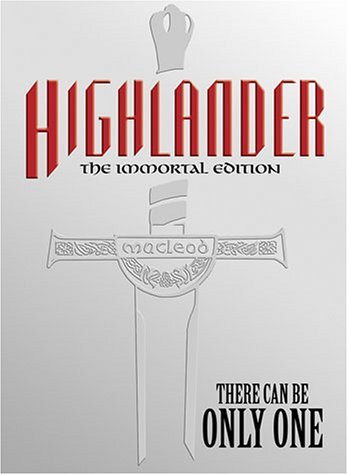
HIghlander (1986)

Before the TV series, the Saturday morning cartoon, and before the head-scratching continuity betraying sequels the world was introduced to Connor MacLeod and an immortal race, the brainchild of writer Gregory Widen.

In an era that featured a saturation of action films-- Commando, Cobra, Rambo, Predator, The Terminator-- this film stood head and shoulders above the rest of the pack (with the possible exception of James Cameron's Terminator).

Connor MacLeod (Christopher Lambert) was born in the 16th century and at some point in in his late twenties or early thirties he made the startling discovery that, wow, he's immortal. The only way in which he's able to "shuffle loose his mortal coil" is for his head to come seperated from his neck.

Being immortal wasn't all fun and games. Cast out of his home in Glennfinnan as a heretic in league with Lucifer, watching the love of his life age and die before his eyes even as he remains the same age-- Life hasn't been easy for Connor. Luckily, under the tutelage of Juan Sanchez Villalobos Ramirez (Sean Connery) Connor becomes a much more skilled swordsman than the mere amateur he had been prior to Ramirez much needed intervention.

Fast forward to the 1980s. It is the time of The Gathering when all remaining immortals must face each other in a final combat until there is only one. Standing between Connor and "The Prize" is the evil Kurgan (played with a delightful evil brilliance by Clancy Brown).

Standing in MacLeod and the Kurgan's way are the NYPD and their attractive forensic scientist with a metallurgical hobby, Brenda Wyatt (Roxanne Hart). When Wyatt discovers fragments of MacLeod's sword-- a sword that should not exist she takes a stronger interest in the mysterious antiques dealer Russell Nash (the pseudonym MacLeod has adopted).

Highlander is a brilliant movie that could easily have stood on its own. It It had the strength to stand on its own. Don't waste your time on the unnecessary sequels or the TV series, let the original product speak for itself.

Saturday, February 25, 2006

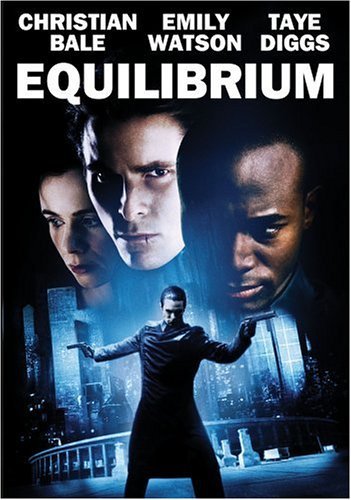
Equilibrium (2002)

Action movies aren't supposed to be smart. They also generally don't have heart either. The characters are generally flat and/or cardboard and the plot is merely a device to loosely tie well choreographed action sequences together.

Equilibrium betrays those stereotypes. Borrowing from both George Orwell's 1984, being set in a future where everyone is always being watched; and from Ray Bradbury's Fahrenheit 451, being set in a future where anything at all that can evoke emotion is destroyed by rule of law and the citizenry take special pills which give them emotional "equilibrium."

In the pills which give equilibrium, the filmmakers have a device which might have allowed their actors to get away with flat and cardboard performances-- essentially they all could have played their parts like Steven Seagall and the lack of emotion would certainly have been believable.

But in casting actors the calibre of Christian Bale, Emily Watson, Taye Diggs, and even Angus McFadyen (best known for his performance as Richard Bruce, the King of Scotland in Braveheart), the film instead benefitted from a higher quality of performances. Instead of just flat and cardboard, Bale's character, John Preston, struggled with his motivation to uphold the law and his curiousity of what he was missing out on by not experiencing emotion.

Mary O'Brien (Emily Watson), is a firecracker, in an otherwise bland clinical future. She plays a renegade whose illicit lover (Preston's former partner, Errol Partridge, played by Sean Bean) had been killed in the line of duty when it was discovered he was keeping "evidence" (books, music, etc.) for himself and allowing himself to feel. Watson's character hasn't been taking her "medication" and her capture forces Officer Preston to confront the life he's chosen to lead and the choices he's made.

Equilibrium is everything action movies are capable of being and should strive towards. There are so many places where the filmmakers could have taken shortcuts or the easy way out. But they didn't. They delivered a high quality and thoroughly enjoyable film in a genre that is generally vapid and dull.

Friday, December 09, 2005

The Time Traveler's Wife & The Confessions of Max Tivoli

The Time Traveler's Wife by Audrey Niffenegger
The Confessions of Max Tivoli by Andrew Sean Greer
A dual book review with comparisons/contrasts

In less than a year I’ve read two remarkable books which pit man against time in very different ways. In Audrey Niffenegger’s The Time Traveler’s Wife Henry de Tamble is a man with a remarkably quirky affliction. He’s a time traveler. In The Confessions of Max Tivoli, the title character suffers from the unusual affliction of aging in reverse. Time travel stories are far from new. Many an author has tackled time travel, as far back as Mark Twain’s A Connecticut Yankee in King Arthur’s Court and H.G. Wells The Time Machine we’ve seen man in a constant struggle to conquer time, to visit time’s past, or those yet to come.

The Time Traveler’s Wife
was the first book I've ever read that portrayed time travel as an affliction, an unwanted disease. See, unlike the protagonists in most time travel novels, Henry de Tamble has no control of when he time travels from and when he travels to. It’s only through the budding friendship of a young girl, Clare, who later becomes Henry’s wife, that he is able to gain some semblance of control over his “chrono-displacement” affliction. While difficult to follow at first, once I got into the book I couldn’t put it down. It was so refreshing to read a book which portrayed time-travel in such a different light than it had been portrayed in countless other novels and films. Part of the charm of this book is that the relationship between Henry and Clare feels so real. It’s not overly flowery or sentimental. It’s a relationship that any of us who have ever experienced love would feel familiar with. This realistic portrayal actually makes the time travel aspect seem that much more real to the reader. After all, all relationships have their problems… but not too many people can say the first time they met their mate they were eight or ten and their mate was in his forties, but when they married they were roughly the same age as each other.

The Confessions of Max Tivoli
is not a time-travel story in the traditional sense, but once again, time is the enemy. Max Tivoli ages in reverse. Born withered like a raisin, resembling more an old man than an infant, as he grows older he appears younger. Greer’s writing style is a bit more flowery and poetic than Niffenegger’s but not to the point of distraction from the plot. Set in turn of the century San Francisco, Greer includes several specific details that make the San Francisco of his novel, feel like home to the reader.

At age 17, appearing to be a man in his 50s, Max falls in love with a 14 year old, Alice, and through some interesting misunderstandings gets into a romantic dalliance with Alice’s mother. Guided throughout his life by his love for Alice and the lengths he’s willing to go to be with her and his near unwavering resolve to keep his secret from her, Max goes to some rather extraordinary lengths and sacrifices under the guise of love. At one point he goes so far as to “disappear” and ignore all of the people who know his secret, so as not to let Alice discover the truth. But The Confessions of Max Tivoli isn’t just a love story—it’s two love stories and with that, I leave you, the reader to discover these well-told tales for yourself.

Friday, November 18, 2005

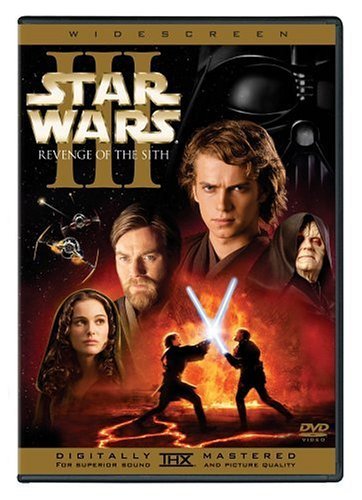
Star Wars Episode III (2005)


Excellent conclusion to an underrated trilogy

Many critics pan the first 2 Star Wars prequels commenting on how weak the scripts or story-telling were, how bogged down the plots were by the galactic politics and etc. But I think to fully appreciate the prequel trilogy one needs to change his/her perspective.

Watching Episodes I-III as the story about Anakin turned to the dark side-- the first 2 films are bound to disappoint. Watching the prequel films from the perspective that these are films not about Anakin's shift to the dark side, but from the point of view of the delightfully Machiavellian Palpatine, then a greater appreciation can be gained.

From Episode I we saw the strings being pulled as Palpatine played both sides against each other in such a way that regardless of the outcome, he'd get the results he wanted.
Episode II saw an extrapolation of his pure Machiavellian deviousness (was George Lucas inspired by "The Prince" when he dreamed up the Palpatine character?) The clone army had been created to serve the Republic... or had it been created to serve the dark side? Count Dooku's revelation that the Republic was being controlled by a Sith Lord mirrored Darth Vader's revelation in The Empire Strike's Back that Darth Vader and Anakin Skywalker were one in the same. Also the scene with the Trade Federation discussing the weapon they are working on, and then seeing the plans for what, in Episode IV, would become the Death Star!

Episode III is the bookend, it's both a finale (for Palpatine's story, his plan is complete) and a new beginning (the birth of Luke & Leia). It ties up the loose ends and (as other reviewers) have stated adds a poignancy to the friendship/mentorship that existed between Obi Wan and Anakin/Vader. The scene where Obi Wan sees that Anakin has killed "the younglings" (okay, that term is utterly ridiculous-- they're "children"-- none of this "younglings" crap!). Ewan MacGregor's portrayal of Obi Wan at this point is spot on. You can both feel and see the hurt in his eyes-- reminiscent of that of a father of a prodigal son. Hayden Christensen's performance in Episode III, if anything helps vindicate and validate his performance in Episode II. While he may have been "wooden" in Episode II it's because he was trying to do what was right but he had that fear and anger inside of him that kept clouding his judgement. The wooden performance was of a man torn between the dark and light, straddling a line. In Episode III, we see that line snap along with Anakin! Christensen's performance in Episode III was probably his best since Life as a House with Kevin Kline a few years ago.

All in all, a joy to watch! George Lucas's return to the use of miniatures rather than relying so heavily on CGI (as he did in the first 2 prequels) was also a very welcome shift from Episodes I & II. While not the best of the Star Wars films it's certainly close!